Job-Hopping Salary Negotiation Guide: 5 Steps to Double Your Pay
A systematic 5-step job-hopping salary strategy from market valuation to negotiation, with scripts for 3 scenarios and 3 major pitfalls to avoid.
At top companies like Google, Amazon, and Meta, job-hopping for a raise isn't a game of luck—it's a replicable strategy system. This article breaks down the 5-step core methodology from an interviewer's perspective to help you achieve a precise salary leap.
Step 1: Market Valuation — Know What You're Worth
The prerequisite for a salary jump is knowing your market value. Many candidates blindly submit resumes without understanding their positioning, resulting in either undervaluing themselves or overestimating and facing repeated rejections.
Three-Dimension Market Valuation Model
- Industry Benchmarking: Where does your ability rank among peers? Reference salary reports and benchmark against Google L5-L7, Amazon L6-L8 salary ranges
- Scarcity Assessment: Is your skill combination scarce in the current market? For example, AI + engineering deployment experience is extremely sought-after in 2026, with premiums of 30%-50%
- Hopping Premium Coefficient: Normal job-hopping raises range from 20%-30%, scarce roles can reach 40%-60%, but exceeding 60% requires extremely strong bargaining chips
Practical Valuation Methods
- Collect 3-5 JDs for similar roles and extract core competency requirements
- Check salary ranges for comparable levels on Glassdoor, Levels.fyi
- Get market value assessments from 2-3 recruiters, using the median as your anchor
Step 2: Timing Selection — The Golden Window for Job Hopping
Timing directly determines your salary upside. Hopping at the wrong time might mean you can't even get a standard raise.
Three Best Timing Windows
- Business Expansion Phase: When Amazon launches new business lines or Meta expands into new markets, headcount is abundant and salary budgets are generous—maximum room for raises
- Post-Bonus Season: March-May is peak job-hopping season, but competition is fierce; start positioning yourself in January-February for first-mover advantage
- Organizational Restructuring: During company reorgs, core talent is often overlooked—your bargaining power is strongest at this moment
Timing Pitfalls to Avoid
Never job-hop frequently during probation periods (severe resume penalty), and avoid resigning without a backup during industry downturns (bargaining power drops to zero). Keep at least a 3-month job search buffer.
Step 3: Resume Packaging — The Door Opener That Makes HR Seek You Out
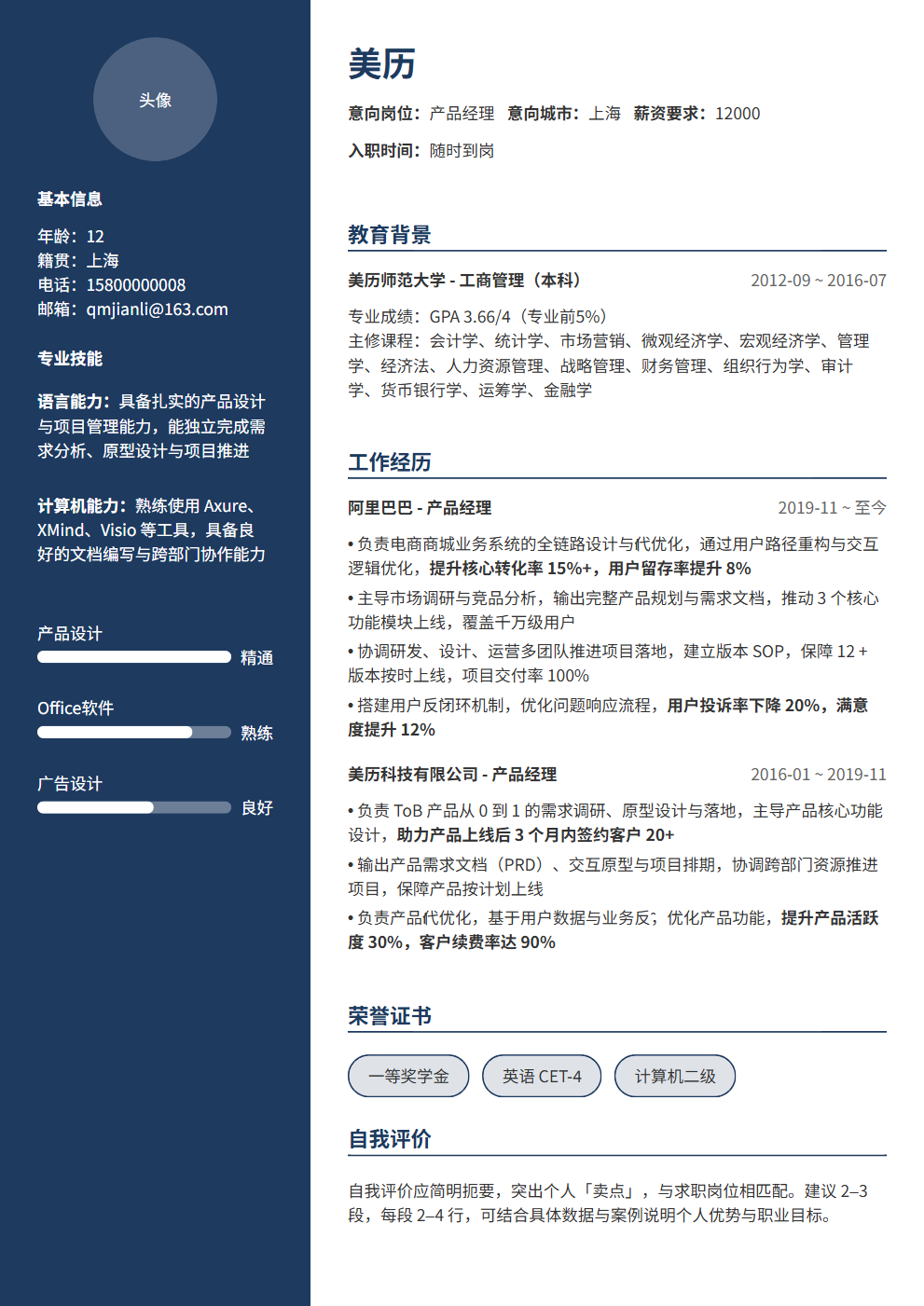
A job-hopping resume isn't a work log—it's a value proposition. Interviewers spend only 15 seconds on your resume; your core value must land immediately.
The STAR+ Formula for Resume Packaging
- Situation: Business context and challenge (e.g., "Led growth strategy for a product with 50M DAU")
- Task: Your specific responsibilities and goals (e.g., "Achieve 15% DAU growth within 3 months")
- Action: Key actions you took (e.g., "Built user segmentation model, designed 3 A/B experiments")
- Result: Quantifiable outcomes (e.g., "DAU grew 22%, exceeding target by 47%")
- +: Transferable value (e.g., "This methodology was scaled to 3 product lines")
Resume Keyword Optimization
Big tech HR relies on keyword matching to search resumes. Applying to Apple? Your resume must include "ecosystem," "user experience," "cross-functional." For NVIDIA, emphasize "GPU computing," "inference optimization," "scalable architecture."
Step 4: Interview Presentation — Make the Interviewer Feel You're Worth It
The core of a job-hopping interview isn't proving you can do the work—it's proving you're worth a higher salary. The interviewer's psychological anchor determines your salary range.
Three Axes of High-Value Presentation
- Dimensional Elevation: Answer questions from a perspective half a level above the target role. When interviewing for L5, demonstrate L6 systems thinking; for L6, show L7 business insight
- Scarcity Demonstration: Proactively mention cross-domain experience, e.g., "I have both frontend architecture and AI engineering deployment experience, which is extremely rare in the market"
- Reverse Questioning: Show depth through high-quality questions, e.g., "What's the biggest business challenge for this role in the next 6 months? My solution in a similar scenario was..."
Value Anchoring Technique in Interviews
When asked about salary expectations, don't give a fixed number. Say "Based on my market research and past contributions, my expected range is $XX-$XXK," using a range rather than a fixed value to leave negotiation room.
Step 5: Salary Negotiation — The Last-Mile Game
Salary negotiation is the decisive moment for a job-hopping raise. Many candidates perform perfectly throughout the process but fall short at negotiation.
Four-Step Salary Negotiation Method
- Delay Your Quote: Let the other side make the first offer to gain information advantage. Say "I'm more focused on role fit, and I trust the company has a fair compensation structure"
- Anchor High: If you must quote first, state your expectation's upper limit +10% as the anchor
- Total Package Approach: Don't just discuss base salary—negotiate equity, signing bonus, level, reporting line, and total compensation. Netflix's equity, Salesforce's RSUs are all important levers
- Create Competition: Appropriately reveal other offers without naming specifics, e.g., "I currently have 2 offers in progress"
Scripts for 3 Job-Hopping Scenarios
Scenario 1: Same Industry Hop
"I've been responsible for XX business at my current company for 3 years, completing 0-to-1 building and scaled growth. Now I want to take on more challenging work on a larger platform, and I believe my experience can bring direct value to your XX business."
Scenario 2: Cross-Industry Hop
"Although I come from a different industry, the underlying logic of XX capability is universal. My success in XX industry, combined with deep research into your industry, gives me confidence in delivering results quickly. In fact, cross-industry perspectives often drive innovative breakthroughs."
Scenario 3: Startup to Big Tech
"My startup experience has given me a 0-to-1 holistic perspective and strong resource integration capabilities. Now I want to bring this entrepreneurial mindset into a big tech system and achieve scaled impact with greater resources."
3 Major Pitfalls in Job-Hopping Interviews
- Pitfall 1: Badmouthing Previous Employers: No matter how bad your previous company was, never speak negatively in an interview. Interviewers will assume you'll do the same to them after leaving
- Pitfall 2: Talking Money Without Value: Salary negotiation requires value equivalence. A raise demand without value support only makes interviewers think you're greedy
- Pitfall 3: Frequent Hopping Without Growth: 3+ hops within 2 years is a red line. Each hop must have a clear growth logic, or your resume gets filtered immediately
Job-hopping for a raise isn't gambling—it's strategic value realization. Using a professional resume builder to craft a resume that precisely communicates your value is the starting point of the entire strategy chain. BeautyResume offers templates recognized by top tech HR and keyword optimization suggestions, helping you build competitive advantage from the application stage.
FAQ
Q1: How much of a raise is reasonable when job-hopping?
A 20%-30% raise is the normal range. Scarce roles or moving from tier-2 companies to top-tier firms can reach 40%-60%. Exceeding 60% requires extremely strong scarcity support, otherwise you risk being questioned about capability mismatch during probation.
Q2: How to answer "Why are you job-hopping?" in an interview?
The core principle is "positive framing + growth needs." Say "I've reached a growth ceiling in my current role and am looking for a larger platform with more challenging opportunities." Avoid any negative comments about your previous employer.
Q3: How to negotiate without other offers?
Even without other offers, don't show desperation. Emphasize "I'm currently evaluating several opportunities" or negotiate based on role fit and your value rather than leveraging competing offers. The essence of negotiation is value bargaining, not offer counting.
Q4: Will my salary drop when switching industries?
Cross-industry moves may face salary stagnation or slight decreases short-term, but long-term ceilings are often higher. Focus on total compensation (base + equity + growth potential) rather than just monthly salary. Moving from traditional industries to tech or AI often yields far faster salary growth within 1-2 years.
Q5: When should you NOT job-hop?
Three scenarios: 1) Your current role still has untapped growth potential; 2) The industry is in a broad downturn where hopping risks outweigh benefits; 3) You've been in your current role less than 1 year without a compelling reason—frequent hopping severely damages resume quality. Timing matters more than interview skills.