Interview Communication Skills Guide: 5 Expression Frameworks for Logical and Compelling Answers
Detailed breakdown of 5 interview communication frameworks (PREP, Pyramid Principle, SCQA, Timeline Narrative, Comparative Argumentation), with scenario-based templates, fixing 3 common issues (irrelevant answers, over-elaboration, logical jumps), and mastering non-verbal communication skills.
Among reasons for interview failure, unclear expression accounts for 47%—more than insufficient professional ability. Many candidates have the knowledge but can't articulate it, and the problem lies in lacking expression frameworks. This article systematically covers 5 proven expression frameworks that give your interview answers both logical structure and compelling substance.
1. PREP Method — The Most Versatile Interview Answer Framework
The PREP method is the most versatile expression framework in interviews, applicable to 80% of interview questions:
- P (Point) Lead with Conclusion: Answer the question directly in one sentence
- R (Reason) Provide Reasoning: Explain why in 1-2 sentences
- E (Example) Give Evidence: Support your point with a specific case
- P (Point) Restate Conclusion: Close with one sentence reinforcing your core point
Best for: Opinion questions, choice questions, evaluation questions. Template: "I believe XX (Point), because XX (Reason), for example in my previous project XX (Example), therefore XX (Restate)."
At Amazon, asked "What's the most important skill for a product manager?" a candidate used PREP: "I believe it's need insight (P), because a PM's core value is discovering real user needs, not false ones (R), for example when working on feature XX, through 5 rounds of user interviews I discovered the original requirement was surface-level—the real pain point was XX, and after adjusting, DAU increased 30% (E), so need insight is fundamental for PMs (P)."
2. Pyramid Principle — Structured Breakdown of Complex Questions
When interview questions span multiple dimensions, the Pyramid Principle helps you organize answers top-down with MECE (Mutually Exclusive, Collectively Exhaustive) logic:
- Top: Core conclusion or overall viewpoint
- Middle: 3 supporting arguments (MECE principle)
- Bottom: Specific evidence under each argument
Best for: Analysis questions, strategy questions, multi-angle evaluation questions. Template: "Regarding XX, I'll analyze from 3 dimensions: First, XX dimension...; Second, XX dimension...; Third, XX dimension... Overall, XX."
At Google, asked "How do you evaluate whether a new market is worth entering?" a candidate used the Pyramid Principle: "I evaluate from 3 dimensions (Top): First, market size—what are TAM/SAM/SOM and growth rate; Second, competitive landscape—top players' market share, differentiation space, entry barriers; Third, internal fit—technical reserves, channel resources, financial strength. Overall, when market size is large enough, competition isn't yet entrenched, and we have differentiation advantages, it's worth entering."
3. SCQA Model — Master of Situational Storytelling
The SCQA model excels at turning dry answers into vivid stories:
- S (Situation): Describe the background, drawing the interviewer in
- C (Complication): Reveal the problem or challenge, creating tension
- Q (Question): Introduce the core question that needs solving
- A (Answer): Present your solution and results
Best for: Behavioral questions ("Tell me about a time you XX"), project introductions, handling difficulties. Template: "The situation was XX (S), but we encountered XX problem (C), I needed to solve XX (Q), so I XX (A), and ultimately XX."
At Microsoft, asked "Tell me about a time you resolved team conflict," a candidate used SCQA: "I was leading a cross-functional project where the tech team and design team had serious disagreements over feature priorities, and the project stalled (S+C). I needed to get both sides aligned within a week (Q). So I organized a requirements alignment meeting, using data—showing user behavior data proving which feature had higher usage frequency, while introducing an ROI evaluation framework so both sides could discuss using unified criteria. We reached consensus within 3 days, and the project launched on time (A)."
4. Timeline Narrative — Showcasing Growth and Reflection
When interviewers want to understand your experience or growth trajectory, Timeline Narrative is the clearest expression method:
- Starting point: What state you were in / what problem you encountered
- Turning point: What catalyst prompted your change
- Action: What you specifically did
- Result: What outcome you achieved
- Reflection: What you learned from it
Best for: Self-introductions, career development questions, learning and growth questions. Template: "In XX year, while doing XX, I discovered XX (Starting point), which made me realize XX (Turning point), so I started XX (Action), ultimately achieving XX (Result), and this experience taught me XX (Reflection)."
At Apple, asked "What's your career development path?" a candidate used Timeline Narrative: "3 years ago I joined as a junior developer, focused only on code implementation (Starting point). An online incident made me realize knowing just code wasn't enough—I needed to understand business and system architecture (Turning point). After that, I proactively participated in architecture reviews and business requirement discussions, and earned my architect certification (Action). Within 2 years, I was promoted from junior to tech lead (Result). This experience taught me that technical professionals must have a holistic perspective (Reflection)."
5. Comparative Argumentation — Making Choices More Persuasive
When interviewers ask about your choices or judgments, Comparative Argumentation adds depth by showing your thinking process:
- Option A: Describe one option and its pros/cons
- Option B: Describe another option and its pros/cons
- Judgment Criteria: Explain what standards you use to decide
- Final Choice: Give your conclusion based on those criteria
Best for: Technology selection questions, decision-making questions, trade-off questions. Template: "There were two options: Option A was XX, with advantages XX and disadvantages XX; Option B was XX, with advantages XX and disadvantages XX. My judgment criteria were XX, and based on this I chose Option X because XX."
At Netflix, asked "Why choose microservices architecture over monolithic?" a candidate used Comparative Argumentation: "Monolithic architecture's advantage is simple development and deployment; its disadvantage is becoming bloated as business grows, with team collaboration difficulties. Microservices' advantage is independent deployment and flexible tech stacks; its disadvantage is increased operational complexity. My judgment criteria are team size and business growth rate—when the team exceeds 2 pizza teams and business growth exceeds 50% annually, microservices' long-term benefits outweigh short-term costs. Our team had 8 people and 80% business growth, so we chose microservices."
6. Three Common Interview Communication Problems and Fixes
Problem 1: Irrelevant Answers — Not Understanding What the Interviewer Is Really Asking
Root cause: Eager to answer without confirming understanding. Fix:
- Paraphrase to confirm: Restate the question in your own words—"You're asking about my experience in XX, correct?"
- Ask clarifying questions: If the question is vague, proactively narrow the scope—"Are you more interested in the technical implementation or project management aspect?"
- 3-second delay: Count to 3 after hearing the question before speaking, giving your brain processing time
At Salesforce, a candidate was asked "What do you think about overtime?" Instead of immediately taking a stance, they asked "Do you mean project-critical periodic overtime, or a常态化 overtime culture?" The interviewer noted, "That follow-up shows they're thinking, not just pleasing."
Problem 2: Over-Elaboration — Answers Like a Running Account
Root cause: No structure, speaking stream-of-consciousness. Fix:
- Set boundaries: Keep each answer to 2-3 minutes, using "3 key points" as self-constraint
- Lead with conclusion: Regardless of framework, the first sentence must be your conclusion
- Cut details: Keep only information directly relevant to the question; delete "interesting but irrelevant" details entirely
At Oracle, a candidate's self-introduction went from college clubs to internships to every project detail, lasting 8 minutes before being interrupted. After revision using PREP: "I have 3 core strengths matching this role: 1) XX experience; 2) XX capability; 3) XX resources. Let me elaborate on the first..."—controlled to 3 minutes.
Problem 3: Logical Jumps — Points Lack Connection
Root cause: Logic exists in your head but isn't expressed verbally. Fix:
- Explicit connectors: Use "therefore," "based on this," "in other words" to verbalize logical relationships
- Number markers: Use "first," "second," "third" to help interviewers follow your logic
- Tie back to theme: After each point, use one sentence to tie back to the core question
At Intel, a candidate's answers frequently jumped from A to C to B, exhausting the interviewer. After revision, they deliberately used "Based on the above analysis, therefore..." connections, dramatically improving logical clarity.
7. Non-Verbal Communication Skills
Psychological research shows that communication effectiveness = 7% words + 38% tone + 55% body language. Non-verbal signals in interviews are equally important:
Eye Contact
Principle: Look at the interviewer's eyes or between their eyebrows; maintain eye contact 60-70% of the time while answering. Briefly look away when thinking. With multiple interviewers, primarily look at the questioner, and scan the room during key conclusions.
Hand Gestures
Principle: Keep gestures natural within the range between waist and shoulders. When listing points, use fingers to assist ("First... Second... Third..."); when emphasizing key data, press your palm downward to convey certainty. Avoid frequent face-touching, pen-spinning, and other nervous tics.
Posture
Principle: Sit in the front 2/3 of the chair, back straight but not stiff, leaning slightly forward to show engagement. Hands naturally on the desk or thighs; avoid crossed arms (defensive posture) or leaning back (arrogant impression).
Pace and Tone
Principle: Control pace to 130-160 words per minute; slow down and emphasize key data and conclusions. Pause appropriately for complex content, giving interviewers time to process. Avoid upward inflection at sentence ends (sounds uncertain) and flat monotone (sounds boring).
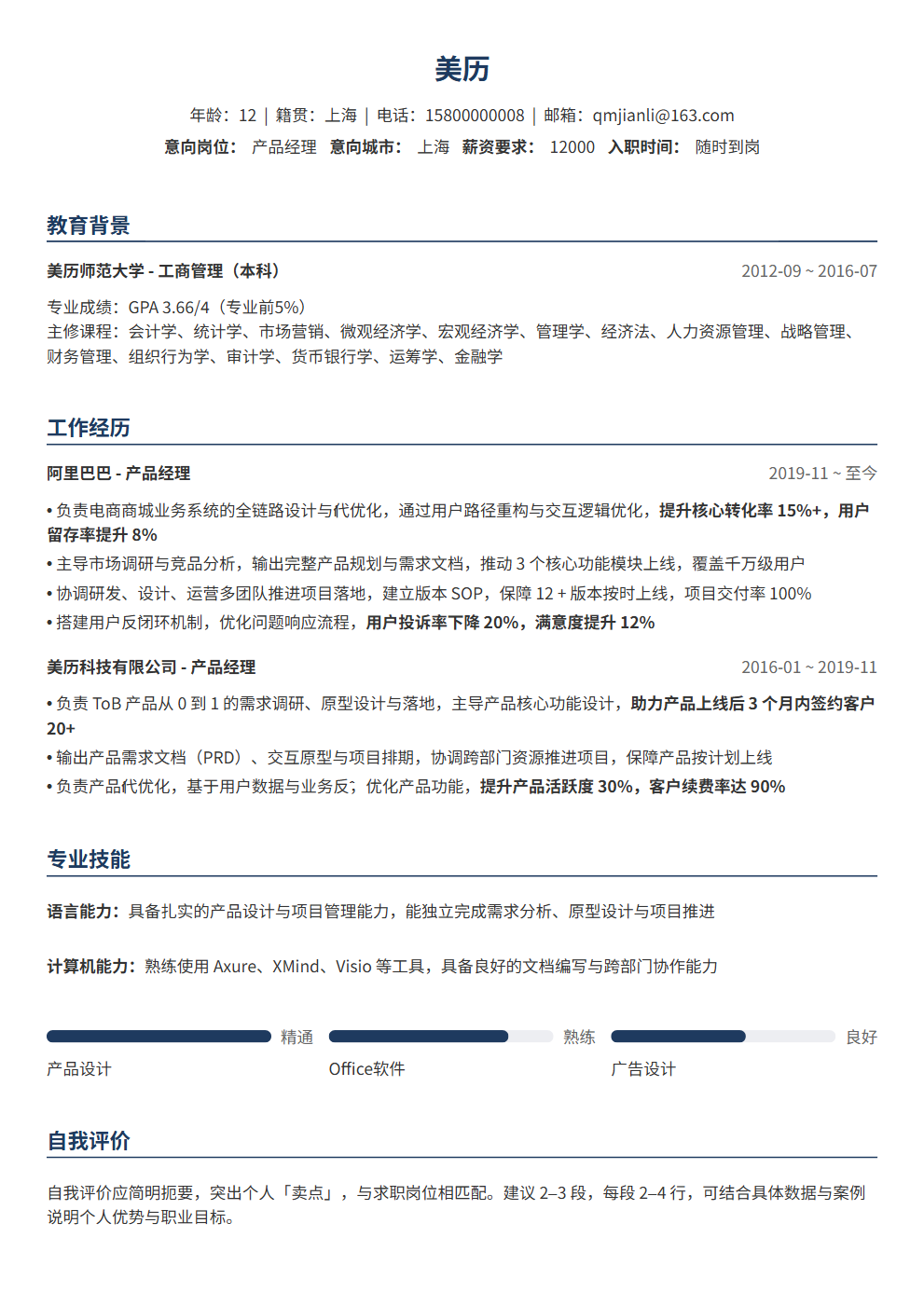
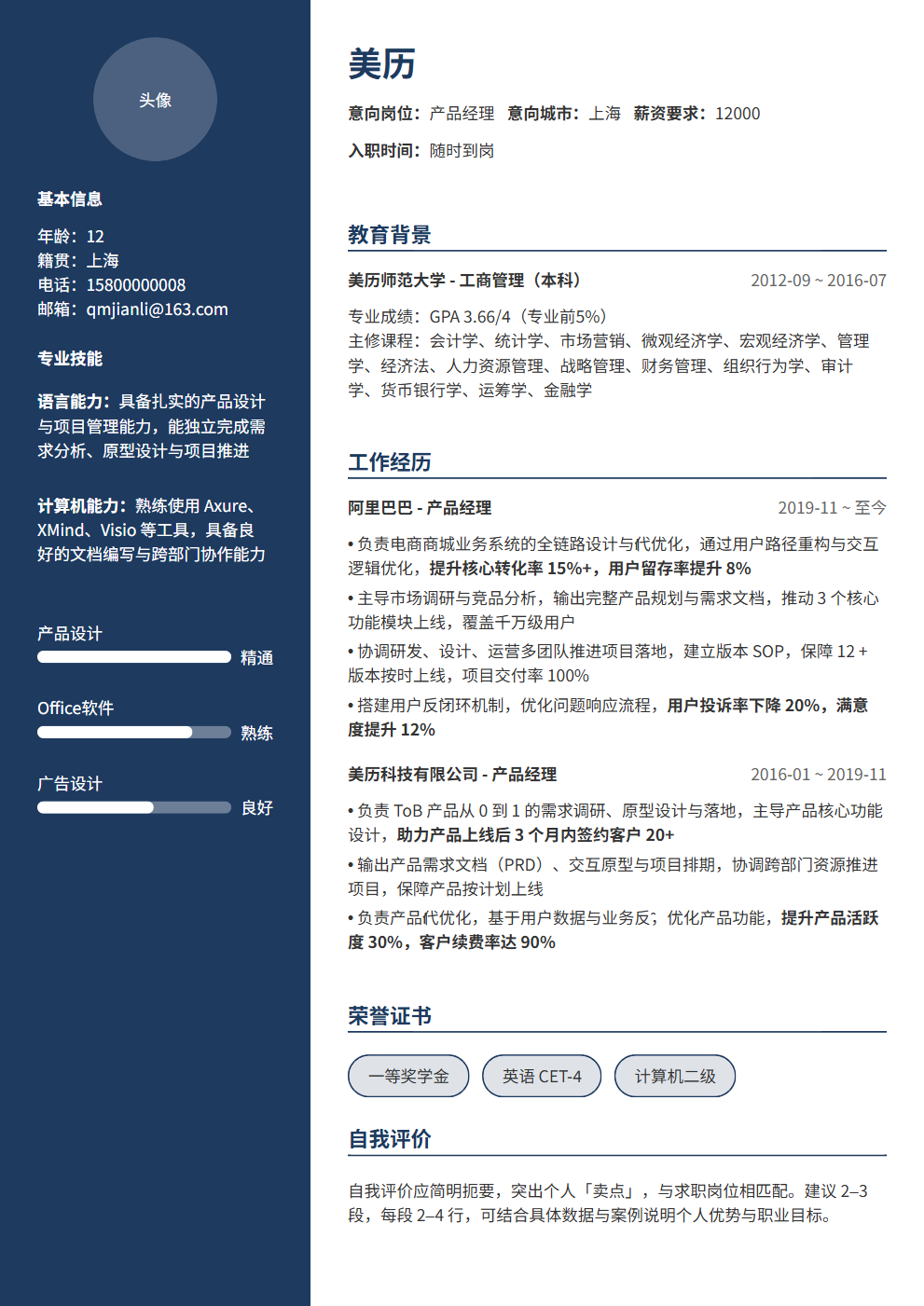
The core of interview communication isn't "speaking beautifully" but making interviewers hear clearly, remember well, and agree with your points. Use a resume builder to quantify your expression framework results—"Restructured project introductions using PREP, increasing interview pass rate from 30% to 70%"—letting interviewers sense your structured thinking at the resume stage.
FAQ
Q1: What if nervousness makes me speak too fast in interviews?
Speaking faster when nervous is a physiological instinct. 3 instant control techniques: 1) Deliberately pause for 1 second at the end of each sentence, replacing filler words like "um" and "ah" with pauses; 2) Record yourself practicing before the interview, finding your comfortable pace and remembering that rhythm; 3) Write a large "SLOW" on your notepad and keep it visible as a visual reminder. At Walmart, a candidate spoke so fast the interviewer couldn't understand them. After marking keywords in their notepad and pausing after each one, their pace naturally slowed down.
Q2: How should I choose among the 5 frameworks?
Selection principle: Match framework to question type—opinion/choice questions use PREP, analysis/strategy questions use Pyramid Principle, behavioral/experience questions use SCQA, growth/development questions use Timeline Narrative, decision/comparison questions use Comparative Argumentation. If you're really unsure, PREP is the universal fallback. At McKinsey, a senior interviewer said, "I love PREP the most because leading with the conclusion lets me immediately know the candidate's position—I don't have to listen forever wondering what they're trying to say."
Q3: How do I handle being interrupted or asked follow-up questions?
Being interrupted isn't bad—it means the interviewer is interested in your answer. Coping strategies: 1) Don't panic or get defensive—pause for 1 second, use "Great question" to buffer; 2) Answer the follow-up directly, don't try to return to your original answer—the interviewer cares about the follow-up's answer; 3) If the follow-up drifts off-topic, use "Regarding this question, my core point is XX" to pull back to the main thread. At Deloitte, a candidate was interrupted with follow-ups 3 times and handled each calmly; the interviewer noted "their adaptability is very strong."
Q4: What's different about communication skills for online interviews?
Online interviews have 3 special challenges: eye contact misalignment (looking at screen not camera), flat voice (microphone compresses tone), interaction delay (network latency causing talking over each other). Solutions: 1) Place the camera directly above the screen—when you look at the camera, interviewers feel you're looking at them; 2) Deliberately increase tone variation by 20% compared to in-person interviews; 3) Pause for 2 seconds after finishing a point before continuing, avoiding "collisions" with the interviewer. At Visa, a candidate experienced simultaneous talking due to network delay and said "Please go ahead"—the interviewer rated "very high EQ."
Q5: How do I practice these expression frameworks?
3-week deliberate practice plan: Week 1—Choose 1 framework daily, practice with 3 interview questions, record and review to improve; Week 2—Have a friend conduct mock interviews, focusing on framework switching (different questions use different frameworks); Week 3—Test in real interviews, reviewing afterward which frameworks worked well and which need improvement. At Boeing, a candidate improved their interview expression score from 3 to 8 (on a 10-point scale) through 3 weeks of deliberate practice. Key: Learning without practice equals not learning—you must build muscle memory through extensive output.