HR Interview Final Round Guide: 8 High-Frequency Questions and Answer Templates
A systematic guide to 8 high-frequency questions in HR interview final rounds, from reasons for leaving to career planning, with high-scoring answer templates and pitfall tips to help you secure the offer.
What Does the HR Final Round Actually Assess? How Is It Different from the Technical Interview?
Many candidates think passing the technical round means they're home free, only to stumble at the HR interview final round. The evaluation logic is fundamentally different — the technical round tests "can you do the job," while the HR round tests "will you stay." Specifically, the HR final round focuses on three core dimensions: stability (will you leave soon?), sincerity (do you genuinely want to join?), and cultural fit (will you mesh with the team?).
You can dominate a technical round with pure skill, but the HR round has no standard answers — it tests your communication style, logical thinking, and emotional management. Many technically strong candidates get rejected over a single poorly phrased answer in the HR round. This guide systematically covers the 8 most frequently asked questions in HR interview final rounds, with evaluation intent, high-scoring answer templates, and pitfall tips for each, helping you secure that offer.
Question 1: Why Did You Leave Your Previous Company?
Evaluation Intent
This is a must-ask question in every HR final round. It's not about the reason itself — it's about how you speak about your former employer. The HR is observing: Do you complain? Do you blame everything on the company? Is your motivation for leaving reasonable? If you badmouth your previous company, the HR will wonder — will you say the same things about us when you leave?
High-Scoring Answer Template
"I worked at my previous company for three years, gaining experience in XX, and I'm grateful for the growth opportunities the team gave me. However, I'm looking for deeper challenges in the XX domain, and your company's positioning in XX aligns closely with the direction I want to pursue, so I'd like to continue developing here."
Pitfall Tips
- Never complain about your previous company: Don't mention low pay, bad management, or excessive overtime — even if those are the real reasons.
- Don't say "no room for growth": This implies your abilities weren't recognized. Reframe it as "I'm seeking deeper challenges in XX direction" — much more positive.
- Use "pull" instead of "push" to explain leaving: Not "the old company was bad so I left," but "the new opportunity is compelling so I'm coming."
Question 2: What Is Your Career Plan?
Evaluation Intent
When HR asks about career plans, they want to confirm two things: do you have clear self-awareness, and does your plan align with what the company can offer. If your plan is "start my own business in three years," HR will see stability concerns. If you say "I haven't thought about it," HR will think you lack direction.
High-Scoring Answer Template
"In the short term, I want to quickly get up to speed after joining and become a core contributor in the XX area. In the medium term, I aim to deepen my expertise in XX, progressing from independently managing projects to leading small teams on challenging initiatives. Long term, I aspire to become a subject-matter expert in XX, providing critical input for the company's technical or business decisions."
Pitfall Tips
- Don't say "I want to move into management" or "start a business": Unless you're interviewing for a management role, moving to management suggests you're not passionate about your current field, and entrepreneurship suggests you'll leave.
- Your plan should relate to the role: Frame your career plan around the position you're interviewing for, not some unrelated vision.
- Structure your answer by short/medium/long term: Short term (within 1 year), medium term (2-3 years), long term (3-5 years) — a layered approach shows genuine thought.
Question 3: What Are Your Strengths and Weaknesses?
Evaluation Intent
The strengths question tests whether your self-perception matches the role's requirements, while the weaknesses question tests your sincerity and whether you have a growth mindset. HR despises two types of answers: the fake weakness like "my biggest weakness is being too much of a perfectionist," and a real weakness that conflicts with the role's core competencies.
High-Scoring Answer Template
Strengths: "My core strength is XX capability. In my previous role, I solved XX problem using XX approach, ultimately achieving XX result. This ability allows me to quickly find solutions when facing XX-type challenges."
Weaknesses: "I did have a gap in XX — for example, my handling of XX situations wasn't mature enough. I proactively improved through XX method, and I've seen significant progress. For instance, in a recent XX project, I used XX approach and the results were much better than before."
Pitfall Tips
- Back up strengths with specific examples: Don't just say "I have strong communication skills" — say "In the XX project, I coordinated three teams and delivered ahead of schedule."
- Weaknesses should be real but not fatal: Don't say "I get anxious easily" (which affects work), and don't say "I'm too much of a perfectionist" (which is fake). Choose a genuine gap that you've recognized and are actively addressing.
- Always pair weaknesses with improvement actions: Stating a weakness without showing improvement equals admitting a problem but not solving it. The improvement matters more than the weakness itself.
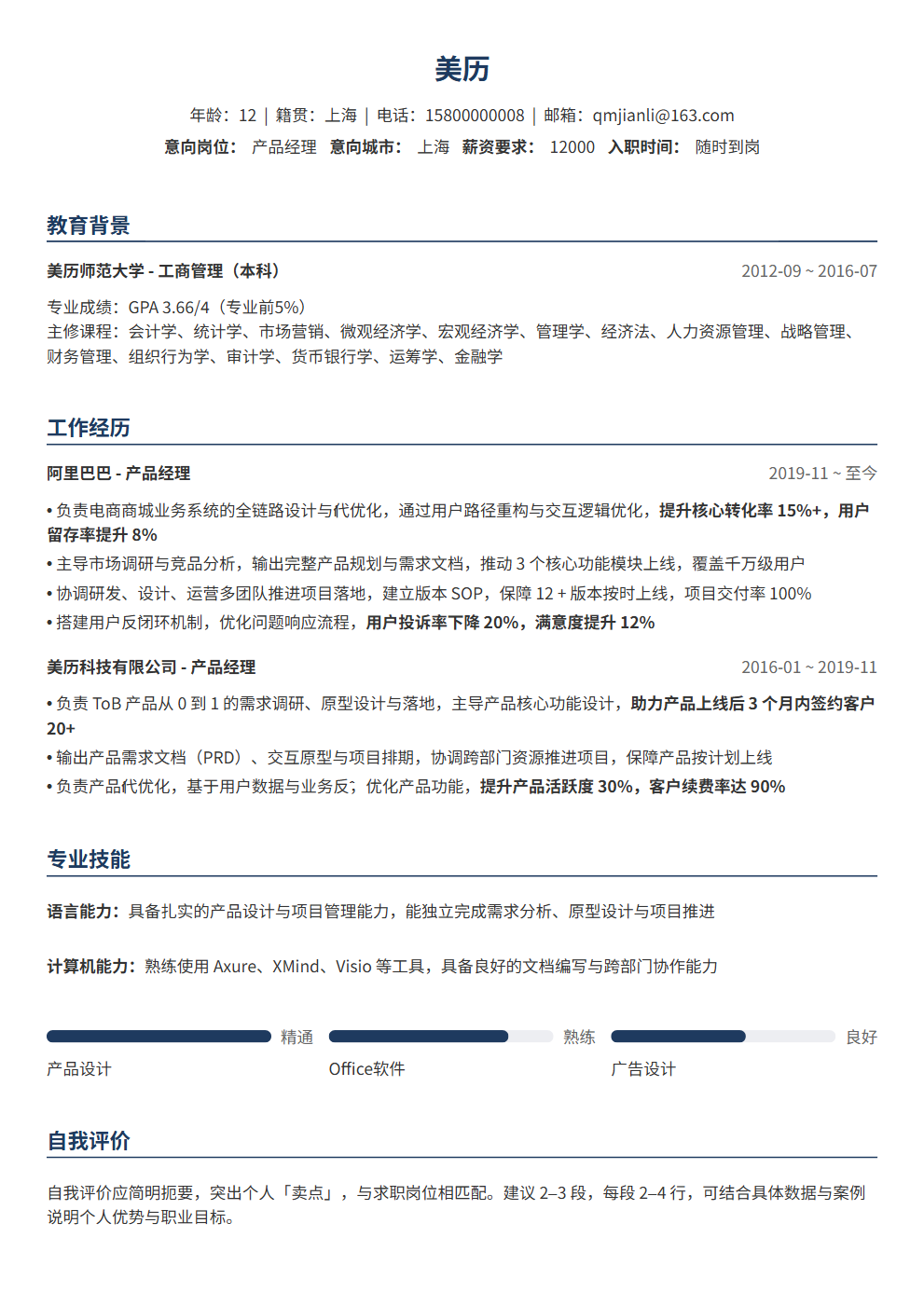
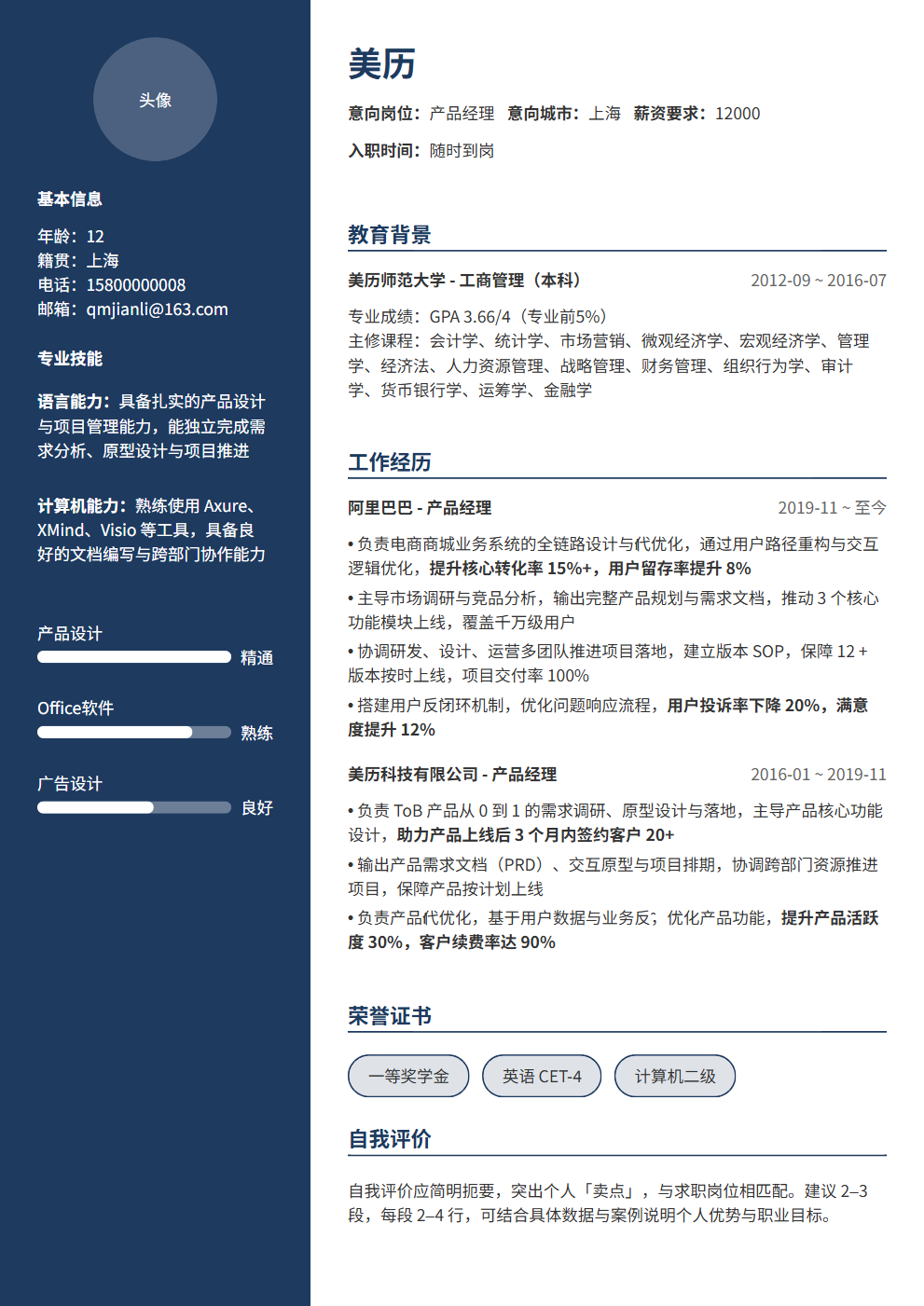
A strong resume is like a preview of the HR round — you need to showcase your core strengths in limited space while avoiding landmines. Use our resume builder to precisely present your project experience and core capabilities, so HR forms a positive impression before the interview even starts.
Question 4: What Is Your Expected Salary?
Evaluation Intent
Salary is the most sensitive topic in HR interview final rounds. HR wants to confirm three things: is your expectation within budget, is your self-assessment reasonable, and will you reject the offer over money. A well-crafted answer can help you negotiate fair compensation without getting eliminated over a number.
High-Scoring Answer Template
"My current salary is XX, and I'm looking for reasonable growth. However, I value the development potential and team culture of this role even more. I trust your company will put forward a fair offer. If possible, could you share the salary range for this position?"
Pitfall Tips
- Don't state a specific number first: Leading with a number eliminates your negotiating room. Try to get HR to share the range first, then negotiate from there.
- Don't say "anything is fine": This suggests you lack self-awareness of your value and makes HR question whether you understand market rates.
- Link salary to role value: Emphasize that you value growth and platform, but also expect reasonable compensation growth.
Question 5: Are You Interviewing with Other Companies?
Evaluation Intent
HR asks this to gauge your market competitiveness and your sincerity about this role. If you say no, HR might think you're not competitive. If you say you have many, HR might think you're not committed. The key is finding the balance between "having options" and "having a preference."
High-Scoring Answer Template
"I am exploring other opportunities and currently in discussions with a few companies. However, your company's XX direction is what interests me most and is my top priority. If you extend an offer, this would be my first choice."
Pitfall Tips
- Don't say "only your company": This lowers your market value and makes HR think you have no other options because of ability gaps.
- Don't name specific companies: You don't need to tell HR which companies you're interviewing with — "a few companies" is sufficient.
- Always express a clear preference: Let HR know you have options but this role is your top choice. This demonstrates both competitiveness and sincerity.
Question 6: When Is the Earliest You Can Start?
Evaluation Intent
HR asks about start date to confirm whether you can join on time and whether you're using other offers as leverage. If you say "anytime," HR may wonder if you're unemployed. If you say "three months," HR may not be able to wait. A reasonable timeline shows professionalism — responsibility to your current employer and commitment to the new one.
High-Scoring Answer Template
"If I receive an offer, I'll need to complete a handover with my current company and expect to start around XX date. During the transition, I'll ensure my current projects are smoothly handed off without disrupting my employer's operations. If there's an urgent need, I can negotiate with my current company to start earlier."
Pitfall Tips
- Don't say "I can start tomorrow": This implies you don't take responsibility for your current employer — HR will assume you'd treat them the same way.
- Don't say "it depends": Vague answers make HR think you lack sincerity or are still deciding.
- Give a clear timeline with flexibility: The standard answer is "about one month," with the flexibility to negotiate.
Question 7: Do You Have Any Questions for Us?
Evaluation Intent
This is the classic closing question in HR final rounds, testing your level of interest and depth of thinking about the role. No questions = no interest. Too-basic questions = no preparation. Salary details = wrong focus. Good questions should revolve around team culture, growth mechanisms, and role expectations.
High-Scoring Answer Template
Recommended directions for your questions:
- "What are the most important goals for this role in the first three months?"
- "What common traits do the top-performing team members share?"
- "What does the company's onboarding and development program look like?"
- "What's the team's working rhythm and collaboration style?"
Pitfall Tips
- Don't say "no questions": This tells HR you're not interested in the role.
- Don't ask about salary and benefits details: These can be confirmed during offer negotiation — asking in the HR round signals misplaced priorities.
- Don't ask information available on the company website: This reveals you haven't done your homework. Research the company's business and culture beforehand so you can ask insightful questions.
Question 8: If We Give You an Offer, Will You Accept It?
Evaluation Intent
This is the "sincerity test" of the HR final round and the most direct question in HR interviews. HR wants to know: are you genuinely interested, or are you waiting for something better? This question seems simple, but your answer directly influences whether HR proceeds with the offer approval process.
High-Scoring Answer Template
"Yes. Through our conversation today, I've gained a deeper understanding of the role and the team. The XX direction aligns closely with my career plans. If I receive an offer, I'll seriously consider it and respond promptly."
Pitfall Tips
- Don't hesitate or be vague: "Probably" or "Let me think about it" will cause HR to deprioritize you.
- Don't say "it depends on the salary": Even if salary is the deciding factor, don't bring it up at this stage. Say "I'll seriously consider it" and save salary discussions for the offer negotiation phase.
- Give specific reasons: Don't just say "I'll come" — explain why. Specific reasons are far more convincing than empty promises.
3 Hidden Scoring Dimensions of the HR Round
Beyond the 8 specific questions above, HR is silently evaluating three invisible dimensions throughout the final round:
Dimension 1: Communication Maturity
HR observes whether you speak logically, whether you're overly emotional, and whether you can control the pace. When answering questions, lead with your conclusion, then elaborate. Use structured expressions like "first, second, third" and avoid rambling without a point. Speak at a moderate pace — don't interrupt, and don't leave long silences.
Dimension 2: Attitude and Sincerity
HR can sense whether you "genuinely want to join" or are "just browsing." Sincerity shows in the details: Are you on time for the interview? Do you understand the company's business? Do you think carefully before answering? A candidate who doesn't even know what the company does won't convince HR of their sincerity.
Dimension 3: Stability Signals
HR's biggest concern in the final round is "will this person leave quickly?" Stability signals include: Is the reason for leaving reasonable? Does the career plan match the role? Is the understanding of the company deep? Is the desire to join strong? Every answer sends a stability signal — with every sentence you say, HR is judging "how long will this person stay?"
FAQ
How Long Does the HR Final Round Typically Last?
Usually 30-45 minutes. If it's very short (under 15 minutes), it may be a formality, or HR may have already decided you're not a fit. If it runs long (over 45 minutes), HR is likely very interested and wants to learn more. Regardless of duration, take every question seriously.
Can the HR Round and Technical Round Happen Simultaneously?
Some companies schedule both on the same day, but they're usually separate. The HR round typically comes after the technical round as a final confirmation step. If the HR round is scheduled before the technical round, the company places extra importance on the HR evaluation — prepare even more carefully.
Can I Ask About Salary During the HR Round?
It's not recommended to bring it up proactively. Salary negotiation should happen after you receive an offer. Asking about salary during the HR round makes it seem like your priorities are misplaced. If HR brings up the topic, you can engage naturally, but don't initiate. Focus on role value and growth potential — save salary for the offer stage.
Is There Still a Chance If I Perform Poorly in the HR Round?
It depends on your technical round performance and the company's decision-making process. If your technical performance was outstanding, negative HR feedback may just be a reference point. But if the HR round reveals serious stability or sincerity issues (like explicitly saying you don't want to join, or showing a pattern of job-hopping), even a perfect technical score may not save you. The HR round has veto power — don't take it lightly.
What Materials Should I Prepare for the HR Round?
Recommended: 1) Notes on the company's business and culture; 2) A list of 3-5 questions you want to ask HR; 3) Salary-related data (current compensation, market benchmarks) in case HR asks. Also, make sure every detail on your resume is accurate — HR will cross-reference your resume during the interview, and every line may be probed further.
The HR interview final round isn't a formality — it's the last gate before you receive your offer. Similarly, your resume is the "first gate" to even get an interview — use our resume builder to craft a focused, logically structured professional resume, so you're well-prepared at every step from application to final round.