HR Interview Common Questions and Pitfalls: Answer Strategies for 10 Must-Know Questions
A systematic guide to 10 must-know HR interview questions, each with intent analysis, high-score answer frameworks, and pitfall warnings to help you avoid elimination traps.
The Essential Difference Between HR Interviews and Technical Interviews
Many candidates treat HR interviews as a mere formality, thinking the technical round is the real battle. This is a dangerous misconception. HR interview elimination rates are no lower than technical rounds — many companies give HR a veto power, meaning you can pass the technical round and still get rejected by HR. The core difference: technical interviews assess "can you do the job," while HR interviews assess "are you a good fit."
Technical interviews focus on your professional skills, project experience, and problem-solving ability; HR interviews focus on your values alignment, stability, communication skills, and career planning clarity. A wrong answer in a technical round might be forgivable; stepping on a landmine in an HR interview can mean instant elimination. This article systematically covers 10 must-know HR interview questions, each with intent analysis, high-score answer frameworks, and pitfall warnings to help you avoid elimination traps.
Question 1: Tell Me About Yourself
This is the most classic opening question in HR interviews, and also the one most people take least seriously. 90% of candidates simply "recite their resume," running through their history like a chronological laundry list. This adds zero informational value — the interviewer can read your resume themselves.
What HR Is Really Assessing
HR isn't asking for your career inventory. They're evaluating your self-awareness, communication logic, and ability to prioritize. What you choose to share, what you lead with, and what you emphasize all reveal your thinking patterns and professional maturity.
High-Score Framework: The 3-Part Introduction
- Part 1 — Who I am: Summarize your core positioning in one sentence, e.g., "I'm a PM with 3 years of B2B product experience, specializing in building products from 0 to 1."
- Part 2 — What I've done: Select 2-3 most relevant experiences, presenting them with a "background + action + result" structure, highlighting your core contributions and quantified outcomes.
- Part 3 — Why I'm here: Use 1-2 sentences to explain your interest in this role and the value you can bring.
Pitfall Warnings
Don't recite your resume: Self-introduction isn't a resume reading — it's the "highlight reel." The interviewer has already seen your resume; you need to provide the logic and standout points behind it.
Don't exceed 3 minutes: Keep your introduction to 1.5-2 minutes. Too short suggests poor preparation; too long tests the interviewer's patience. Remember, this is an opening, not a speech.
Don't start from birth: "I was born in XX year, graduated from XX university..." — this information is already on your resume. Cut straight to your core positioning so the interviewer immediately knows who you are and what you excel at.
Question 2: Why Do You Want to Join Our Company
This question seems simple but is actually a high-frequency elimination question in HR interviews. Many candidates give answers that are either too fake ("Your company is the industry benchmark"), too honest ("It's close to home"), or too vague ("Great growth potential"). All of these miss the mark.
What HR Is Really Assessing
HR wants to understand whether your job-seeking motivation is genuine and whether it aligns with the company. Someone who knows nothing about the company saying they "deeply admire" it is obviously insincere; someone coming purely for salary raises stability concerns. HR is looking for candidates who "both understand the company and have reasonable motivations."
High-Score Framework: The 3-Layer Motivation Method
- Industry layer: Your understanding and agreement with industry trends — "I'm bullish on the XX sector because..."
- Company layer: Your specific knowledge of this company — "Your company's XX strategy in the XX space impressed me..."
- Personal layer: How this role fits your career plan — "This role allows me to continue deepening my expertise in XX..."
Pitfall Warnings
Don't just say "great company": "Your company is the industry leader" is something HR hears dozens of times daily with zero differentiation. You need to mention specific points that only come from deep research.
Don't reveal purely self-interested motives: "High salary," "great benefits," "no overtime" — these make you appear mercenary and unstable. It's not that these don't matter, but they're inappropriate to state directly in an HR interview.
Don't say "because I couldn't find other work": This sounds like you're saying "you're my backup" — even if true, absolutely don't say it.
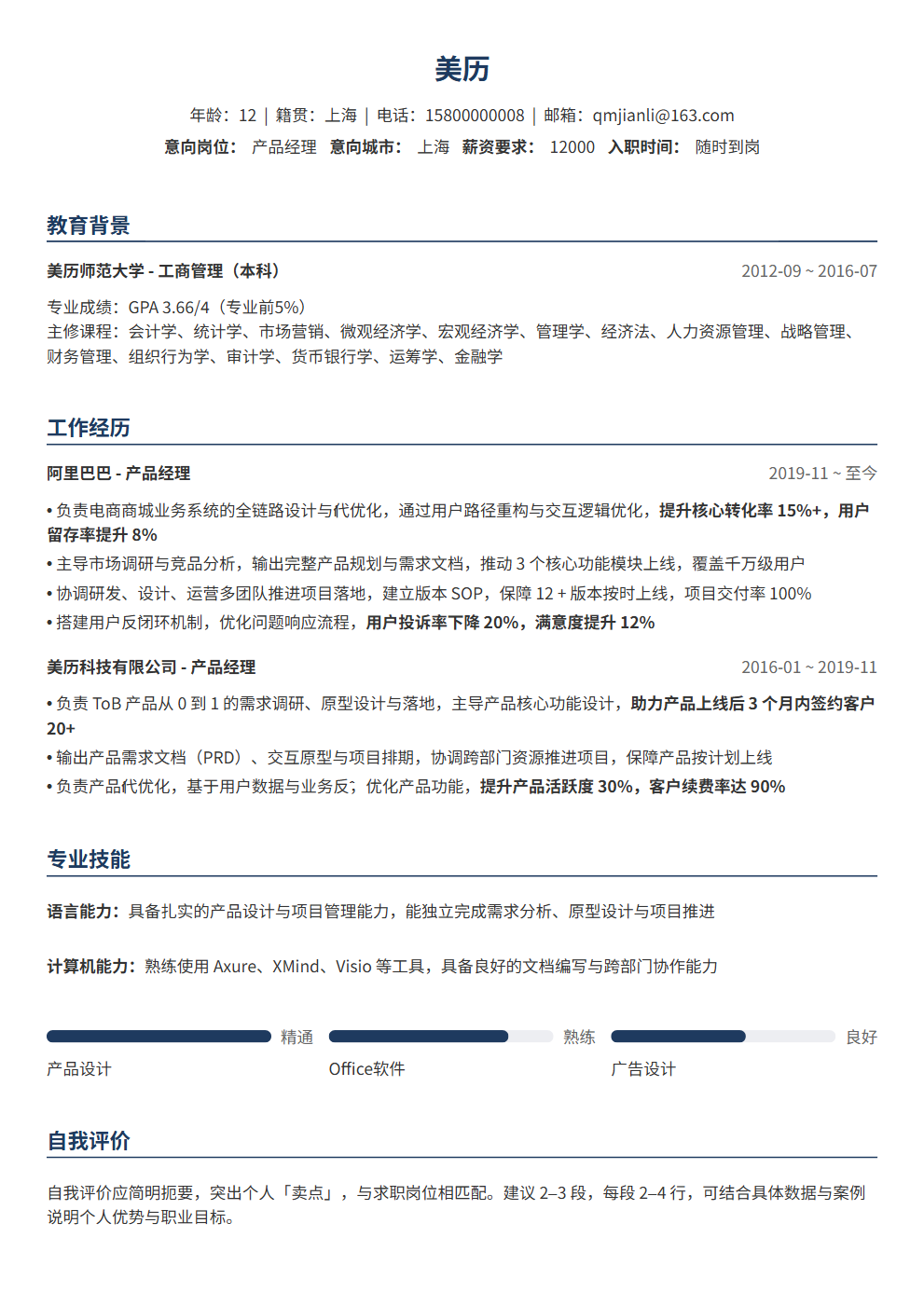
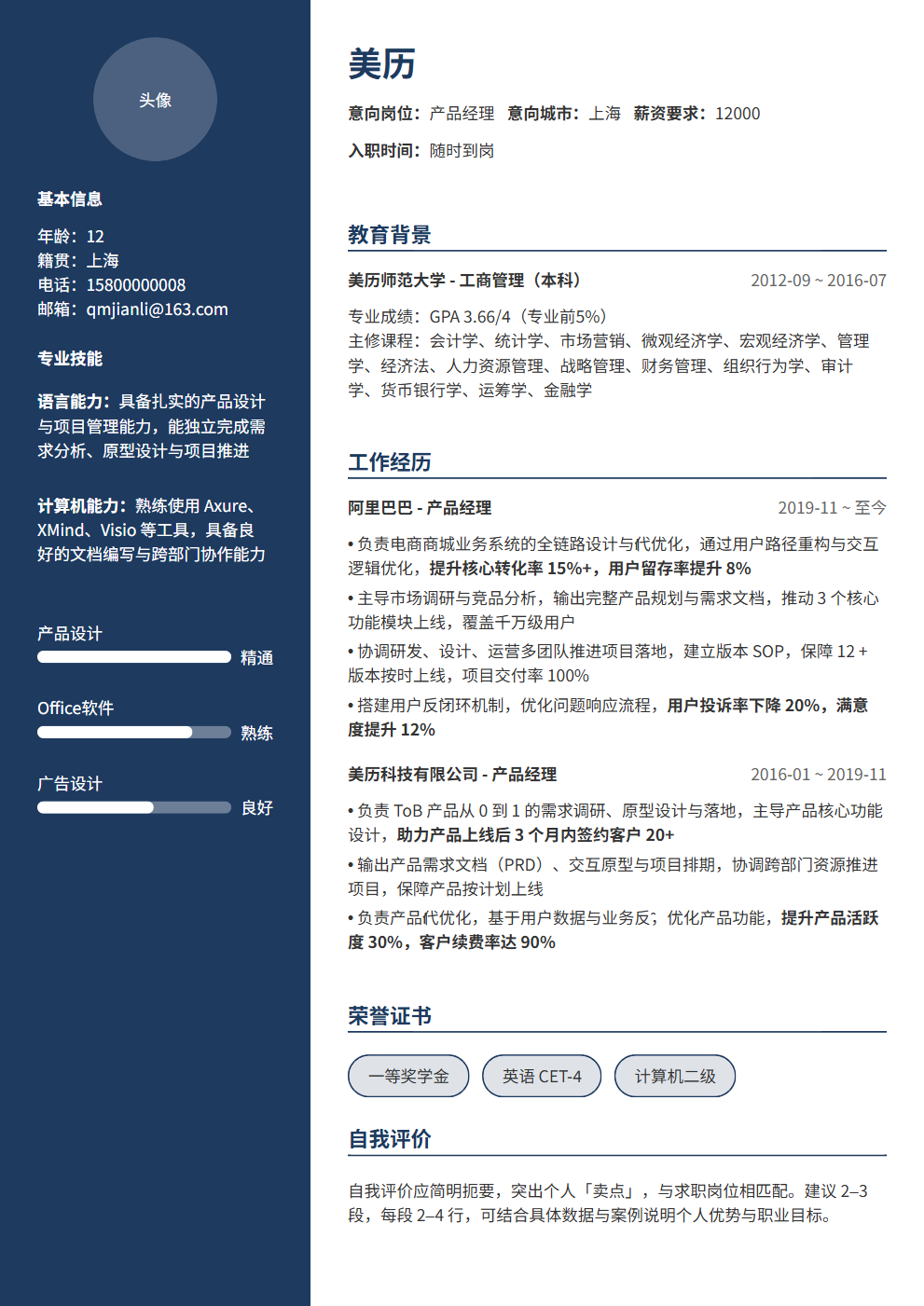
Answering "why join us" requires genuinely understanding the company — just like writing a resume, you need to precisely present your fit with the role in limited expression. Use our resume generator to distill your core advantages onto your resume, so HR forms a positive impression before the interview even starts.
Question 3: What Is Your Greatest Achievement
This question is a "bonus opportunity" in HR interviews — a strong answer can significantly boost the interviewer's assessment of you; a weak one makes them question your capability ceiling.
What HR Is Really Assessing
HR uses your chosen "greatest achievement" to judge your capability ceiling, values, and self-awareness level. What you consider your "greatest achievement" reveals what you find valuable and at what level you can make an impact.
High-Score Framework: STAR Advanced
- Situation: What was the background and challenge?
- Task: What goal did you need to accomplish?
- Action: What specifically did you do? Focus on your decision logic and key actions.
- Result: What outcome was achieved? Quantify with data.
- Reflection: What did you learn? This is the advanced bonus element.
Pitfall Warnings
Don't present team achievements as personal ones: "Our team completed the XX project" — HR wants to know your contribution, not the team's. Use "I" rather than "we" to describe your core contribution.
Don't choose trivial achievements: "I learned XX tool" makes the interviewer think your capability ceiling is very low. Choose achievements that demonstrate your initiative, influence, or complex problem-solving ability.
Don't share results without process: "I helped the company earn 1 million" — how? What were your key decisions? Without process, the interviewer can't judge whether this was skill or luck.
Question 4: What Was the Biggest Difficulty You've Faced
This is a "stress test question" in HR interviews. HR doesn't actually want to hear how miserable you were — they want to see your coping mechanisms, resilience, and growth speed under adversity.
What HR Is Really Assessing
HR wants to understand your resilience, problem-solving ability, and depth of reflection. The difficulty you choose to share reveals your experience level; how you describe your response reveals your thinking patterns; how you summarize and reflect reveals your growth potential.
High-Score Framework: Difficulty + Action + Growth
- Describe the difficulty: Briefly explain what the difficulty was without over-dramatizing.
- Your actions: Focus on what you did to cope — breaking down the problem, seeking resources, adjusting strategy, persisting with execution.
- Your growth: What you learned from this difficulty and how you've applied those lessons since.
Pitfall Warnings
Don't choose interpersonal conflicts: "I had a bad relationship with my boss" — this makes HR question your workplace adaptability. Business challenges, resource constraints, technical problems are safer choices.
Don't play the victim: "It was all someone else's fault," "The company didn't provide resources" — this attribution style makes HR think you lack accountability. Even if external factors existed, emphasize what you did within the constraints.
Don't choose minor difficulties: "Once I worked late" — that's not a difficulty, that's normal work. Choose challenges that genuinely test your abilities.
Question 5: Have You Had Conflicts with Colleagues
This is an "EQ test question" in HR interviews. The right answer is "Yes, but I handled it well" — you can't say no (too fake) or describe something severe (too dangerous).
What HR Is Really Assessing
HR wants to understand your communication style, conflict resolution ability, and team collaboration awareness. Workplace conflicts are inevitable; the key is how you handle them. Someone who can't manage conflict is a liability to any team.
High-Score Framework: Conflict + Communication + Consensus
- Describe the conflict: Objectively state the point of disagreement without emotion or evaluating the other person.
- Your communication: How you proactively communicated, put yourself in their shoes, and sought common goals.
- Final consensus: How you reached agreement and what the outcome was.
Pitfall Warnings
Don't say "no conflicts": It's impossible to have zero disagreements in the workplace. Saying none only makes HR think you're either dishonest or lack social awareness.
Don't belittle the other person: "He was too stubborn," "She was incompetent" — even if true, don't evaluate others in an interview. HR takes a neutral stance; belittling others makes you appear unprofessional.
Don't describe severe conflicts: Conflicts involving moral issues, legal problems, or serious personal attacks should never be mentioned. Disagreements about work methods or solution choices are the safest examples.
Question 6: Why Have You Changed Jobs So Frequently
If you've changed companies 3+ times in 3 years, HR will definitely ask this. It's a "stability test question" — answer poorly and you're out.
What HR Is Really Assessing
HR's core concern is you'll leave them quickly too. Frequent job changes signal: poor adaptability, unreasonable expectations, poor interpersonal skills, or lack of career planning. You need to dispel these doubts.
High-Score Framework: Objective Reasons + Active Choices + Current Stability
- Objective reasons: Company closure, business downsizing, organizational restructuring — if applicable, lead with these.
- Active choices: Each move was a step up — bigger platform, more core role, better-aligned direction.
- Current stability: Clearly state that you've now found your clear direction and no longer need to job-hop to explore.
Pitfall Warnings
Don't complain about previous companies: "Bad leadership," "Terrible culture," "Low pay" — these complaints make HR think you'll be dissatisfied everywhere.
Don't say "wanted to try different directions": This tells HR you still lack career planning, and the next job might also just be "trying."
Don't dodge the question: Trying to change the subject or being evasive only makes HR more suspicious of your stability. Face it honestly and provide reasonable explanations.
Question 7: What Are Your Salary Expectations
This is one of the most sensitive questions in HR interviews. Go too high and risk elimination; go too low and risk being lowballed. Many candidates lose out on this question.
What HR Is Really Assessing
HR wants to understand whether your self-valuation is reasonable, whether your expectations fit the budget, and whether your negotiation approach is mature. Salary negotiation isn't just a numbers game — it's a demonstration of communication ability.
High-Score Framework: Range + Basis + Flexibility
- Give a range, not a fixed number: "My expected salary is in the XX-XX range." The lower end is your acceptable floor; the upper end leaves negotiation room.
- Provide basis: "Based on my XX years of experience and XX capabilities, combined with market rates..." Make your expectations well-grounded.
- Express flexibility: "Salary is just one factor I consider; I also value growth potential and platform value." This prevents you from missing opportunities over small salary gaps.
Pitfall Warnings
Don't name a number first: If HR hasn't shared the budget range, try to get them to go first. You can counter-ask, "What's the typical salary range for this position?"
Don't say "whatever" or "per company standard": This makes you appear to lack self-awareness and signals to HR that you're easy to lowball.
Don't focus only on numbers: Salary negotiation is about the total package — bonuses, equity, benefits, promotion paths. Don't fixate solely on base salary.
Every answer in an interview requires careful preparation — the same goes for your resume. Use our resume tool to distill your experience into precise highlights that make HR interested before the interview even starts. A strong resume is the first step to interview success.
Question 8: Are You Looking at Other Opportunities
This is a "loyalty test" in HR interviews. Many candidates don't know how to respond — saying no seems dishonest, saying yes might make HR think you're not committed.
What HR Is Really Assessing
HR wants to understand your market competitiveness, job-seeking status, and level of sincerity. If you have other opportunities in progress, it shows you're a competitive candidate; but if you're mass-applying everywhere without discernment, HR will question your judgment.
High-Score Framework: Honesty + Focus + Preference
- Be honest: "Yes, I'm exploring other opportunities." Honesty is the best policy — HR knows strong candidates don't only look at one company.
- Express focus: "But my current focus is on the XX sector. I haven't applied to many companies, and yours is the one I'm most interested in."
- Emphasize preference: "Compared to other opportunities, I'm particularly drawn to your company's XX aspect." Give specific reasons for your preference.
Pitfall Warnings
Don't say "only looking at you": Unless it's true, don't say this. HR knows strong candidates don't only consider one company; this claim actually makes you seem dishonest.
Don't flaunt other offers: "I already have 3 offers" — this makes HR feel you're negotiating under pressure and they may simply pass on you.
Don't say "looking everywhere": This makes you appear directionless and lacking in judgment. Even if you've applied broadly, express that you have clear screening criteria.
Question 9: Do You Have Any Questions for Me
This is the "closing question" in HR interviews, and a bonus opportunity most people waste. 90% of candidates either say "no questions" or ask "when will I hear back." Both responses are missed opportunities.
What HR Is Really Assessing
HR wants to understand how seriously you're taking this role, what you care about, and how deeply you've thought about it. The questions you ask reveal what matters to you and what you've been thinking about. Someone with zero questions either hasn't seriously considered the role or lacks curiosity.
High-Score Framework: 2-3 High-Quality Questions
- About the role: "What's the most important goal for this position in the next 6 months?" — Shows you've thought deeply about the role.
- About the team: "What's the current team size and collaboration style?" — Shows you care about team fit.
- About growth: "What does the promotion path look like for this position?" — Shows your long-term development interest.
Pitfall Warnings
Don't say "no questions": This tells HR you haven't seriously thought about the role. Prepare at least 2-3 questions.
Don't ask about compensation and benefits: Proactively asking about salary, overtime pay, or vacation days in an HR interview makes you appear solely interested in perks. These can be discussed during the offer stage.
Don't ask information available online: "What does the company do?" — This question shows you haven't done basic research.
Question 10: When Can You Start
This is a "signal question" in HR interviews — when HR asks this, it usually means you've passed the interview and they're entering the process evaluation phase. But a poor answer can still derail things.
What HR Is Really Assessing
HR wants to confirm whether your availability matches business needs. Some positions are urgent — if you need 3 months to start, they may pass. HR is also evaluating your professionalism — whether you handle resignation and handover properly.
High-Score Framework: Clear Timeline + Reasonable Cause + Positive Attitude
- Clear timeline: Give a specific start date range, e.g., "Earliest in 2 weeks" or "The 1st of next month."
- Reasonable cause: If you need more time, explain why — "I need to complete the handover for my current project."
- Positive attitude: "If needed, I can start learning about the business in advance." Show your enthusiasm.
Pitfall Warnings
Don't say "anytime": If you're currently employed, saying "anytime" makes HR wonder if you'd leave them just as carelessly. It also suggests you're irresponsible toward your current employer.
Don't delay too long: If you need more than 1 month, proactively explain why and express flexibility. Excessive waiting may cause HR to move to other candidates.
Don't be vague: "Maybe around XX time," "Not sure yet" — vague answers make HR think you're not serious or have other concerns.
3 Hidden Scoring Criteria in HR Interviews
Beyond the content of your answers, HR is observing 3 scoring dimensions you might not notice:
1. Logical Consistency
HR cross-references all your answers together. If you say "I value growth most" in your introduction but only care about money in the salary discussion; or you claim "I'm very stable" but have changed companies 4 times in 3 years — this kind of contradiction costs you points directly. Ensure all your answers convey consistent messaging.
2. Emotional Stability
HR deliberately asks "uncomfortable" questions — about frequent job changes, being fired, below-market salary, etc. They're not trying to make things difficult; they're observing your emotional response under pressure. If you get angry, defensive, or start complaining, HR will conclude you lack emotional management skills. Staying calm, objective, and positive is fundamental to HR interview success.
3. Fit Over Excellence
HR interviews don't select the most outstanding person — they select the best-fitting person. A candidate scoring 80 on ability but highly aligned with team culture is more likely to pass than someone scoring 95 but clashing with the environment. When answering questions, don't just showcase "how impressive I am" — demonstrate "how well I fit."
FAQ
How long do HR interviews typically last?
Usually 30-45 minutes. If an HR interview exceeds 1 hour, either the interviewer is particularly interested and digging deeper, or the process has gone off track. If it ends in under 15 minutes with no obvious interest from the interviewer, you may have been preliminarily eliminated.
Can I ask about salary in an HR interview?
It's not recommended to proactively bring up salary unless HR mentions it first. The core of HR interviews is values and fit assessment; bringing up salary proactively makes you appear overly transactional. If HR asks about your salary expectations, use the framework described earlier.
Which is harder — HR interviews or technical interviews?
The difficulty types differ. Technical interviews have "hard difficulty" — you either know it or you don't; HR interviews have "soft difficulty" — there are no standard answers, but many landmines. Many people think HR interviews are easy, precisely because they don't understand the elimination logic. Poor technical answers might still leave room; stepping on an HR landmine often means instant elimination.
Should I pay attention to dress code for HR interviews?
Yes. Attire is the first signal HR uses to evaluate your professionalism. You don't need a suit and tie, but at minimum be clean, neat, and appropriate. Business casual works for tech companies; formal attire is safer for finance or consulting.
How long after an HR interview should I expect results?
Typically 3-7 business days. If you haven't heard back after 2 weeks, you can follow up. Keep your follow-up polite and professional — don't pester. If HR says they "need to evaluate comprehensively," it usually means you're in the candidate pool but not the top priority.
The core logic of HR interviews is "fit first" — which is exactly the same logic as writing a resume. A strong resume doesn't pile on every experience; it precisely presents your alignment with the target role. Use our resume tool to craft your resume as carefully as you'd prepare for an HR interview, so that before they even meet you, the interviewer is convinced — you're the best fit.