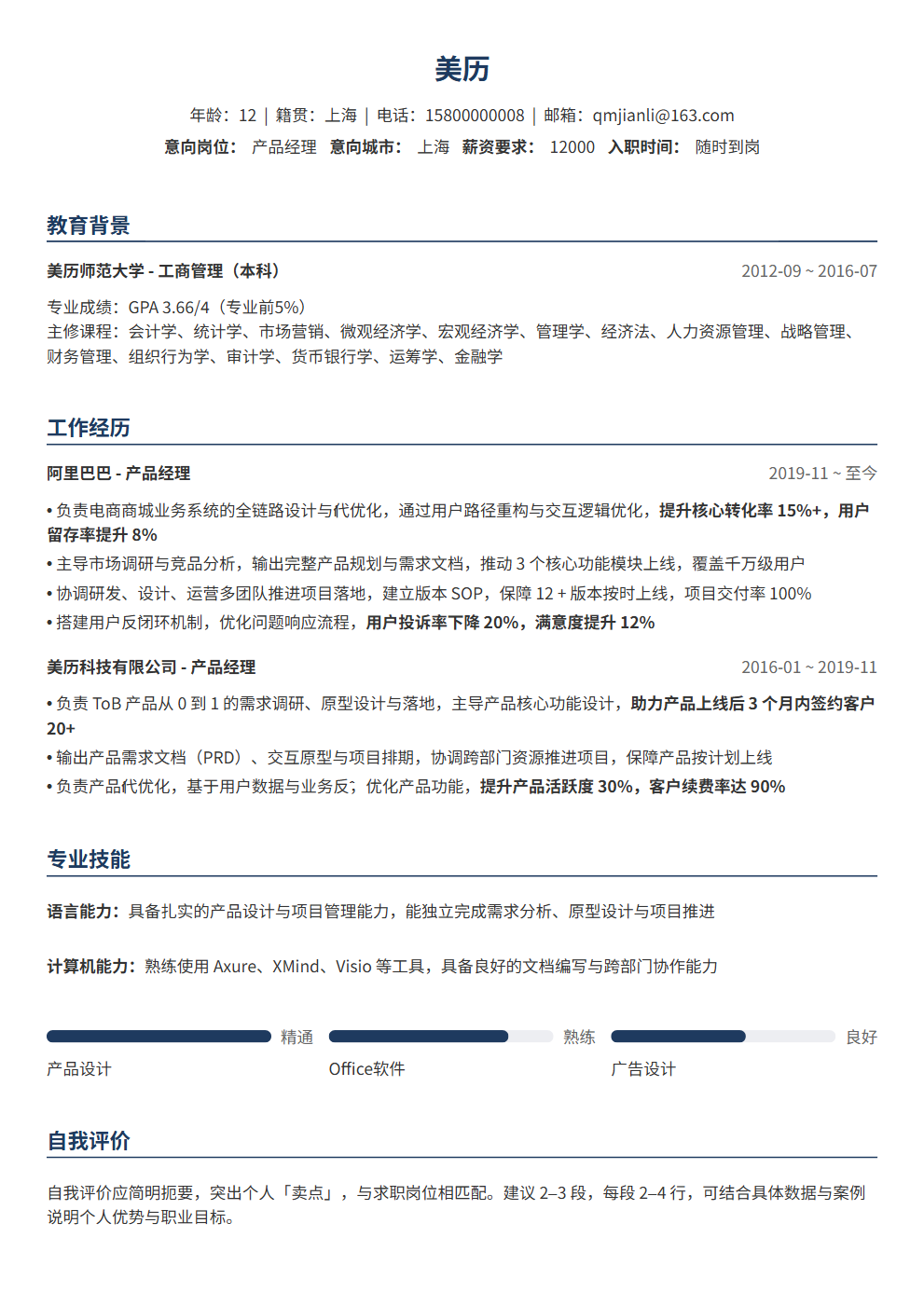
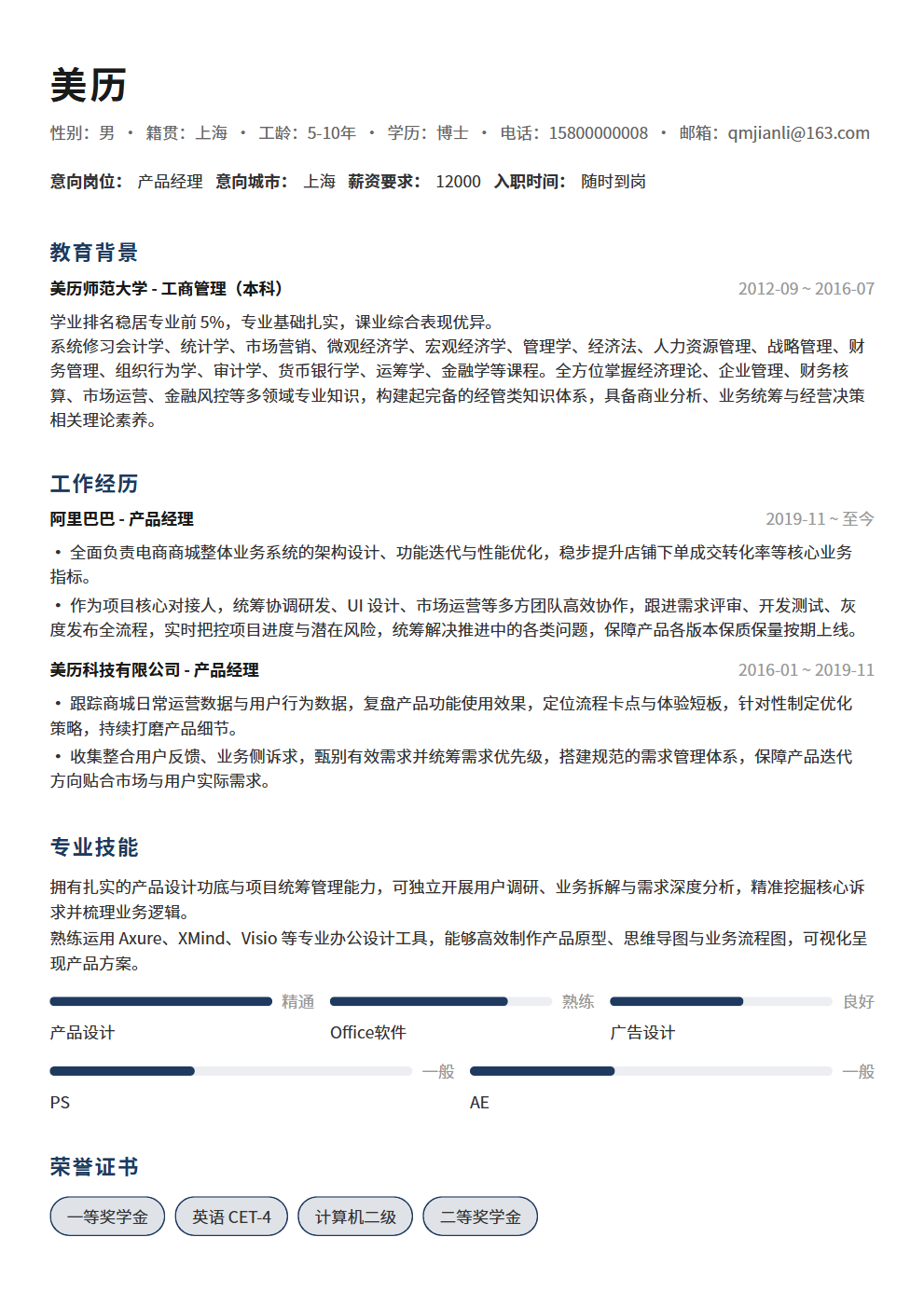
How to Write a Resume That Passes Big Tech Screening: From 8 Rejections to 80% Pass Rate
From 8 rejections to 80% pass rate — sharing 5 resume optimization methods including structure optimization, STAR method, data quantification, JD keyword matching, and formatting tips, with before-and-after comparisons.
From 8 Rejections to 80% Pass Rate: My Resume Optimization Journey
Let me start with the conclusion: a resume isn't written, it's rewritten. My first version went out to 8 companies — all rejected, not even a single interview invitation. After two months of relentless refinement, the same background achieved an 80% pass rate. Today I'm sharing my complete methodology so you can avoid the same mistakes.
Background: The Despair of 8 Rejections
In March 2023, I decided to job-hop. I was a frontend developer at a mid-size company with 3 years of experience, and I thought my skills were solid. I spent a weekend writing my resume and confidently applied to 8 companies — ByteDance, Alibaba, Tencent, Meituan, Kuaishou, Xiaohongshu, Pinduoduo, and NetEase. The result? 8 rejection letters, not even a phone screening.
I was devastated. A friend at ByteDance looked at my resume and said just one thing: "HR scans this for 3 seconds and tosses it." That's when I realized the problem wasn't my ability — it was that my resume failed to express it.
1. Resume Structure Optimization: Projects > Skills > Education
My Original Resume Structure
The order was: Personal Info → Education → Skills → Work Experience → Project Experience. Seems normal, right? The problem was that what HR and interviewers care about most — project experience — was buried at the bottom, written like a laundry list.
Optimized Resume Structure
New order: Personal Info → Project Experience → Work Experience → Skill Highlights → Education. Why? Because big tech HR spends only 6-10 seconds per resume. You must put the most compelling content first.
Two key changes to the project section:
First, only include your top 3 projects. I used to list 6, resulting in shallow descriptions for each. Cutting to 3 let me go deep on each one, which was far more convincing.
Second, use a "one-line summary + 3-4 bullet points" structure. The summary explains what the project is and what problem it solves; the bullets detail what you did, what tech you used, and what results you achieved.
2. STAR Method for Projects: From Laundry List to Story Arc
What Is the STAR Method
STAR stands for Situation, Task, Action, Result. Originally an interview answering framework, it works equally well for writing project experience on resumes.
Before Optimization
"Responsible for company website redesign, rebuilt with Vue3 + TypeScript, improved page performance."
What's wrong with this? No context, no specific task, no quantified results. Interviewers only know you did something, not how difficult it was or how well you did it.
After Optimization
"S: Company website had a 4.2s first-screen load time and 62% bounce rate. T: As frontend lead, needed to complete redesign within 2 months, targeting sub-1.5s load time. A: Led tech selection, rebuilt with Vue3 + TypeScript, implemented SSR, code splitting, lazy loading, and set up CI/CD pipeline. R: First-screen load dropped to 1.1s (74% improvement), bounce rate fell to 38%, page PV increased 45%."
See the difference? The same thing, but the STAR method turns it into a story with a beginning, middle, and end. Interviewers immediately understand what you did, how you did it, and the impact.
3. Quantify Results with Data: Numbers Are 100x More Powerful Than Adjectives
Common Quantification Dimensions
I created a "quantification checklist" that I reference every time:
Performance: Load time, response time, QPS, memory usage — "First-screen load from 4.2s to 1.1s"
Business: Conversion rate, DAU, GMV, retention rate — "Payment conversion up 23%, monthly GMV increased by 8M"
Efficiency: Dev efficiency, build time, deploy frequency — "Build time from 8min to 2min, deploy frequency from weekly to daily"
Scale: Code volume, team size, user base — "Managed 5-person frontend team, responsible for core business with 5M daily PV"
Before and After Quantification
Before: "Improved page performance" → After: "First-screen load time reduced by 74%, LCP from 4.2s to 1.1s"
Before: "Improved development efficiency" → After: "After building component library, new page dev time from 3 days to 0.5 days"
Before: "Participated in important projects" → After: "Led payment system refactoring, supporting 500K daily transactions, error rate reduced 90%"
Remember: a resume without data is self-congratulation; a resume with data is evidence.
4. Keyword Matching with JD: Get Past ATS First
What Is ATS
Big tech companies almost universally use ATS (Applicant Tracking System) to screen resumes. Your resume goes through the machine before it reaches a human. If keywords don't match, HR never sees your resume.
My Keyword Matching Method
Step 1: Deconstruct the JD. Extract all technical keywords from the target job description. If a frontend JD mentions "Vue3, TypeScript, Micro Frontend, Performance Optimization, SSR, CI/CD," these must appear in your resume.
Step 2: Natural integration. Don't just stuff keywords — weave them into project descriptions. Instead of "Familiar with Vue3," write "Refactored XX module using Vue3 Composition API."
Step 3: Synonym coverage. Some technologies have multiple names — cover them all. For example, "微前端" and "Micro Frontend," "性能优化" and "Performance Optimization."
Real Results
I once applied to ByteDance with "前端性能优化" on my resume, but the JD said "Web Performance." After changing the keyword, I got an interview invite the next day. Sometimes it's not that you're not good enough — you're just using the wrong words.
5. Layout and Formatting Tips: Make Your Resume Look Professional
Layout Principles
One-page rule: For developers with 3-5 years of experience, keep it to one page. HR won't flip to page two.
Font and spacing: Use Microsoft YaHei or Source Han Sans for Chinese, Arial or Helvetica for English, 10-12pt font size, 1.2-1.5x line spacing.
Bold key points: Use bold for key metrics, core technologies, and important achievements to guide the interviewer's eyes.
Keep it simple: No colors, no photos (unless applying to foreign companies), no weird templates. Clean and professional is best.
Format Details
Always submit as PDF, never Word. Name the file as "Name-Position-Years," e.g., "Zhang San-Frontend-3Years." These small details genuinely affect first impressions.
Interview Questions Related to Resumes
- "Can you elaborate on the architecture design of this project on your resume?"
- "What was the biggest challenge you faced in this project?"
- "How was this metric calculated? Can you explain the methodology?"
- "Which modules were you responsible for? What did other team members handle?"
- "If you were to redo this project, what would you improve?"
Key Takeaways
1. Your resume is a living document. Tailor it for every company based on the JD. I eventually maintained 3 versions for 10 applications.
2. Peer review beats self-assessment. My resume went through 7 revisions, each reviewed by different friends. Outsiders spot problems you can't see yourself.
3. Data must be truthful and verifiable. Don't fabricate metrics — interviewers will catch on when they probe. Use "approximately" if you lack precise numbers, but provide reasonable estimates.
4. Project experience matters 10x more than skill lists. Skill lists are for keyword matching; what truly impresses interviewers is what you've done and how well you did it.
5. Resume optimization is ongoing. After each interview, adjust your resume based on what the interviewer focused on. My final version was practically a complete rewrite from the first.
FAQ
Q: Should I include a photo on my resume?
Not recommended for Chinese tech companies — it can introduce bias. For foreign companies or traditional industries, a professional headshot is acceptable.
Q: What if I don't have 3 projects?
2 is fine — the key is depth. You can also break one project into different phases or modules, but don't force it.
Q: How should I write the skills section?
Organize by proficiency: Expert / Proficient / Familiar. Only include skills relevant to the target position — no "Proficient in Microsoft Word."
Q: How to explain frequent job changes?
Don't explain on the resume. Address it in interviews when asked. Let your project results speak on paper.
Q: What if my education isn't strong?
Move education to the end. Compensate with project experience and quantified achievements. Big tech cares more about what you can do than where you graduated.