Handling Stress Interviews: 5 Types of Pressure Tests and Counter-Strategies
Decode the real intent behind 5 types of stress interviews, from rapid-fire follow-ups to negative evaluations, with counter-strategies and script templates for each type.
Stress Interviews: The Invisible Test You Can't Afford to Ignore
During the job search process, stress interviews are the环节 many candidates fear most. Interviewers deliberately create a tense atmosphere to observe your reactions and performance under pressure. Data shows that over 60% of big tech interviews include at least one stress testing technique. If you're unprepared, it's easy to underperform at the critical moment. This article breaks down 5 common types of stress interviews, helps you identify the interviewer's real intent, and provides actionable counter-strategies with script templates so you can handle every stress interview with composure.
1. Rapid-Fire Follow-Up Type: Logical Consistency Under Information Overload
The Interviewer's Real Intent
The rapid-fire follow-up is the most common type in stress interviews. The interviewer immediately fires the next question after your answer, giving no time to think, probing deeper into details layer by layer. Their real intent is:
- Testing whether you actually did what you claim — fabricated experiences can't withstand follow-ups
- Evaluating your logical consistency and depth of thinking under information pressure
- Observing whether you'll contradict yourself or change your story under stress
Counter-Strategy
When facing rapid-fire follow-ups, the core principle is don't panic, don't fabricate, don't deflect:
- Slow down: Pause 1-2 seconds before each answer, buy thinking time with "That's a great question"
- Stick to facts: Only share details you've actually experienced; for uncertain points, clearly say "I'd need to verify that"
- Structure your response: Organize answers using the "Context-Action-Result" framework to avoid being led off track
- Actively refocus: When follow-ups drift from the core, use "Returning to the key point" to steer back
Script Template
When being rapidly questioned on details:
"Regarding this project, the core data I mentioned earlier is XX. As for the details you're following up on, my understanding is this — first, ...; second, .... If you'd like more information, I can provide complete details afterward."
Pitfalls to Avoid
- Never make up data on the spot — follow-ups will quickly expose contradictions
- Don't speed up your speech due to nervousness — the faster you talk, the more errors you make
- If you genuinely can't recall a detail, being honest is safer than being vague
2. Negative Evaluation Type: Your Psychological Defense Against Criticism
The Interviewer's Real Intent
The negative evaluation type is when the interviewer directly dismisses your answer, experience, or ability, saying things like "This approach simply won't work" or "Your experience isn't sufficient." Their real intent isn't actually to reject you, but rather:
- Testing your emotional management — whether you easily become emotional
- Evaluating whether you can argue rationally when challenged, rather than rushing to defend
- Observing whether you have the confidence to stand by reasonable positions, or easily cave
Counter-Strategy
When facing negative evaluations, the key is neither submissive nor aggressive — win with reason:
- Acknowledge before adding: Don't directly confront; first validate the reasonableness of their point
- Let facts and data speak: Support your position with specific cases, not emotional arguments
- Show reflective ability: If the issue they raise is valid, admit it openly and explain your improvement direction
- Keep your tone steady: Volume and pace unchanged, body language not shrinking
Script Template
When the interviewer dismisses your approach:
"The perspective you've raised is indeed important — I considered this risk when designing the solution as well. The approach I chose was the optimal solution under XX constraints, specifically... Of course, if conditions permit, I would also consider the direction you mentioned."
Pitfalls to Avoid
- Don't rush to rebut, and never show anger or grievance
- Don't completely overturn your own answer just because it was criticized — this shows a lack of conviction
- Avoid over-apologizing —适度 admitting shortcomings is enough; don't self-deprecate
3. Silent Pressure Type: The Soundless Psychological Game
The Interviewer's Real Intent
The silent pressure type is the most unsettling form of stress interview. The interviewer remains silent for an extended period after your answer, or continues to stare at you with a scrutinizing gaze. Their real intent is:
- Testing whether you'll over-explain due to awkward silence and expose weaknesses
- Observing your self-control when uncertain about the other party's attitude
- Seeing whether you'll voluntarily retract your previous answer
Counter-Strategy
When facing silent pressure, the core principle is hold steady, don't add, don't retract:
- Accept the silence: After finishing your answer, calmly maintain eye contact with a smile
- Don't fill the void: Don't keep adding due to nervousness — the more you add, the more likely you'll make mistakes
- Graceful closing: If silence exceeds 10 seconds, politely ask "Would you like me to elaborate on any particular aspect?"
- Maintain composure: Don't fidget, touch your face, or constantly adjust your posture due to nervousness
Script Template
When the interviewer stays silent for a long time:
"That concludes my answer to this question. If you're interested in any particular detail, I can elaborate further."
If the interviewer continues to remain silent:
"I'd like to add some context — the core objective of this project was XX, which helps better understand the approach I mentioned earlier."
Pitfalls to Avoid
- The biggest mistake is retracting your answer due to silence — this makes the interviewer doubt your professional confidence
- Don't keep adding content during silence — over-explaining actually exposes weaknesses
- Don't display anxiety, such as repeatedly checking the time or wringing your hands
4. Dilemma Type: The Decision Test When You're Damned Either Way
The Interviewer's Real Intent
The dilemma type is when the interviewer poses questions with no standard answer, such as "Would you choose project deadline or code quality?" or "What do you do when leadership requirements conflict with user interests?" Their real intent is:
- Evaluating your value hierarchy and decision-making logic
- Testing whether you can think dialectically rather than in black-and-white terms
- Observing your ability to weigh trade-offs when there's no perfect answer
Counter-Strategy
When facing dilemmas, the key is don't take extremes — demonstrate your trade-off thinking:
- Refuse either-or: Clearly state this is a question requiring trade-offs, not a binary choice
- Provide a trade-off framework: Explain what conditions and priorities you'd base your decision on
- Give a concrete example: Use real experience to show how you've handled similar trade-offs
- Acknowledge the cost: Honestly state that every choice has a cost — the key is whether it's controllable
Script Template
When asked "Deadline or code quality?":
"I don't think this is an either-or choice. Ideally, both should be guaranteed; when resources are constrained, I'd weigh based on the project phase — for the MVP stage, I'd prioritize core functionality availability while flagging technical debt and creating a repayment plan; for stable operations, code quality priority would increase accordingly. I encountered a similar situation in a previous project..."
Pitfalls to Avoid
- Don't simply pick one side — this shows simplistic thinking
- Don't just say "it depends" and stop — you must provide specific trade-off criteria
- Avoid proposing a "perfect solution" — dilemma questions have no perfect answers by definition
5. Deliberate Provocation Type: The Ultimate Test of Emotional Limits
The Interviewer's Real Intent
Deliberate provocation is the most intense type of stress interview. The interviewer may question your integrity, belittle your background, or even use provocative language, such as "Are you sure your resume isn't inflated?" or "Do you really think someone with your background can handle this role?" Their real intent is:
- Testing your emotional control under extreme pressure
- Evaluating whether you can maintain professionalism without being provoked
- Observing whether your self-awareness and confidence are solid enough
Counter-Strategy
When facing deliberate provocation, the core principle is don't get angry, don't back down, don't be submissive:
- Recognize it as a test: Tell yourself internally "This is a stress interview, not a personal attack"
- Respond to doubts with facts: Prove your capability with specific achievements and data
- Maintain professional demeanor: Steady tone, professional wording, no emotional language
- Show a growth mindset: Acknowledge shortcomings but emphasize learning ability and room for improvement
Script Template
When the interviewer questions your resume:
"I understand your concern. Every experience on my resume is verifiable — for example, the project I led at XX Company delivered XX results, and this information can be verified through XX channels. If you have questions about any specific project, I can elaborate in detail."
When the interviewer questions your capability:
"My background is indeed different from the traditional path, but that difference gives me a unique perspective and capability. For instance, in the XX project, I leveraged XX ability to solve XX problem. Of course, I also have areas for improvement, such as XX, and I'm currently addressing that through XX."
Pitfalls to Avoid
- Absolutely do not lose your temper or lash back — this immediately disqualifies your emotional management
- Don't start self-doubting due to provocation, and never deny yourself on the spot
- If the provocation involves personal attacks or discrimination, you can politely but firmly express your boundaries
Universal Principles for Handling Stress Interviews
Beyond the type-specific strategies, these universal principles apply to all stress interview scenarios:
- Recognize the signals: When you feel the interview atmosphere becoming unusually tense, immediately tell yourself "This is a stress interview" and mentally switch to response mode
- Control physical reactions: Deep breathing, slower speech, maintaining eye contact — these small actions significantly reduce nervousness
- Don't take it personally: The interviewer is testing your stress tolerance, not rejecting you as a person
- Prepare thoroughly: Know your resume and project experiences inside out so you can withstand any follow-up questions
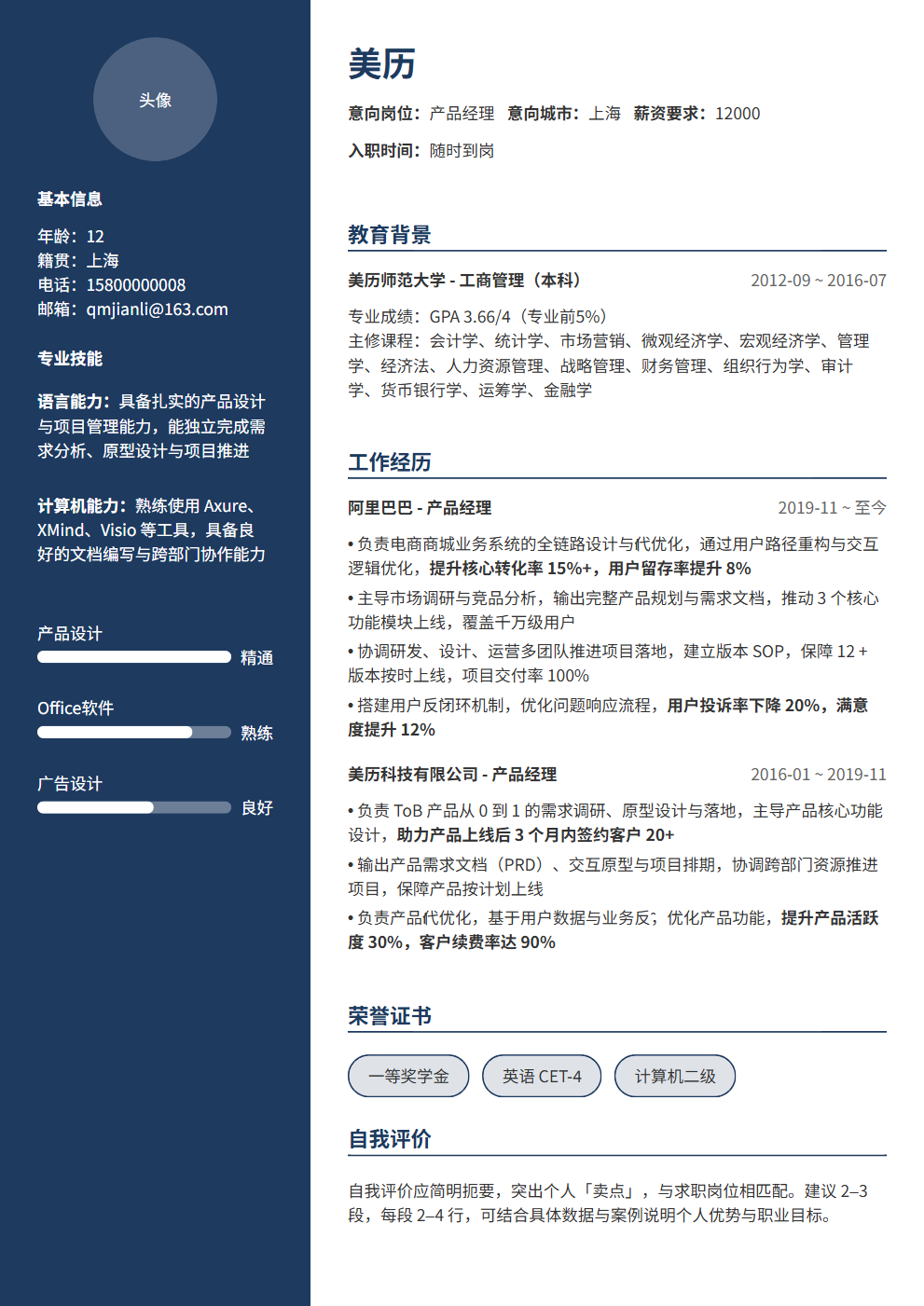
- Leverage resume tools: A well-structured, focused resume helps you prepare better for interviews. A resume generator can help you quickly create a professional resume, building your confidence before the interview even starts
FAQ: Common Questions About Stress Interviews
Q1: How can I tell if it's a stress interview or the interviewer is genuinely dissatisfied?
Look at the pattern, not isolated incidents. If the interviewer only probes deeply on one question, it may be a normal technical discussion; if the entire interview consistently features dismissal, rapid-fire questions, and silence, it's likely a stress interview. Also, big tech companies typically have standardized processes — stress interviews are deliberately designed, not the interviewer's personal behavior.
Q2: What if I actually get angry during a stress interview?
Pause for 3 seconds immediately. Take a deep breath before speaking, and mentally review what you're about to say. If you've already said something emotional, correct yourself right away: "Let me rephrase that —" and return to the factual level. Interviewers value your ability to self-correct, not perfection.
Q3: Do all companies use stress interviews?
No. Stress interviews are more common at big tech companies and high-pressure roles, such as technical positions at internet giants, trading roles in finance, or consultant positions at consulting firms. Regular companies typically focus more on capability assessment without deliberately creating pressure. However, understanding stress interview strategies helps with any interview.
Q4: If I perform poorly in a stress interview, is there still a chance?
It depends on your overall performance. A stress interview is just one component, not the whole picture. If you perform well in technical and project interview rounds, minor mistakes in the stress interview may not affect the final result. The key is to avoid fundamental errors during the stress interview, such as losing emotional control or integrity issues.
Q5: How can I practice handling stress interviews before the real thing?
Mock practice is the most effective method. Have a friend play the "tough interviewer" and deliberately create pressure scenarios for simulation. Meanwhile, prepare your project experiences and core data to ensure they can withstand follow-up questions. Also, using a resume generator to create a logically structured resume is itself excellent interview preparation — when your experiences are presented in a structured way, your confidence during interviews naturally increases.