Finance Interview Mastery: 7 High-Frequency Question Types and Professional Answer Templates
Covering banking, securities, funds, and insurance, this guide breaks down 7 high-frequency finance interview question types with scoring logic, answer frameworks, and pitfall alerts to help you ace your finance career interview.
Finance Interviews: Why You Need a Specialized Guide
Finance industry interviews differ fundamentally from other sectors—they test not only yourtechnical expertisebut also yoursensitivity to macroeconomic trends, depth of risk awareness, and commitment to compliance. Whether you're targeting banking, securities, funds, or insurance, the core logic of finance interviews is consistent:speak with data, think with frameworks, and act within compliance boundaries.
This guide systematically covers7 high-frequency question typesin finance interviews, each withhigh-scoring answer templatesandpitfall alertsto help you demonstrate professional depth and role fit.
1. Industry Awareness and Macro Analysis Questions
1.1 Common Question Formats
- "What is your view on the current interest rate trend?"
- "What is the impact of the recent RRR cut on the banking sector?"
- "Please analyze the structural opportunities in the current capital market."
- "What challenges does the insurance industry face in a low-rate environment?"
1.2 What They Test
Interviewers want to know whether youconsistently follow industry developmentsand can connect macro events to micro-level business implications. The finance industry demands extremely highinformation sensitivity, and these questions directly reveal your daily knowledge accumulation.
1.3 High-Scoring Answer Template
Framework: Macro judgment → Transmission path → Business impact → Personal view
Example: "China is currently in a rate-cutting cycle with LPR continuing to decline. On thetransmission path, bank NIM is under pressure, but credit demand may marginally improve; for securities firms, the low-rate environment favors equity markets, potentially benefiting brokerage and margin financing businesses.My viewis that in the short term, banks need to optimize their liability structure and increase non-interest income share, while securities firms should capitalize on the active market window to grow their client base."
1.4 Pitfall Alerts
- Don't give conclusions without logic—"I think rates will keep falling" carries zero information
- Don't stay at the macro level without grounding—you must connect to specific business and company
- Don't avoid uncertainty—saying "I'd continue monitoring XX indicator" is more professional than guessing
2. Professional Knowledge and Skills Questions
2.1 Common Question Formats
- "Please explain the concept of VaR and its limitations."
- "How do you determine WACC in a DCF valuation model?"
- "How do you identify financial fraud in a company?"
- "What are the main methods for credit risk rating?"
2.2 What They Test
These questions directly assess yourprofessional fundamentals. Finance interviews won't test obscure knowledge, but they will probe yourdepth of understanding of core concepts—whether you can explain principles, identify limitations, and connect to practice.
2.3 High-Scoring Answer Template
Framework: Definition → Core logic → Application scenarios → Limitations/Improvements
Example: "VaR (Value at Risk) is the maximum loss a portfolio could suffer at a given confidence level and holding period.Core logicis estimating tail risk based on historical return distributions.Applications: widely used by banks and funds for market risk limit management.Limitations: first, it assumes normal distribution of returns, underestimating extreme events; second, historical data cannot predict structural changes. In practice, stress testing and scenario analysis are commonly used as supplements."
2.4 Pitfall Alerts
- Don't just recite textbook definitions—interviewers want your understanding, not a dictation
- Don't ignore limitations—pointing out model flaws shows genuine understanding
- Don't speak in generalities—connect to specific business scenarios (bank risk control, securities proprietary trading, fund investment)
3. Case Analysis and Modeling Questions
3.1 Common Question Formats
- "Given a company's financial statements, determine whether it's worth investing in."
- "A bank's NPL ratio is rising—how would you analyze the causes and propose solutions?"
- "Design an annuity product targeting the middle class for an insurance company."
- "How would you build an industry comparison model?"
3.2 What They Test
Case analysis is thecore screening环节in finance interviews. Interviewers focus on yourstructured thinking: whether you can quickly decompose problems, build analytical frameworks, and reach evidence-based conclusions. Modeling questions further testquantitative abilityandlogical rigor.
3.3 High-Scoring Answer Template
Framework: Problem definition → Decomposition dimensions → Analysis methods → Conclusions and risk caveats
Example (bank NPL analysis): "Firstdefine the scope—is the NPL increase across the board or concentrated in specific industries/regions? Thendecompose by dimensions: macro economy (downward cycle, industry policy), bank-specific factors (credit approval standards, post-lending management, client mix), and accounting factors (five-category classification adjustments, write-off timing). Foranalysis methods, I'd compare peer data, conduct time-series analysis, and run stress tests.Conclusionsshould distinguish short-term fluctuations from long-term trends, with caveats on model assumptions."
3.4 Pitfall Alerts
- Don't jump straight to conclusions—showing your thought process matters more than the answer itself
- Don't ignore data limitations—proactively explain how you'd supplement insufficient data
- Don't analyze without deciding—finance requires judgment; give clear recommendations
4. Stress Testing and Scenario Questions
4.1 Common Question Formats
- "If the market drops 30%, how would you respond with your portfolio?"
- "A client asks you to recommend a guaranteed-return product—what do you do?"
- "You discover a colleague's operation involves a compliance violation—how do you handle it?"
- "You find a major model error the day before the project deadline—what do you do?"
4.2 What They Test
The finance industry inherently faceshigh pressure and uncertainty. These questions test youremergency judgment, risk awareness, and compliance boundaries. Interviewers especially watch whether you canstay rational and hold the line under pressure.
4.3 High-Scoring Answer Template
Framework: Identify core risks → Prioritize → Response measures → Post-event review
Example (market crash response): "Firstidentify core risks: portfolio liquidity risk, maximum drawdown exposure, client redemption pressure. Onprioritization, ensure liquidity safety first, then evaluate whether position reduction is needed.Response measures: one, activate the contingency plan and execute stop-loss discipline; two, communicate with clients explaining strategy logic and market assessment; three, review whether the portfolio's risk budget is reasonable.Review: afterward, examine whether model assumptions and stress test parameters need adjustment."
4.4 Pitfall Alerts
- Don't say 'this won't happen'—black swans in financial markets are more frequent than you think
- Don't focus only on technical responses and ignore communication—client and team communication is critical
- Don't be vague on compliance—zero tolerance for violations; your stance must be firm
5. Professional Ethics and Compliance Questions
5.1 Common Question Formats
- "How do you understand the professional ethics of finance practitioners?"
- "When client interests conflict with company interests, how do you handle it?"
- "What is your view on insider trading and front-running?"
- "How do you ensure information barriers in the investment research process?"
5.2 What They Test
Compliance is thelifelineof the finance industry. With tightening regulation in recent years, institutions have unprecedentedly high requirements for practitioners'compliance awareness. These questions aren't testing your moral awakening—they're confirming whether youtruly understand compliance boundaries.
5.3 High-Scoring Answer Template
Framework: Principle stance → Scenario-specific response → Institutional safeguards
Example (conflict of interest): "Principle stance: client interest priority is a fundamental principle for finance practitioners, and it's a core requirement of securities law and industry self-regulation.Specific response: if I identify a potential conflict, I'd report it to the compliance department immediately and follow the company's conflict-of-interest management procedures for recusal or disclosure.Institutional safeguards: I believe it's even more important to build preventive defenses—improving information barriers, strengthening compliance training, and establishing conflict-of-interest review processes to reduce the likelihood of conflicts at the system level."
5.4 Pitfall Alerts
- Don't signal 'flexible handling'—compliance has no gray areas
- Don't focus only on personal awareness without mentioning systems—institutions value whether you rely on systems, not just personal judgment
- Don't dodge the question of reporting colleagues—the correct approach is internal reporting, not looking the other way
6. Team Collaboration and Communication Questions
6.1 Common Question Formats
- "How do you handle disagreements between researchers and portfolio managers in an investment team?"
- "How do you explain complex financial products to non-professional clients?"
- "You encounter resistance in a cross-departmental project—how do you resolve it?"
- "How do you address uneven workload distribution in a team?"
6.2 What They Test
The finance industry heavily relies onteam collaboration and cross-departmental communication. Whether it's discussions within investment teams, negotiations between risk control and business departments, or client-facing communication, you needprofessional expression skills and collaboration awareness.
6.3 High-Scoring Answer Template
Framework: Understand their position → Find common ground → Propose solutions → Drive implementation
Example (explaining products to non-professional clients): "I'dfirst understand the client's needs and knowledge level, then use analogies and scenario-based explanations. For example, when explaining options, I wouldn't start with the Black-Scholes model—I'd use the 'buying insurance' analogy: you pay a premium for coverage, where the option premium is like the insurance premium and the strike price is like the coverage amount.Core principle: ensure clients understand risks, not just returns, achieving genuine suitability matching."
6.4 Pitfall Alerts
- Don't turn a communication question into a technical question—interviewers want to see your communication approach, not technical depth
- Don't ignore the other party's position—understanding before expressing is the prerequisite for effective communication
- Don't just say 'I'll communicate'—provide specific communication strategies and sample talking points
7. Career Motivation and Planning Questions
7.1 Common Question Formats
- "Why did you choose the finance industry?"
- "Do you prefer banking, securities, or funds? Why?"
- "What is your 3-5 year career plan?"
- "What do you think about the overtime culture in finance?"
7.2 What They Test
These questions seem simple but actually test yourself-awareness, industry understanding, and stability. Interviewers want to confirm you're not 'spray-and-pray' applying, but havea clear career direction and reasonable expectations.
7.3 High-Scoring Answer Template
Framework: Intrinsic motivation → Industry choice logic → Milestone goals → Role fit
Example: "Intrinsic motivation: I have a sustained passion for data analysis and risk management, focusing on quantitative approaches since university.Industry choice: I lean toward risk control roles at securities firms or funds, because market risk management is more cutting-edge and demands high quantitative skills, matching my background.Milestone goals: within 1-2 years, solidly master the company's risk control system and become a backbone capable of independently completing stress tests and risk reports; in 3-5 years, I hope to deepen expertise in a specific area (e.g., derivatives risk control) and become a core team member.Fit: your firm's derivatives business expansion aligns closely with my direction."
7.4 Pitfall Alerts
- Don't say 'finance pays well'—this is the most damaging answer
- Don't show ignorance of sub-sectors—at minimum, explain the core differences between banking, securities, funds, and insurance
- Don't plan a career path unrelated to the role—interviewing for securities IB while saying you want to switch to insurance actuarial work signals poor fit
Quick Reference: Interview Focus by Sub-Sector
Different sub-sectors emphasize different question types. Understanding this helps youprepare more strategically:
- Banking: Emphasis on compliance and risk control (Types 2, 5), focusing on credit analysis, regulatory metrics, and AML
- Securities: Emphasis on industry awareness and case modeling (Types 1, 3), focusing on market judgment, valuation modeling, and research frameworks
- Funds: Emphasis on professional depth and stress testing (Types 2, 4), focusing on investment logic, portfolio management, and drawdown control
- Insurance: Emphasis on actuarial work and compliance (Types 2, 5), focusing on product design, solvency, and regulatory policy
Interview Preparation Checklist: From Resume to Practice
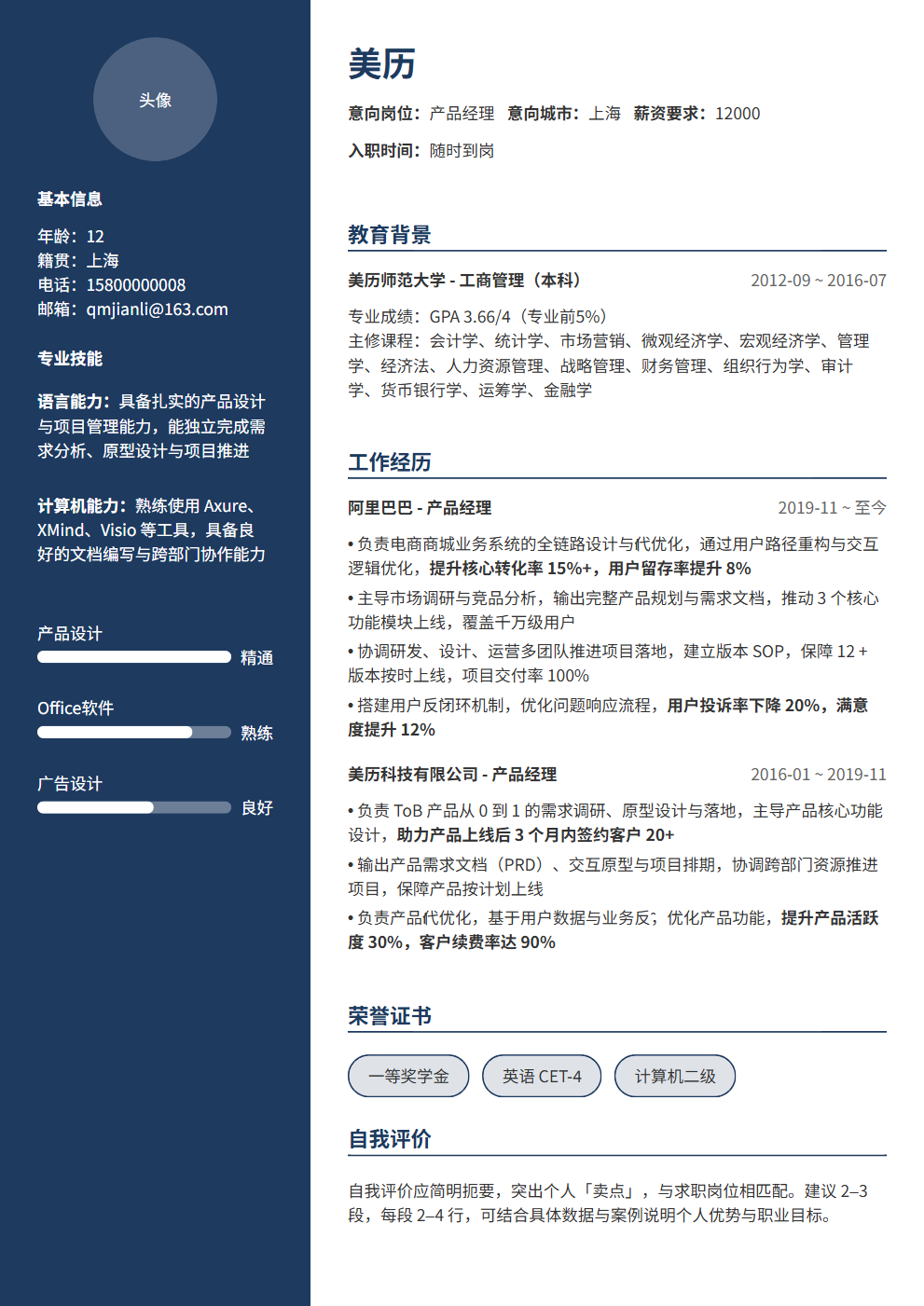
- Polish your resume: Finance resumes should highlight quantitative achievements and professional skills. If you're struggling with your resume, try aresume generatorto quickly create a professionally formatted finance industry resume that lets HR see your core strengths at a glance.
- Build your knowledge framework: Map out core knowledge for your target role, ensuring no blind spots in high-frequency topics.
- Practice mock interviews: Find peers or mentors for mock interviews, focusing on case analysis and stress questions.
- Follow recent developments: Concentrate on financial news and regulatory updates in the week before your interview, ensuring you can discuss current markets.
- Prepare reverse questions: Prepare 2-3 high-quality questions that demonstrate your depth of thought and genuine interest.
FAQ: Common Finance Interview Questions
Q1: Must I wear formal attire to a finance interview?
Yes. The finance industry has very uniform dress code expectations—dark suit, solid-color shirt, leather shoes. Even if the company culture leans casual, you should dress formally for the interview. This is basic respect for industry conventions.
Q2: Can non-finance majors pass finance interviews?
Absolutely. Many financial institutions welcome candidates with cross-disciplinary backgrounds, especiallySTEM + financecombinations. The key is demonstrating your learning ability in finance knowledge and depth of industry understanding during the interview. Consider systematically studying core CFA Level I content or FRM fundamentals beforehand.
Q3: Are there many math calculation questions in finance interviews?
It depends on the role. Investment research, quantitative, and risk control roles will have more calculation and modeling questions; relationship manager and operations roles focus more on communication and business understanding. However, basicfinancial ratio calculations and valuation formulasshould be mastered for all roles.
Q4: How should I prepare for 'cold start' case analysis questions?
When facing unfamiliar cases,don't panic. First confirm the problem boundaries, then use the MECE principle to decompose dimensions and analyze layer by layer. Interviewers value yourthinking frameworkmore than standard answers. Practice exercises like 'given an industry, name 3 investment theses in 3 minutes' regularly.
Q5: What if I'm asked a professional question I can't answer?
Honesty + pivotis the optimal strategy. You can say 'I don't have deep knowledge on this topic yet, but my understanding framework is... and I'd prioritize strengthening this area after joining.' Never bluff—finance interviewers can typically see through it with one or two follow-up questions.