DevOps and Operations Interview Core Topics: High-Frequency Questions and Answer Frameworks Across 7 Modules
Covers 7 core modules of DevOps and operations interviews, with high-frequency topics and answer frameworks per module, SRE vs DevOps role differences, and hands-on question strategies.
DevOps and operations interviews cover an enormous scope — from Linux fundamentals to Kubernetes orchestration, from CI/CD pipelines to security and disaster recovery. Interviewers typically cross-examine across multiple modules to assess a candidate's systems thinking. This article organizes 7 core modules of DevOps and operations interviews, with high-frequency topics and answer frameworks for each module to help you prepare systematically.
1. Linux Fundamentals: The Mandatory Foundation
Linux is the foundation of all operations work. Interview questions typically progress from command-line operations to kernel principles — the more senior the role, the deeper the questions go.
1.1 High-Frequency Topics
- Process management: Process vs. thread differences, zombie and orphan processes, signal mechanisms
- File systems: inode and block, soft vs. hard links, file permission models
- Network configuration: TCP three-way handshake and four-way termination, netstat/ss commands, iptables rules
- Performance analysis: Use cases and metric interpretation for top/htop, iostat, vmstat, sar
1.2 Answer Framework
Use the "Symptom → Cause → Tool → Solution" four-step method for Linux questions:
- Example: Server CPU usage spikes to 100% — what do you do? → Use top to identify the high-CPU process → Analyze whether it's user-space or kernel-space (us/sy ratio) → For user-space, use perf to analyze hot functions; for kernel-space, use strace to trace system calls → Optimize code or adjust system parameters based on findings
2. Containers and Kubernetes: The Core of Cloud-Native
Containerization and K8s have become the absolute centerpiece of DevOps interviews — nearly all mid-to-senior roles will probe deeply.
2.1 High-Frequency Topics
- Docker core: Image layering principles, Dockerfile best practices, multi-stage builds, container network modes
- K8s architecture: Control plane components, etcd's role, kubelet and kube-proxy responsibilities
- Workloads: Pod lifecycle, Deployment rolling update strategies, StatefulSet vs. DaemonSet use cases
- Services and networking: Service types, Ingress controller selection, NetworkPolicy, CNI plugin comparison
- Storage: PV/PVC/StorageClass, CSI interface, persistent data backup strategies
2.2 Answer Framework
Use "Architecture Understanding → Problem Diagnosis → Solution → Optimization Practice" for K8s questions:
- Example: Pod stuck in CrashLoopBackOff — how to troubleshoot? → Check Pod events (kubectl describe pod) → Check container logs (kubectl logs --previous) → Analyze exit codes (OOMKilled/Exit Code 137 means increase resource limits; Exit Code 1 means check application startup logic) → Adjust resource configuration or fix the application based on root cause
3. CI/CD: The Core Practice of DevOps
CI/CD is where DevOps philosophy meets implementation. Interviews test not just tool usage but engineering thinking in pipeline design.
3.1 High-Frequency Topics
- Pipeline design: Multi-environment deployment strategies, pipeline-as-code, artifact management
- Toolchains: Jenkins Pipeline vs. GitLab CI vs. GitHub Actions — comparison and selection
- Quality gates: Code scanning, unit test coverage, security scanning integration
- Deployment strategies: Blue-green deployment, canary releases, rolling updates — implementation and rollback
3.2 Answer Framework
Use "Requirements Analysis → Architecture Design → Implementation Details → Metrics and Optimization" for CI/CD questions:
- Example: How to design a CI/CD pipeline supporting multi-environment deployment? → Requirements: dev/staging/pre-prod/production, traceable and rollback-capable → Architecture: code commit triggers build → unit tests → image build → push to artifact repo → auto-deploy to dev → manual approval → progressive promotion to production → Implementation: use GitLab CI's environment and rules for environment isolation → Metrics: track build success rate, deployment frequency, mean time to recovery
4. Monitoring and Alerting: The Eyes of Operations
The maturity of your monitoring system directly determines how quickly you detect and resolve incidents. Interviews focus on monitoring design capability and alert management experience.
4.1 High-Frequency Topics
- Monitoring systems: The three pillars (Metrics/Logs/Traces), Prometheus + Grafana + Loki + Jaeger full-stack solution
- Alert design: Alert tiering strategy, alert deduplication and consolidation, on-call rotation mechanisms
- SLO/SLI: Error budget concept, SLO formulation methods, Burn Rate alerting
- Observability: Distributed tracing principles, OpenTelemetry standard, correlation analysis
4.2 Answer Framework
Use "Metric Design → Collection Implementation → Alert Strategy → Continuous Optimization" for monitoring questions:
- Example: How to design monitoring for a microservice? → Metrics: RED method (Rate/Error/Duration) + resource utilization → Collection: Prometheus exposes /metrics endpoint, logs collected via Fluentd to Loki, traces via OpenTelemetry → Alerting: SLO-based Burn Rate alerts, P99 latency threshold triggers → Optimization: regularly review alert noise ratio, retire ineffective alerts, add missing metrics
5. Automation: From Manual to Intelligent
Automation is the core driver of operations efficiency. Interviews assess automation thinking and engineering capability.
5.1 High-Frequency Topics
- Configuration management: Ansible Playbook authoring, role and variable management, idempotency design
- Infrastructure as Code: Terraform core concepts, state management, modular design
- Automation scripts: Shell/Python operations scripts, batch operations, scheduled tasks
- ChatOps: Bot-driven automated operations, approval workflow integration
5.2 Answer Framework
Use "Pain Point Identification → Solution Selection → Implementation Details → Outcome Measurement" for automation questions:
- Example: How to batch-update configurations across 100 servers? → Pain point: manual SSH to each server is slow and error-prone → Selection: Ansible is ideal for config management — no agent needed, Playbooks are version-controllable → Implementation: write role-based Playbooks, use dynamic Inventory, trigger via Jenkins scheduled jobs → Measurement: execution time reduced from 4 hours to 15 minutes, error rate from 5% to 0
6. Cloud Platforms: Architecture Choices in the Multi-Cloud Era
Cloud platform skills are essential for modern operations. Interviews go beyond single-cloud usage to assess multi-cloud strategy and cost optimization.
6.1 High-Frequency Topics
- Major clouds: AWS/Azure/GCP core services (EC2/ALB/S3/RDS equivalents) — usage and selection
- Architecture design: High-availability architecture (multi-AZ/cross-region), auto-scaling strategies, disaster recovery plans
- Cost optimization: Resource utilization analysis, Reserved Instance/Spot Instance strategies, FinOps practices
- Multi-cloud management: Necessity of multi-cloud architecture, unified management platforms, data migration strategies
6.2 Answer Framework
Use "Business Requirements → Architecture Selection → Cost Assessment → Operations Assurance" for cloud platform questions:
- Example: How to design a 99.99% availability cloud architecture? → Requirements: core business cannot be interrupted, RTO < 5 minutes, RPO < 1 minute → Selection: multi-AZ deployment + cross-region disaster recovery, ALB for traffic distribution, RDS primary-replica + read replicas → Cost: Reserved Instances cover baseline traffic, Spot Instances handle elastic traffic → Assurance: automated failover, regular disaster recovery drills, chaos engineering validation
7. Security and Disaster Recovery: The Bottom Line of Operations
Security and disaster recovery are the baseline of operations work — a single security incident can undo all technical achievements. Interviews focus on security awareness and disaster recovery practical experience.
7.1 High-Frequency Topics
- Security baselines: Server hardening, SSH key management, principle of least privilege
- Container security: Image scanning, runtime security, Pod Security Policies/SecurityContext
- Disaster recovery: Backup strategies (3-2-1 principle), failover, disaster recovery drills
- Incident response: Security incident handling procedures, log auditing, forensic analysis
7.2 Answer Framework
Use "Threat Identification → Protective Measures → Detection Mechanisms → Response Procedures" for security questions:
- Example: How to secure a K8s cluster? → Threats: image vulnerabilities, privilege escalation, network attacks → Protection: image scanning + signature verification, RBAC least privilege, NetworkPolicy network isolation → Detection: Falco runtime detection, audit log analysis → Response: auto-isolate anomalous Pods, notify security team, post-incident review and improvement
SRE vs. DevOps Role Differences
Interviewers frequently ask about the difference between SRE and DevOps. Understanding the distinction helps you target the right position:
- DevOps: Focuses on optimizing collaboration between development and operations. Core: CI/CD pipelines and automation toolchains. Goal: shorten delivery cycles
- SRE: Focuses on system reliability and stability. Core: SLO/SLI frameworks and on-call mechanisms. Goal: reduce incident duration and impact
- Common ground: Both emphasize automation, observability, and infrastructure as code
- Interview focus: DevOps roles emphasize CI/CD and toolchains; SRE roles emphasize monitoring/alerting and incident response
Handling Hands-On Questions in Operations Interviews
Operations interviews often include live hands-on segments. Mastering the approach ensures you perform at your best:
- Prepare in advance: Familiarize yourself with common command shortcuts and configure your dotfiles for efficiency
- Think aloud: Narrate your thought process during hands-on exercises so the interviewer understands your troubleshooting logic
- Quick first, deep second: Start with rapid triage directions, then dive into root cause analysis — demonstrate layered thinking
- Use built-in help: When unsure about command flags, use --help or man pages — it's more professional than guessing
Showcase Your Operations Expertise with a Professional Resume
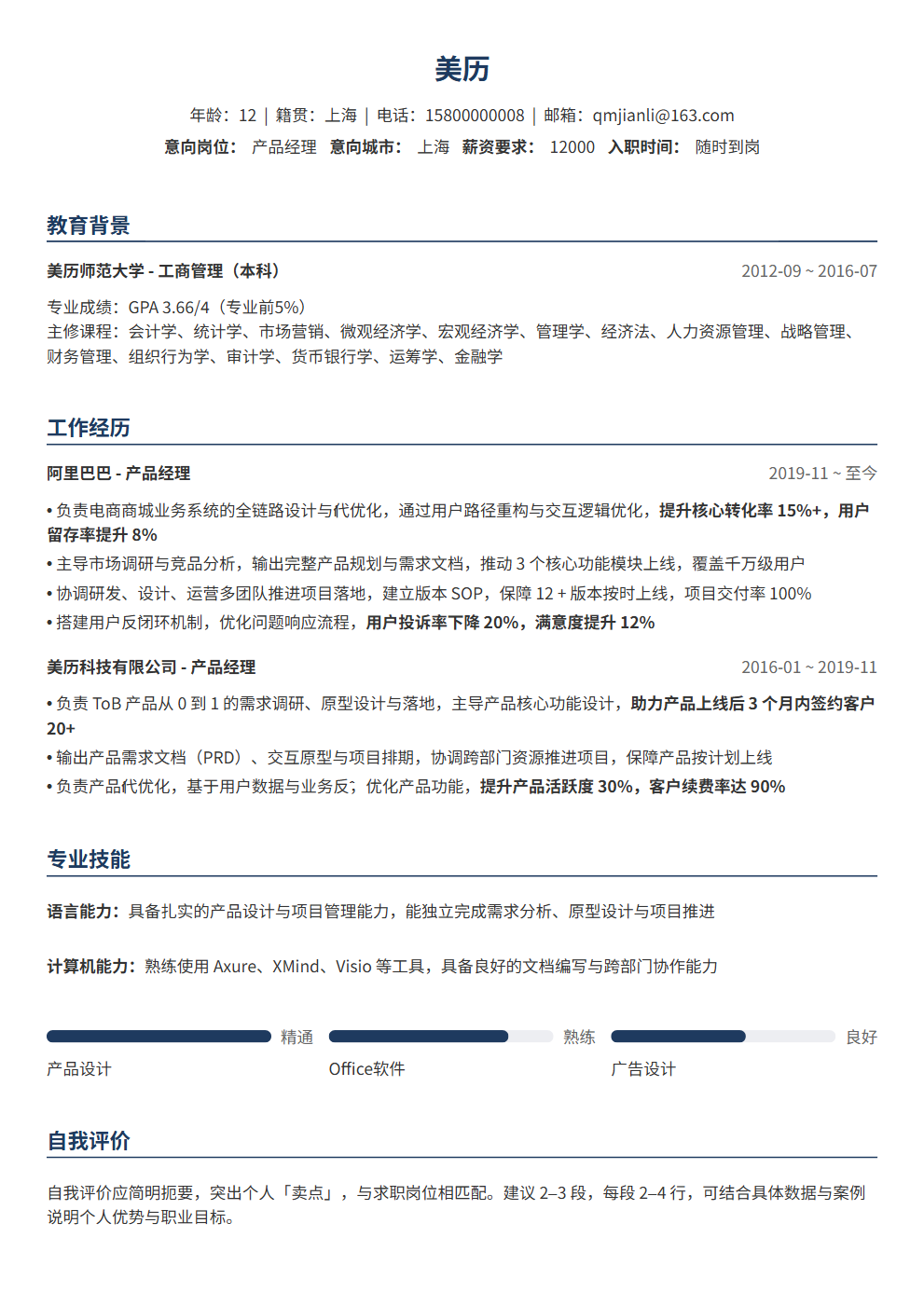
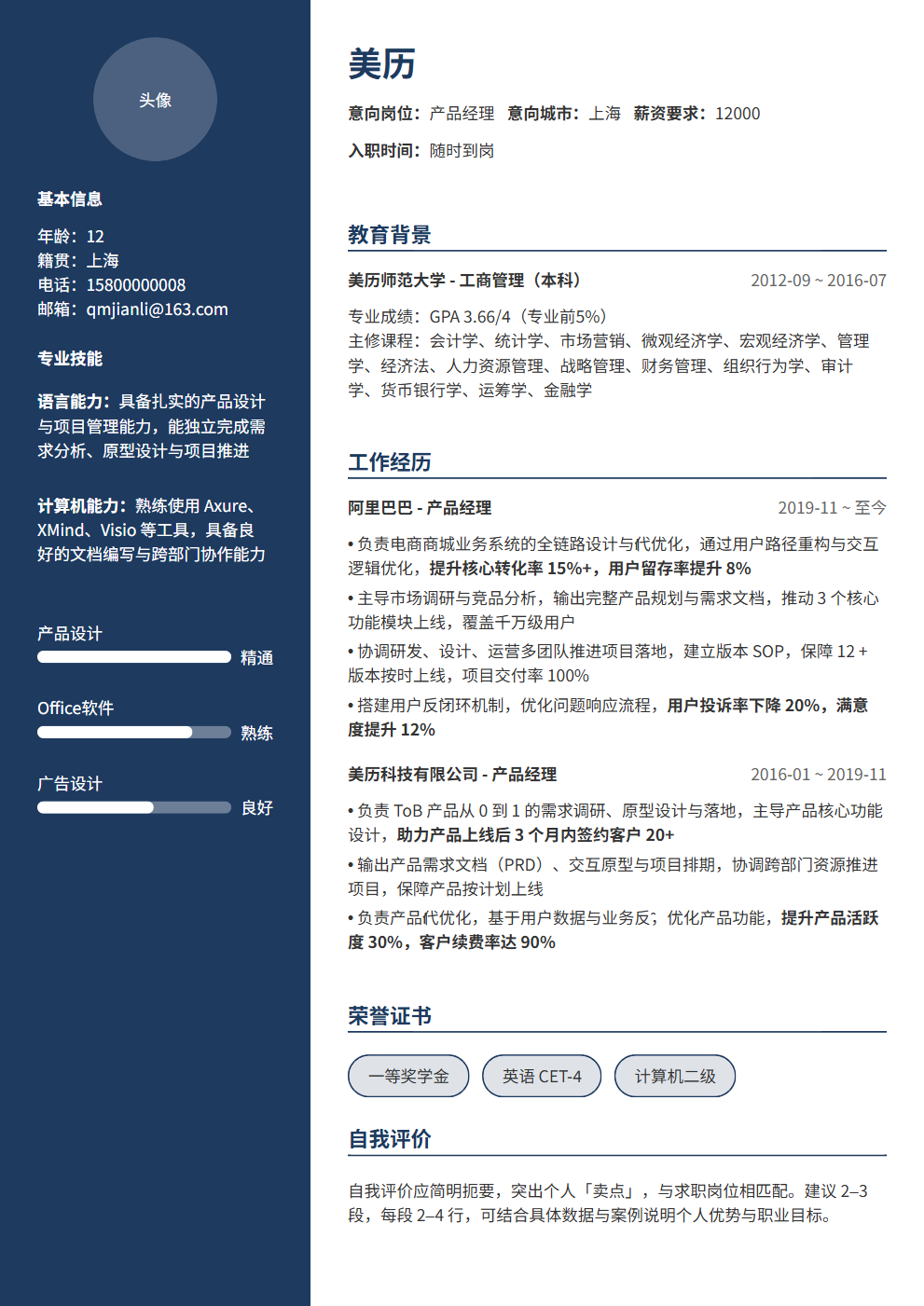
Operations interview hard skills need a professional resume to carry them. Clearly presenting your tech stack depth, project complexity, and incident response experience in your resume helps interviewers quickly recognize your value. We recommend using a resume builder — it offers technical role-specific templates, smart formatting that highlights core skills and project outcomes, and one-click PDF export to help you stand out among operations candidates.
FAQ
Q1: Do I need to know programming languages for a DevOps interview?
Yes. Python and Shell are essential for operations roles, and Go is increasingly important in cloud-native. Interviews typically test your ability to write automation scripts in Python/Shell and read Go code (the K8s ecosystem heavily uses Go).
Q2: What if I don't have large-scale cluster experience?
Compensate with personal lab environments. Use Kind/Minikube to set up a local K8s cluster, Vagrant + Ansible to simulate multi-node deployments, and Prometheus + Grafana for a complete monitoring stack. In interviews, focus on your lab process and lessons learned — demonstrating learning ability and hands-on skills.
Q3: How do I showcase incident response ability in operations interviews?
Use the STAR method to describe incident response experiences: Situation (incident symptoms and blast radius) → Task (your responsibilities and objectives) → Action (troubleshooting steps and solutions) → Result (recovery time and follow-up improvements). Emphasize the systematic nature of your troubleshooting approach, not just "restarting fixed it."
Q4: What's the salary range for DevOps roles?
At top tech companies like Google, Amazon, and Microsoft, DevOps engineer salary ranges: Junior (1-3 years) $90-130K, Mid-level (3-5 years) $130-180K, Senior (5+ years) $180-250K+. SRE roles typically command a 10-20% premium over equivalent DevOps roles due to on-call requirements. Candidates with K8s and cloud-native expertise see significant salary premiums.
Q5: How should I prepare for system design questions in DevOps interviews?
System design questions test holistic architecture thinking. Preparation approach: 1) Practice drawing architecture diagrams, scaling from single-node to distributed; 2) Understand the rationale and trade-offs for each component selection; 3) Prepare solutions for 3-5 common scenarios (high-availability web service, CI/CD pipeline, monitoring system); 4) Focus on scalability, observability, and security dimensions in your design.