Demonstrating Logical Thinking in Interviews: 5 Frameworks for More Persuasive Answers
Master 5 core frameworks for demonstrating logical thinking in interviews, from the Pyramid Principle to MECE, helping you build persuasive answers that convince interviewers.
Why Logical Thinking Is the Hidden Bonus in Interviews
When evaluating candidates, interviewers often value logical thinking ability more than technical details. Whether your answers are structured, self-consistent, and easy to follow directly shapes the interviewer's overall impression. Logical thinking is not an innate gift—it's a skill you can develop through frameworks.
This article introduces 5 classic logical thinking frameworks, each paired with interview scenarios and sample responses to help you build clear, persuasive answers.
Framework 1: The Pyramid Principle — Lead with Your Conclusion
Core Logic
The Pyramid Principle, developed by McKinsey consultant Barbara Minto, centers on stating your conclusion first, then providing reasons, and finally adding details. Like a pyramid, the top holds the core viewpoint, with supporting arguments layered beneath.
The advantage: the interviewer hears your key judgment right away instead of getting lost in a long preamble.
Interview Scenarios
- "How do you see the trends in our industry?"
- "Why do you think you're a good fit for this role?"
- "What's your take on this project?"
Sample Response
Question: Why do you think you're a good fit for this role?
"I believe I'm a strong fit for this role for three main reasons. First, I have 5 years of hands-on experience in this field and have led 3 similar projects. Second, I excel at data-driven analysis—I once boosted conversion rates by 30% through a data-informed strategy. Third, I have a deep understanding of your product direction and can ramp up quickly. For example, at my previous company..."
Conclusion first (good fit), then supporting points (three reasons), then details (specific cases)—that's the Pyramid Principle in action.
Framework 2: MECE — Mutually Exclusive, Collectively Exhaustive
Core Logic
MECE stands for Mutually Exclusive, Collectively Exhaustive. Simply put, when categorizing, aim for "no overlap, no gaps."
In interviews, when you need to analyze a problem or break down a task, the MECE principle makes your thinking comprehensive without redundancy, leaving the interviewer with an impression of rigor.
Interview Scenarios
- "If you were to lead this project, how would you break it down?"
- "What challenges do you think this business faces?"
- "How would you evaluate a market opportunity?"
Sample Response
Question: What challenges do you think this business faces?
"I'd analyze this from two dimensions: internal and external. Internal challenges include talent gaps in the team and accumulated technical debt. External challenges include increasing product homogenization from competitors and stricter regulatory policies. These four areas cover the major risks without overlapping."
The internal/external dichotomy is the most common MECE split—clear and complete.
Framework 3: SCQA Model — Story-Driven Expression
Core Logic
SCQA consists of four elements: S (Situation), C (Complication), Q (Question), and A (Answer). It uses storytelling to guide the listener naturally through your reasoning.
Compared to dry bullet points, SCQA creates suspense and sparks interest, making your answer more engaging and memorable.
Interview Scenarios
- "Tell me about a difficult problem you solved."
- "What's your proudest achievement?"
- "How did you drive a challenging cross-team collaboration?"
Sample Response
Question: Tell me about a difficult problem you solved.
"Situation (S): Last year, my team was responsible for a major e-commerce promotion with a GMV target of 5x our daily average. Complication (C): One week before the event, our core supplier notified us of a capacity shortfall that could leave 30% of products out of stock. Question (Q): How could we still hit our GMV target with limited supply? Answer (A): I took three actions: First, I urgently contacted 3 backup suppliers and secured alternative inventory. Second, I adjusted our operations strategy to shift traffic toward well-stocked categories. Third, I designed a limited-time pre-order mechanism to convert out-of-stock items into pre-sales. We ultimately reached 92% of the target—far exceeding expectations."
SCQA gives your answer a narrative arc—the interviewer can follow it and remember it.
Framework 4: 5W2H Analysis — Comprehensive Thinking, No Blind Spots
Core Logic
5W2H is an acronym for seven questions: What, Why, Who, When, Where, How, and How much.
This framework is ideal for scenarios that require comprehensive planning or in-depth analysis, ensuring your thinking covers all critical dimensions.
Interview Scenarios
- "If you had to build a team from scratch, how would you do it?"
- "How would you create an execution plan for a project?"
- "How would you assess a proposal's feasibility?"
Sample Response
Question: If you had to build a team from scratch, how would you do it?
"I'd plan across 7 dimensions: What—define the team's core responsibilities and deliverables; Why—confirm the business value and goals justifying the team; Who—identify the roles needed and key talent profiles; When—create a phased hiring timeline; Where—determine the team's working model and collaboration setup; How—design workflows and communication mechanisms; How much—assess the budget and expected output. This ensures no critical step is missed."
5W2H transforms your planning answer from "gut feeling" into a systematic approach—the interviewer will immediately recognize your thoroughness.
Framework 5: Dialectical Thinking — Multi-Perspective Analysis for Depth
Core Logic
The core of dialectical thinking is seeing both sides of an issue—acknowledging advantages and risks, short-term impacts and long-term trends. It demonstrates depth of thought and maturity.
Many interview questions have no absolute right or wrong. One-sided arguments can seem shallow; dialectical thinking lets you examine problems from a higher vantage point, showcasing strategic vision.
Interview Scenarios
- "What's your take on remote work?"
- "Will AI replace your job?"
- "Do you prefer working at a large company or a startup?"
Sample Response
Question: What's your take on remote work?
"I see remote work as a double-edged sword. On the plus side, it removes geographic barriers, enabling companies to tap into a broader talent pool. It also eliminates commute times and boosts autonomy and well-being. On the challenge side, it can weaken the efficiency of face-to-face communication, potentially eroding team cohesion and making it harder for new hires to integrate. My view: remote work isn't an either-or choice—it should be flexibly combined based on team maturity and business nature. For instance, core collaboration days in-office and deep-focus days remote, balancing efficiency with flexibility."
Acknowledge, then challenge, then synthesize—the three-part structure of dialectical thinking makes your answer both deep and constructive.
How to Choose the Right Framework
Each of the 5 frameworks has its strengths—picking the right one multiplies your impact:
- Pyramid Principle: Best for quickly stating your position—self-introductions, opinion statements.
- MECE: Best for categorizing or decomposing—problem analysis, solution evaluation.
- SCQA Model: Best for storytelling—project experiences, problem-solving narratives.
- 5W2H Analysis: Best for comprehensive planning—team building, project design.
- Dialectical Thinking: Best for multi-angle analysis—trend judgments, opinion discussions.
In real interviews, these frameworks can also be combined. For example, open with the Pyramid Principle to state your view, use MECE to break down supporting points, and use SCQA to tell a case story—your answer becomes far more multidimensional.
Practice Tips
- Record and review: Record your mock answers on your phone. When you play them back, check whether the logical structure comes through clearly.
- Framework journaling: Pick one framework per day and practice it on an interview question. Two weeks of consistency builds muscle memory.
- Mock with a friend: Have a friend play the interviewer to test your framework skills under pressure.
- Write before you speak: Sketch an outline using a framework on paper first, then express it verbally—logic before language.
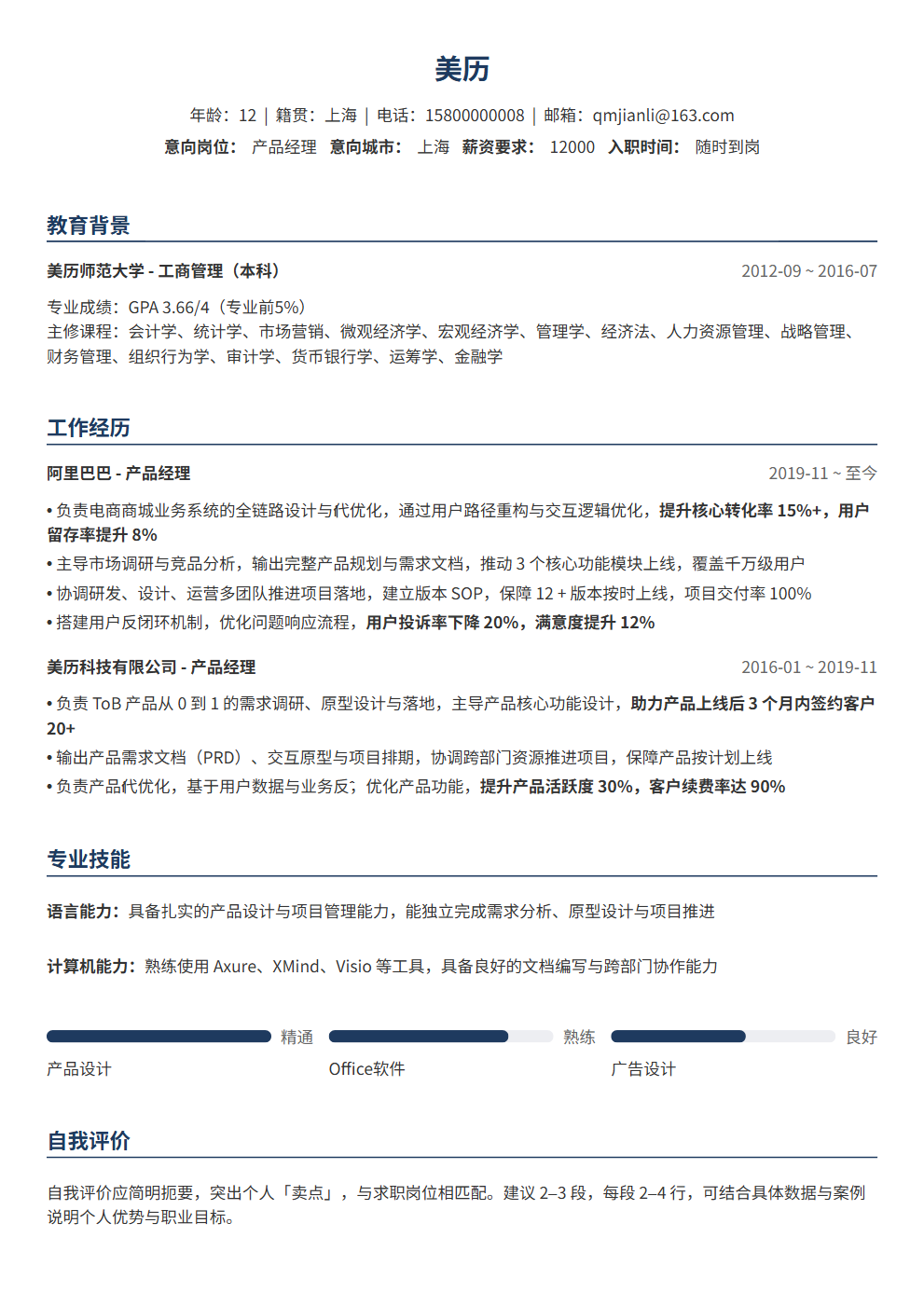
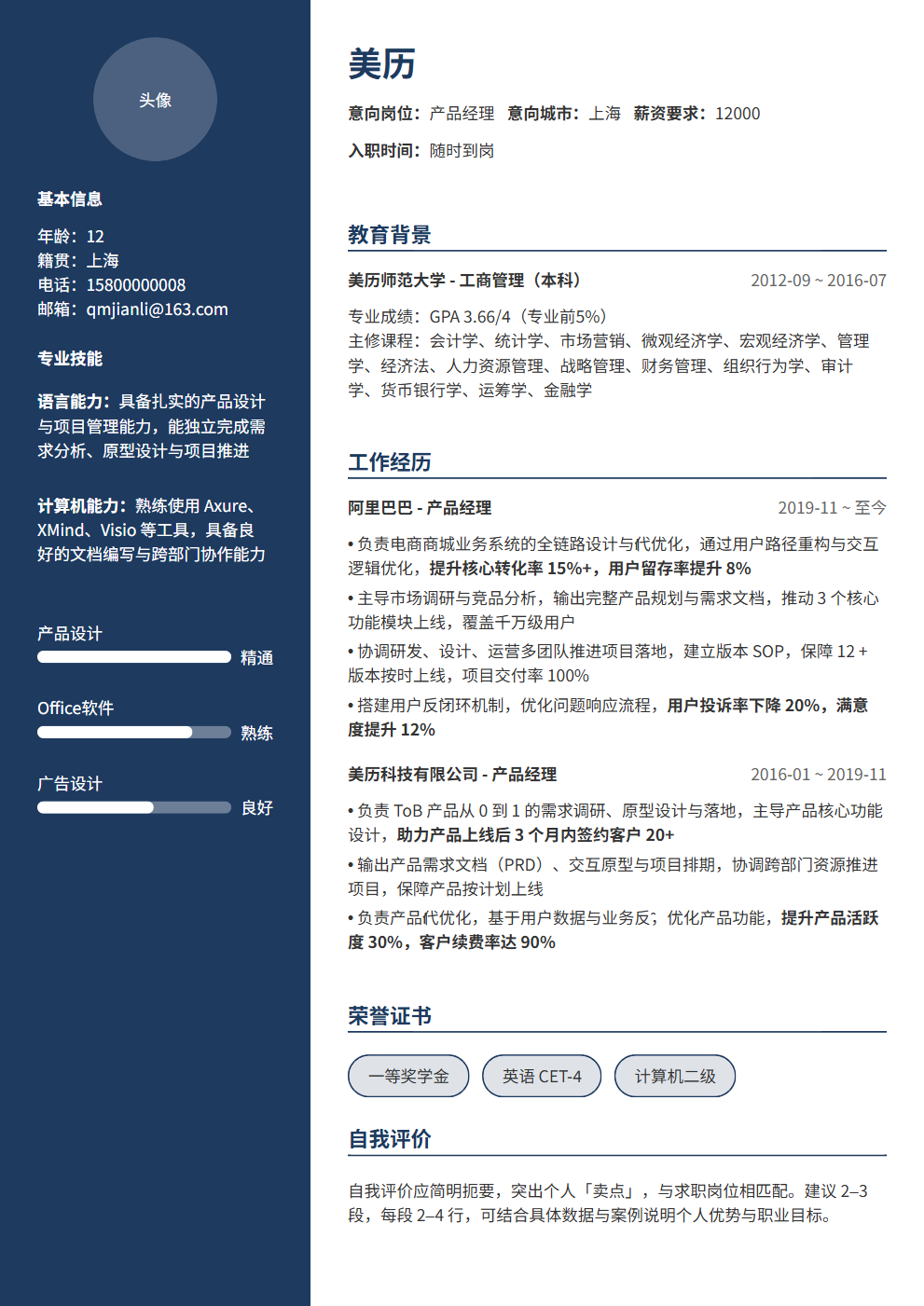
Logical thinking is the most underrated skill in interviews. Master these 5 frameworks, and your answers will evolve from "stream of consciousness" to "structured, deep, and persuasive." Of course, great communication also needs a great resume as your foot in the door—try a resume generator to quickly create a professional resume that showcases your logical thinking from the very first step.
FAQ
Q1: Which matters more in interviews—logical thinking or communication skills?
You need both. Logical thinking is the content; communication is the form. Expression without logic is empty words; logic without expression is invisible. Build your frameworks first, then polish your delivery.
Q2: If the interviewer interrupts me, do these frameworks still work?
Absolutely. The Pyramid Principle's "lead with your conclusion" is designed for exactly this—state your key point first, so even if interrupted, the interviewer has already heard your core judgment.
Q3: Doesn't MECE feel too rigid in a real interview?
Not at all. MECE is a way of thinking—you don't need to announce "I'm using MECE." Just ensure your categories are clear, non-overlapping, and complete. The interviewer will sense your rigor naturally.
Q4: Doesn't dialectical thinking make me seem indecisive?
The key is to reach a conclusion after your analysis. Dialectical thinking isn't "saying both sides equals saying nothing"—it's "making a well-informed judgment after thorough analysis." Always end with a clear personal viewpoint and recommendation.
Q5: Can I use multiple frameworks together?
Yes, and it's recommended. Use the Pyramid Principle for overall structure, MECE to break down arguments, SCQA for case stories, 5W2H for details, and Dialectical Thinking to elevate your viewpoint. Combining frameworks makes your answer more complete and multidimensional.