Decoding Interviewer Follow-Up Questions: 5 Types and Response Strategies
Decode the real intent behind 5 types of interviewer follow-up questions, from detail verification to stress testing, with response strategies and script templates for each type.
Follow-Up Questions: Why They're the Decisive Factor in Interviews
Many candidates think the key to interviewing is "telling a good story," but they overlook the fact that interviewer follow-up questions are when the real judgment happens. After you smoothly deliver your STAR-method narrative, the follow-up questions have only just begun—follow-ups are the interviewer's X-ray machine, revealing the true substance behind your story.
In big tech interviews, follow-up questions often account for over 40% of the evaluation weight. This article systematically breaks down 5 types of interviewer follow-up questions, their real intent, and provides response strategies, script templates, and pitfall alerts for each type—helping you turn a passive moment into an active advantage.
1. Detail Verification Follow-Ups
1.1 Typical Questions
- "How exactly did you do XX?"
- "How did you obtain that data?"
- "Can you be more specific about your role in this project?"
- "What was the baseline for the optimization results you mentioned?"
1.2 The Interviewer's Real Intent
Detail verification is the most common type of follow-up. The core purpose is to verify the authenticity of your experience. When your description is vague or overly high-level, the interviewer uses detail probing to determine: Did you personally experience this or just hear about it? Were you a core contributor or a marginal participant?
Interviewers focus on three types of details: data sources, decision-making processes, and personal boundaries. If you hesitate on data sources, it suggests you may not have done the work; if you can't explain the decision process, you were likely just an executor; if you claim team achievements as your own, follow-ups will expose this immediately.
1.3 Response Strategy
Core Principle: Build credibility with specific details, but don't proactively expose weaknesses.
- Prepare data anchors in advance: For each project on your resume, prepare 3-5 key metrics (user volume, conversion rate, technical indicators) so you can recall them instantly when probed.
- Clarify personal boundaries: Clearly distinguish between "what I did" and "what the team did," using "I was responsible for XX, while other team members handled XX" to demonstrate honesty and collaboration.
- Reconstruct the decision chain: Don't just state results—show the "why" behind your decisions, including comparisons of alternative approaches.
1.4 Script Template
Template: Specific Data + Personal Role + Decision Logic
Example: "The project's DAU grew from 120K to 180K. I was responsible for the recommendation algorithm optimization module. We evaluated three approaches: collaborative filtering, content-based features, and a hybrid model. I ran offline A/B tests and chose the hybrid because it achieved better balance between precision and recall, improving offline metrics by 15%, and DAU grew 50% after launch."
1.5 Pitfall Alerts
- Don't use vague quantifiers—"a lot," "significant improvement," "notably better" are unconvincing under follow-up scrutiny
- Don't claim team achievements as your own—follow-up questions about division of labor will expose this
- Don't fabricate data—different interviewers may cross-verify; contradictory data means instant disqualification
2. Deep-Dive Follow-Ups
2.1 Typical Questions
- "Why did you choose this approach over another?"
- "What do you think is the biggest risk of this approach?"
- "If you could do it over, how would you improve it?"
- "What are the trade-offs of this technology choice?"
2.2 The Interviewer's Real Intent
Deep-dive follow-ups assess your depth of thinking and capacity for reflection. The interviewer wants to know: Were your decisions carefully considered or following the crowd? Can you see both sides of an approach? Do you have a habit of reviewing and iterating?
This type of follow-up is especially common at big tech companies, which need people who can think independently and continuously optimize—not execution machines. Someone who can only say "the approach was great" is far less competitive than someone who can say "the approach has limitations in XX scenarios, and I'd suggest YY improvements."
2.3 Response Strategy
Core Principle: Show the trade-off process behind your decisions, and proactively expose limitations.
- Present alternatives: Proactively compare 2-3 approaches with their pros and cons, showing your decision framework.
- Proactively discuss risks: Don't wait for the interviewer to ask—voluntarily mention limitations to demonstrate comprehensive thinking.
- Show review mindset: Use "If I could do it over, I would..." to demonstrate growth, showing you're not someone who only charges forward.
2.4 Script Template
Template: Approach Comparison + Trade-off Logic + Improvement Direction
Example: "We weighed building in-house vs. using open-source. In-house gave us full control and deep customization, but longer development cycles and higher maintenance costs. Open-source was faster to deploy but limited in customization. We chose in-house because our business scenario demanded extremely high recommendation precision that open-source couldn't deliver. In hindsight, we could have validated the business logic with open-source first, then gradually replaced core modules, saving about 2 months of validation time."
2.5 Pitfall Alerts
- Don't give conclusions without reasoning—"I think this approach is better" has zero information value
- Don't avoid discussing flaws—proactively exposing them is far better than being caught off guard
- Don't say "there's no better approach"—this only reveals insufficient depth of thinking
3. Stress-Test Follow-Ups
3.1 Typical Questions
- "What if this approach fails?"
- "How would you handle a project delay?"
- "If resources were cut in half, how would you ensure delivery?"
- "What if your approach conflicts with leadership's opinion?"
3.2 The Interviewer's Real Intent
The core of stress-test follow-ups isn't whether you might fail—it's about your quality of thinking and emotional stability under pressure. The interviewer wants to confirm: When facing unexpected situations, do you stay calm and analyze or panic? Do you have contingency thinking? Can you still find a viable path under adverse conditions?
This type of follow-up is almost mandatory in big tech interviews, because large-scale projects have high complexity and uncertainty, requiring team members with stress resilience and emergency handling capabilities.
3.3 Response Strategy
Core Principle: Don't avoid worst-case scenarios; show layered contingency thinking.
- Acknowledge the existence of risk: Don't say "it won't fail"—this only makes the interviewer think you lack risk awareness.
- Show layered contingencies: Provide responses by risk level—how to adjust for minor risks, how to downgrade for moderate risks, how to cut losses for severe risks.
- Emphasize review mechanisms: Explain that you'd quickly learn and adjust from failures, demonstrating a growth mindset.
3.4 Script Template
Template: Risk Anticipation + Layered Contingencies + Rapid Review
Example: "If the approach fails, I'd respond in layers based on impact severity. If only local metrics fall short, I'd quickly identify the bottleneck and adjust parameters or strategy—typically fixable in 1-2 iterations. If the overall direction is wrong, I'd immediately pull the team for a review, analyzing whether it's a flawed assumption or execution deviation, then develop an adjusted plan. The key is setting clear stop-loss thresholds—for example, if core metrics don't improve within 2 weeks of launch, activate Plan B. I'd also ensure every failure has a documented review so the team learns from it."
3.5 Pitfall Alerts
- Don't say "it won't fail"—this is more dangerous than acknowledging risk, showing you lack contingency thinking
- Don't give vague answers—"I'd figure something out" has zero information value; you must provide specific paths
- Don't respond emotionally—stress follow-ups are testing your emotional stability; panicking is self-destructive
4. Perspective-Switch Follow-Ups
4.1 Typical Questions
- "How would you look at this from the user's perspective?"
- "If you were the product manager, how would you evaluate this?"
- "What impact does your technical approach have on business metrics?"
- "If you were doing competitive analysis, what would you focus on?"
4.2 The Interviewer's Real Intent
Perspective-switch follow-ups assess your big-picture vision and cross-role thinking ability. The interviewer wants to know: Are you limited to your own professional perspective, or can you think from different stakeholders' positions? At big tech companies, cross-departmental collaboration is the norm—someone who only thinks from one angle will struggle to drive work forward in a complex organization.
Another hidden assessment point is business acumen: Can you connect technical decisions to business value? Can you understand the real motivations behind user needs?
4.3 Response Strategy
Core Principle: Break out of silo thinking; analyze problems using a multi-dimensional framework.
- Identify stakeholders: Quickly list the key affected roles (users, business teams, technical teams, management) and analyze each one's concerns.
- Establish evaluation dimensions: Use a "user experience + business value + technical feasibility" three-dimensional framework to demonstrate holistic thinking.
- Find the balance point: Different stakeholders' needs may conflict—show how you find the optimal solution through trade-offs.
4.4 Script Template
Template: Role Identification + Multi-Dimensional Analysis + Balanced Conclusion
Example: "From the user perspective, this approach's core value is reducing operation steps, expected to improve conversion by 20%. From the business perspective, there may be a short-term increase in customer service inquiries as users adapt to the new flow, but long-term user retention should improve. From the technical perspective, implementation cost is manageable—an MVP can launch within 2 weeks. My recommendation is to do a gradual rollout, collect user feedback, then do a full launch—balancing user experience and business risk."
4.5 Pitfall Alerts
- Don't answer only from your professional perspective—the interviewer asking you to switch perspectives is a signal to step outside your silo
- Don't ignore the user perspective—regardless of role, users are the ultimate service recipients
- Don't give equal weight to all perspectives—focus on what the interviewer is prompting, and briefly touch on others
5. Contradiction-Challenge Follow-Ups
5.1 Typical Questions
- "What you just said contradicts what you said earlier?"
- "You said XX was important before, but now you're saying YY is more important—which is it?"
- "The data you mentioned seems inconsistent with your conclusion?"
- "What's the essential difference between this approach and the one you rejected earlier?"
5.2 The Interviewer's Real Intent
Contradiction-challenge follow-ups are the most nerve-wracking type, but their purpose isn't to invalidate you—it's to assess your logical consistency and adaptability. The interviewer wants to see: When challenged, do you calmly clarify or panic and backtrack? Is your reasoning internally consistent?
Importantly, sometimes the interviewer doesn't actually think you're contradicting yourself—they're testing whether you'll easily abandon your position under pressure. If you immediately change your answer when challenged, it reveals a lack of confidence and independent judgment.
5.3 Response Strategy
Core Principle: First confirm whether there's a genuine contradiction, then decide whether to clarify or correct.
- Don't rush to admit fault: Calmly review your earlier statements to determine if it's a true contradiction or just imprecise wording.
- If it's a wording issue: Use "Let me add some context" to clarify, rather than "I was wrong."
- If there is indeed a contradiction: Honestly acknowledge it, explain the evolution of your thinking, and turn the contradiction into evidence of growth.
5.4 Script Template
Template (Clarification Scenario): Review Original Intent + Add Context + Unify Logic
Example: "I understand your concern—let me add some context. When I said XX was important earlier, that was during the initial validation phase of the project, where fast iteration was the top priority. When I said YY was more important later, that was during the scaling phase, where system stability became the core requirement. These aren't contradictory—they reflect different priorities at different stages. This is actually something we learned in the project—different stages require different strategic focuses."
Template (Correction Scenario): Acknowledge Inconsistency + Explain Cognitive Shift + Provide Unified Conclusion
Example: "You're right—my earlier statement was indeed inconsistent. Looking back, I overestimated the impact of XX, and in subsequent practice found that YY was the key factor. This cognitive shift was itself an important takeaway from the project—moving from assumption-driven to data-driven, and adjusting my judgment accordingly. So my more firmly held conclusion now is YY."
5.5 Pitfall Alerts
- Don't immediately backtrack when challenged—the interviewer may be testing your conviction
- Don't stubbornly defend clear errors—if you were genuinely wrong, honest admission scores better than rationalization
- Don't respond emotionally—"I'm not contradicting myself!"—defensive reactions only make the interviewer more suspicious
Universal Principles for Handling Follow-Up Questions
Beyond the specific strategies for each of the 5 follow-up types, these universal principles will help you maintain your composure in any follow-up scenario:
- Pause 3 seconds before answering: When a follow-up comes, don't rush to speak—3 seconds of thinking time can dramatically improve your response quality.
- Confirm the question before answering: If the follow-up isn't clear, restate and confirm: "So you're asking about XX, is that right?" This buys thinking time and avoids answering the wrong question.
- Use structured expression: For any follow-up, use a "First... Second... Third..." structure—it appears organized and gives you a rhythm for thinking.
- Stay authentic: The essence of follow-ups is to verify authenticity. Rather than fabricating and being exposed, honestly show your thinking process and learning ability.
Interview Preparation: From Resume to Follow-Up Readiness
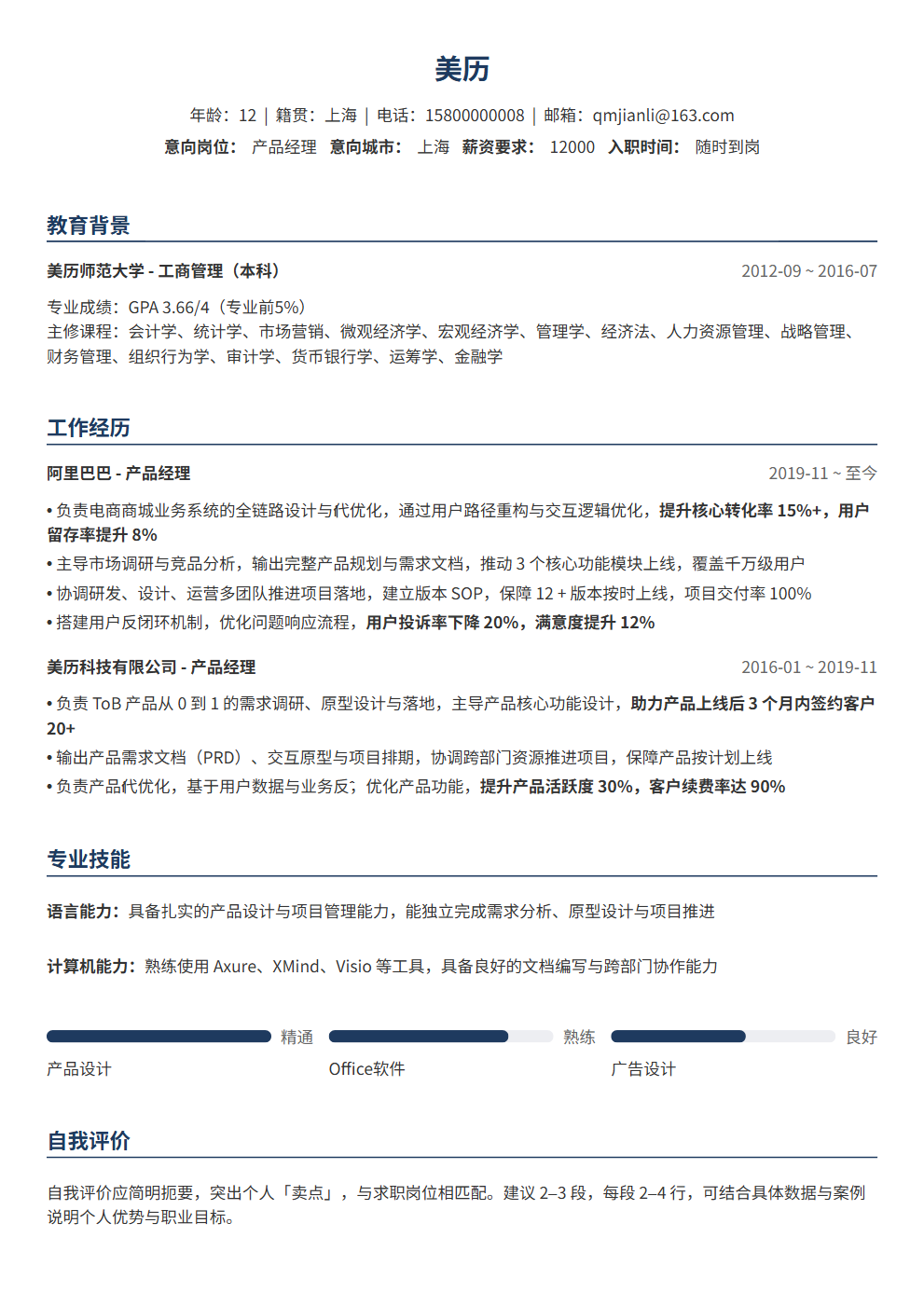
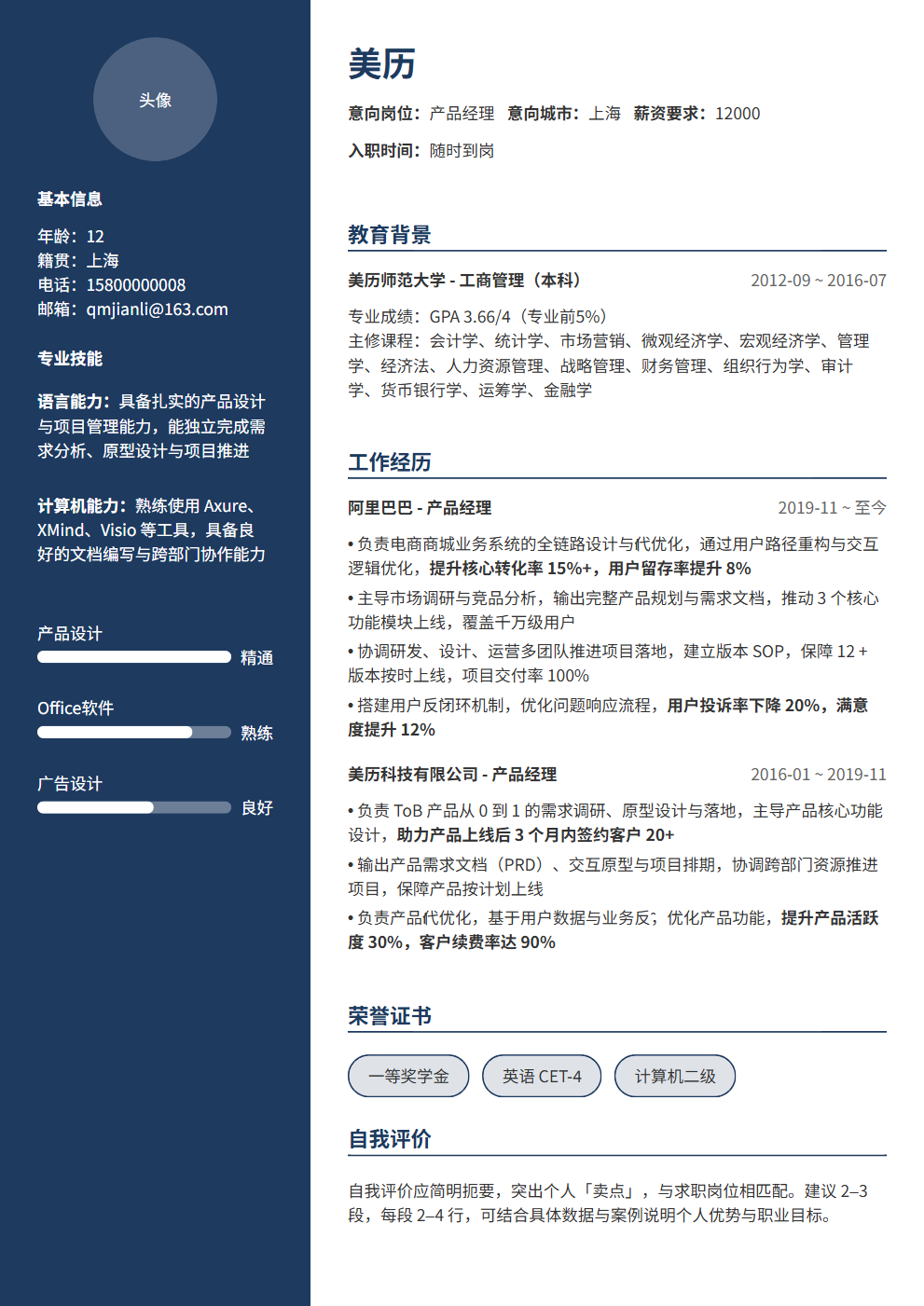
- Polish your resume deeply: Every experience on your resume must withstand follow-up scrutiny. If you're still struggling with your resume, try a resume generator to quickly create a professionally formatted resume that makes your experience more compelling, laying a solid foundation for the follow-up phase.
- Build a follow-up material library: For each experience, prepare response materials organized by the 5 follow-up types, ensuring you have solid ground for any question.
- Practice with mock follow-ups: Have friends or mentors do mock interviews with random follow-ups to train your on-the-spot response ability.
- Record and review: Record your practice responses and listen back, checking: Are the data points specific? Is the logic consistent? Is the expression concise?
- Build a personal case collection: Prepare 5-8 high-quality cases, each covering different competency dimensions, ensuring you have ample material to draw from during follow-ups.
FAQ: Common Questions About Interview Follow-Ups
Q1: Does being asked follow-up questions mean I answered poorly?
Not necessarily. Follow-ups are a normal part of the interview process—nearly all candidates get them. The key is the type: Detail verification follow-ups mean the interviewer is interested in your experience and wants to dig deeper; contradiction-challenge follow-ups may just be the interviewer's style, not a sign that you're actually contradicting yourself. Don't equate follow-ups with rejection.
Q2: What should I do when I'm asked a follow-up I can't answer?
Honesty + knowledge transfer is the optimal strategy. You can say, "I don't have direct experience with this, but based on my understanding of XX, my thinking would be..." Never pretend to know—follow-ups will peel back layers like an onion, and fabricated content can't survive two rounds of probing.
Q3: How can I avoid contradicting myself in interviews?
The key is to梳理 your logical chain in advance. Before the interview, do a logical self-check for each experience: Are your motivation, actions, and results causally consistent? Are the data points you use internally consistent? If you can't even explain the logic to yourself, the interviewer's follow-ups will definitely expose the problems.
Q4: Are stress-test follow-ups the interviewer deliberately making things difficult?
No. Stress-test follow-ups are a standard interview technique, especially common at big tech companies. The interviewer isn't targeting you personally—they're testing your performance under high-pressure conditions. Staying calm and giving structured responses can actually help you stand out in these follow-ups.
Q5: Can I ask the interviewer clarifying questions during follow-ups?
Yes, but with caution. If a follow-up isn't clear, it's fine to politely ask the interviewer to clarify—this is better than answering the wrong question. But don't use counter-questions to evade or challenge the interviewer, which comes across as unprofessional. The purpose of asking back is to ensure accurate understanding, not to deflect.