Core Testing & QA Interview Topics: High-Frequency Questions & Answer Frameworks Across 6 Key Modules
A systematic breakdown of high-frequency topics and answer frameworks across 6 core testing & QA interview modules, analyzing functional vs. automation testing interview differences, with test case design answer strategies and real cases.
Testing/QA interviews have a 60% elimination rate—not because candidates can't test, but because their answers lack framework and depth. This article systematically covers high-frequency topics across 6 core testing interview modules, each with answer frameworks, helping you upgrade from "knows testing" to "knows how to interview."
1. Module 1: Testing Theory Fundamentals
Testing theory is the mandatory foundation of every interview—seemingly simple but hiding deep traps:
High-Frequency Topic 1: Test Case Design Methods
Interviewers love asking "Please design test cases for XX." Answer framework:
- Equivalence partitioning: Divide inputs into valid and invalid equivalence classes, selecting representative values from each
- Boundary value analysis: Focus on boundary and near-boundary values (e.g., 0, -1, 1, max, max+1)
- Scenario-based testing: Design end-to-end test scenarios based on business workflows
- Error guessing: Supplement with error-prone scenarios based on experience
- Orthogonal array testing: Reduce case count when combining multiple parameters
Practical example: "Design test cases for a login function"—Start with equivalence partitioning (valid/invalid username/password), add boundary values (min/max password length), cover scenarios with scenario-based testing (normal login, 3 failed attempts lockout, expired captcha, remote login alert), supplement with error guessing (SQL injection, XSS attacks, concurrent logins). At Amazon, interviewers will follow up with "If you could only write 10 cases, which would you prioritize?" testing your prioritization skills.
High-Frequency Topic 2: Software Testing Lifecycle
Answer framework: Requirements Analysis → Test Planning → Test Design → Test Execution → Defect Management → Test Reporting. Interviewers will deep-dive into specific deliverables and key activities at each stage. At Google, interviewers specifically focus on "What do you do during requirements analysis?" expecting: participating in requirement reviews, identifying ambiguities, assessing test feasibility, and formulating test strategies.
High-Frequency Topic 3: Defect Management
Answer framework: Defect lifecycle (New → Confirmed → Fixed → Verified → Closed) + Key defect report fields (Title, Reproduction Steps, Expected Result, Actual Result, Severity, Priority). Interview trap: Distinguish "severity" from "priority"—severity measures impact on the system, priority measures urgency of fixing. A UI misalignment might have low severity but high priority (if it's the homepage logo).
2. Module 2: Automation Testing
Automation testing is the dividing line between junior and senior test engineers:
High-Frequency Topic 1: Automation Testing Frameworks
Answer framework: Page Object Model + Data-Driven + Keyword-Driven. Interviewers expect you to not just name frameworks but explain why you chose them:
- Page Object Model: Separates element locators from test logic, improving maintainability
- Data-Driven: Separates test data from scripts, one script covering multiple data sets
- Keyword-Driven: Encapsulates actions as keywords, enabling non-technical users to write tests
At Microsoft, interviewers ask "What problems does your automation framework solve?" expecting specific pain points (e.g., reducing regression testing from 8 hours to 2) and architectural decisions (e.g., why pytest over unittest).
High-Frequency Topic 2: Selenium/Appium Core Issues
High-frequency follow-up: How do you handle element location failures? Answer framework: 1) Verify locator strategy is correct; 2) Wait mechanisms—explicit waits (WebDriverWait) preferred over implicit waits; 3) iframe/window switching; 4) Dynamic elements using XPath or CSS Selector fuzzy matching. At Meta, interviewers follow up with "How do you handle dynamically loaded elements?" expecting explicit waits + retry mechanisms + timeout handling.
High-Frequency Topic 3: Automation Testing ROI
Interviewers ask "Which scenarios are suitable for automation?" Answer framework:
- Suitable for automation: Regression testing, stable modules, repeated execution, data-driven scenarios
- Not suitable for automation: Exploratory testing, frequently changing UI, one-time verification, subjective experience evaluation
At Netflix, interviewers follow up with "How do you evaluate automation ROI?" expecting: automation script development time vs. manual execution time × execution frequency, plus maintenance cost calculations.
3. Module 3: Performance Testing
Performance testing is a core assessment area for senior testing roles:
High-Frequency Topic 1: Performance Testing Metrics
Answer framework: Must-master core metrics—
- Concurrent users: Number of users simultaneously sending requests to the server
- TPS/QPS: Transactions/Queries per second, measuring system throughput
- Response time: Average, P90, P95, P99 response times
- Error rate: Failed requests as a proportion of total requests
- Resource utilization: CPU, memory, disk I/O, network bandwidth
At Apple, interviewers ask "What's the difference between TPS and QPS?" expecting: TPS measures complete transactions per second (containing multiple requests), QPS measures individual queries per second—one transaction may contain multiple queries.
High-Frequency Topic 2: Performance Testing Types
Answer framework: Load Testing → Stress Testing → Endurance Testing → Spike Testing. At Tesla, interviewers follow up with "What's the difference between load and stress testing?"—load testing gradually increases load to find the optimal operating point; stress testing exceeds capacity to find the breaking point.
High-Frequency Topic 3: Performance Bottleneck Analysis
Interviewers ask "How do you locate performance bottlenecks?" Answer framework:
- Check monitoring first: Which metric is abnormal—CPU/memory/I/O/network
- Review logs: Application logs, database slow queries, GC logs
- Layer-by-layer isolation: Network → Application → Database → Code
- Common bottlenecks: Slow database queries, insufficient connection pools, memory leaks, lock contention
At NVIDIA, interviewers present a specific scenario: "An API's P99 response time suddenly spikes from 200ms to 5s—how do you investigate?" expecting systematic layer-by-layer analysis, not guessing.
4. Module 4: API Testing
High-Frequency Topic 1: API Test Design
Answer framework: Functional Verification → Parameter Validation → Exception Handling → Security Testing → Performance Testing. At Salesforce, interviewers ask "How do you test a payment API?" expecting coverage of: normal payment flow, amount boundaries (0, negative, extremely large), duplicate payments, concurrent payments, signature verification, timeout handling.
High-Frequency Topic 2: HTTP Protocol Core Knowledge
High-frequency question: What's the difference between GET and POST? Answer framework: Don't just say "GET parameters in URL, POST in body"—interviewers expect deeper understanding: 1) Semantic difference (GET retrieves resources, POST submits data); 2) Idempotency difference (GET is idempotent, POST is not); 3) Caching difference (GET is cacheable, POST is not by default); 4) Security (neither is secure—HTTPS needed).
High-Frequency Topic 3: API Automation
Answer framework: Postman/HttpClient + Data-Driven + Assertion Mechanisms + CI Integration. At Oracle, interviewers ask "How does your API automation integrate with CI/CD?" expecting: Jenkins/GitHub Actions trigger → execute API tests → generate Allure reports → block deployment on failure.
5. Module 5: Security Testing
High-Frequency Topic 1: OWASP Top 10
Answer framework: Master at least the Top 5—SQL Injection, XSS, CSRF, Broken Access Control, Sensitive Data Exposure. At JPMorgan, interviewers ask "How do you test an API's security?" expecting answers across 5 dimensions: authentication, authorization, input validation, data encryption, log masking.
High-Frequency Topic 2: SQL Injection Testing
Answer framework: 1) Input special characters in fields (' OR 1=1 --); 2) Check if abnormal data is returned; 3) Verify parameterized queries are in effect; 4) Check WAF interception rules. At Goldman Sachs, security testing interviewers follow up with "How do you prevent SQL injection?" expecting: parameterized queries, input validation, principle of least privilege, WAF protection.
6. Module 6: Quality Assurance Systems
High-Frequency Topic 1: Building a Quality Assurance System
Answer framework: Code Quality (code reviews + static analysis) → Test Quality (case reviews + coverage) → Process Quality (CI/CD + quality gates) → Production Quality (monitoring + alerting + incident response). At IBM, interviewers ask "How would you build a QA system from scratch?" expecting you to assess the team's current state first, then create a phased rollout plan—not pushing the full system on day one.
High-Frequency Topic 2: Quality Metrics
Answer framework: Process metrics (case pass rate, defect detection rate, code coverage) + Outcome metrics (production defect rate, defect escape rate, customer complaint rate). At Intel, interviewers ask "How do you reduce defect escape rates?" expecting: strengthen case reviews, add exploratory testing, establish defect retrospective mechanisms, introduce automated regression.
7. Functional Testing vs. Automation Testing Interview Differences
Different directions have fundamentally different interview focuses—preparation strategies must be differentiated:
Functional Testing Direction
Core assessment: Business understanding + Test design ability + Defect sensitivity. Interviewers focus more on "Can you find bugs others miss?" At Walmart, functional testing interviews present a real business scenario requiring on-the-spot test case design, assessing business understanding and boundary thinking.
Automation Testing Direction
Core assessment: Coding ability + Framework design + Engineering mindset. Interviewers focus more on "Can you build a maintainable automation system?" At Visa, automation testing interviews require live coding (e.g., implementing an API automation script in Python), testing fundamental coding skills.
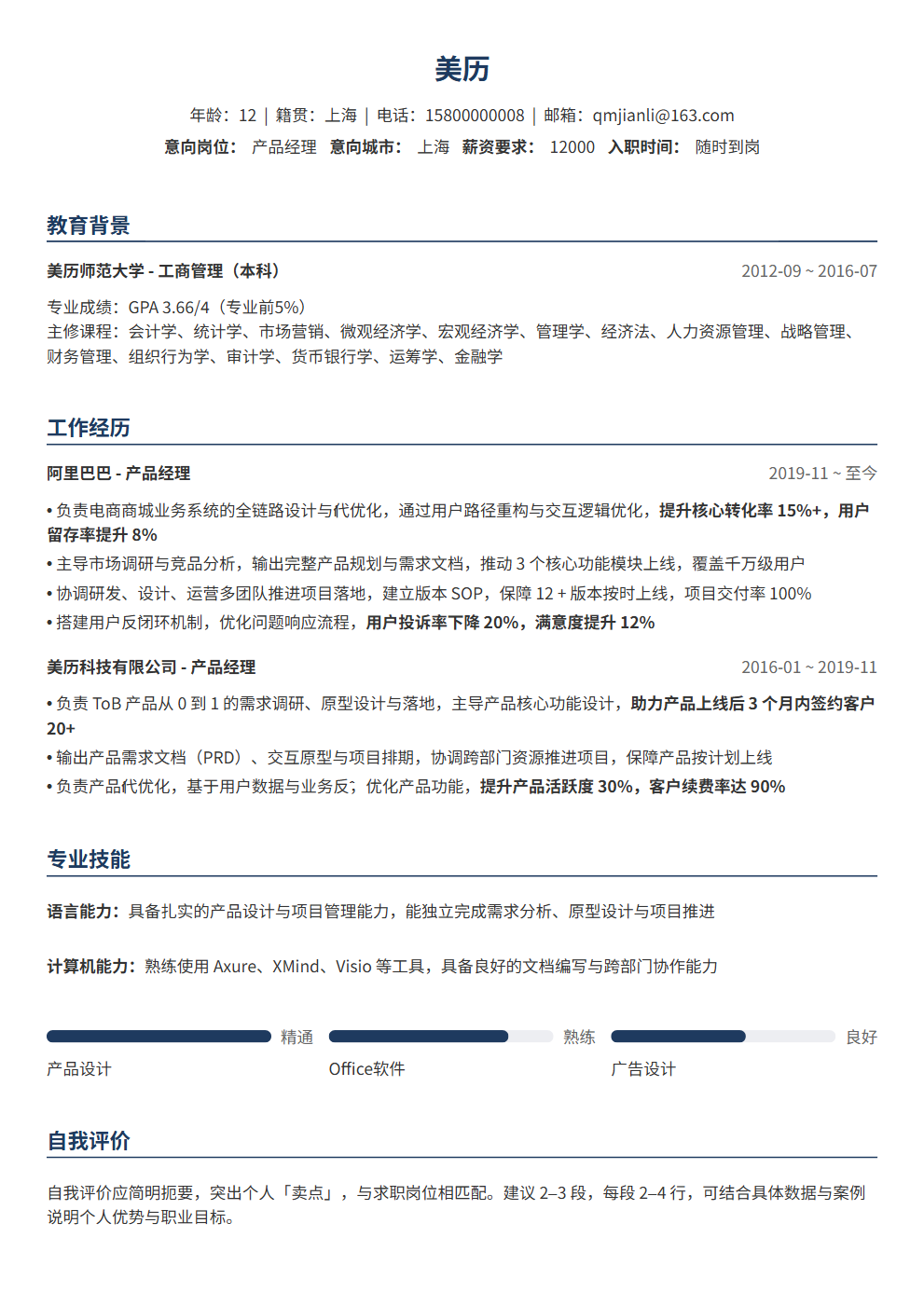
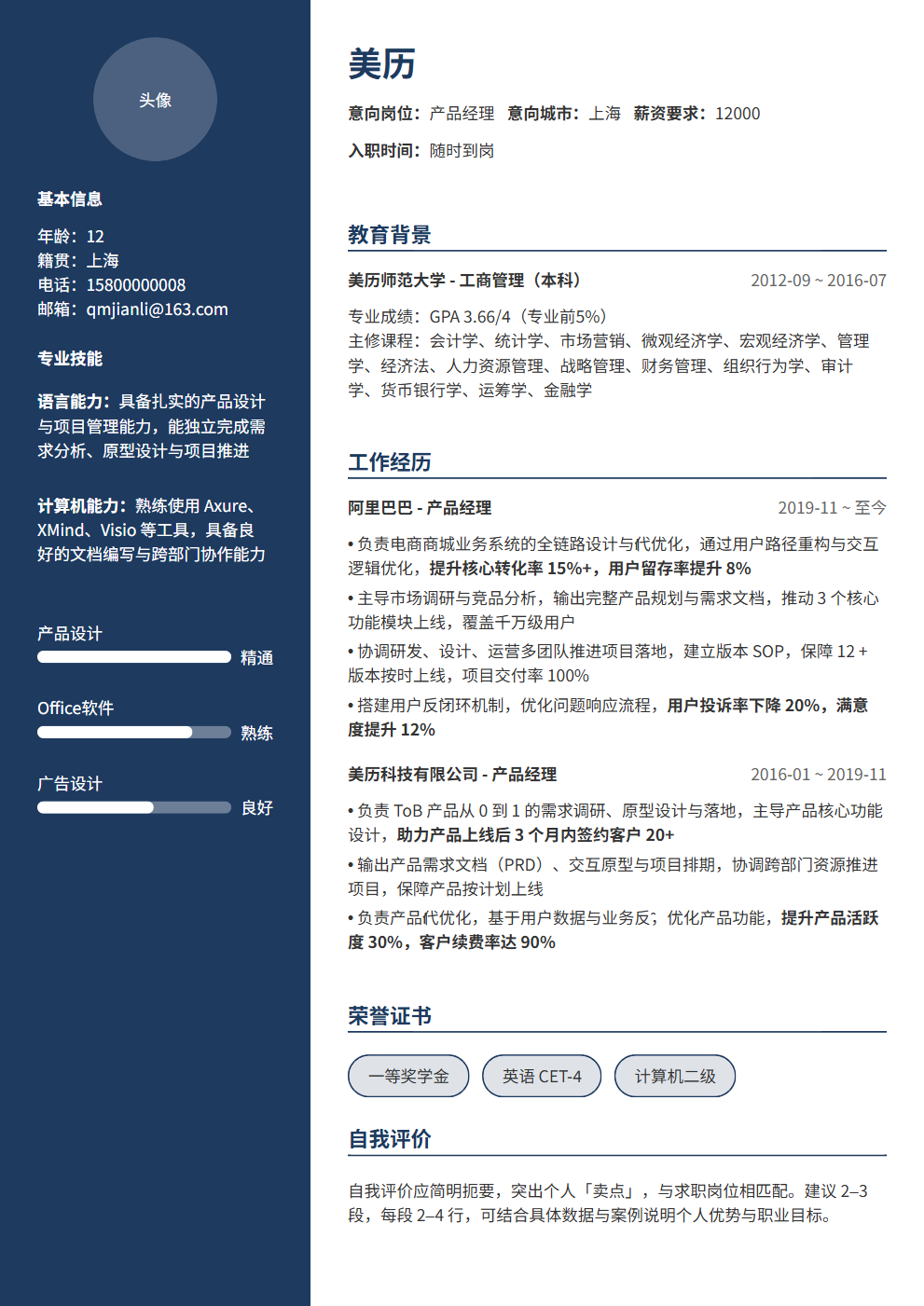
The core of testing/QA interviews isn't "how many tools you know" but "whether you can ensure quality with systematic methods." Use a resume builder to quantify your testing project achievements—automation coverage increased by X%, defect escape rate reduced by Y%, performance bottlenecks identified Z times—letting interviewers see your professional depth at the resume stage.
FAQ
Q1: What techniques help with writing test cases during interviews?
Writing test cases on the spot is standard in testing interviews. 3 scoring techniques: 1) Draw a mind map first—list all testing dimensions before expanding, avoiding omissions; 2) Use "Input-Action-Expected Result" three-column format—clear and standardized, easy for interviewers to follow; 3) Label priorities—P0 (must pass) / P1 (should pass) / P2 (nice to pass), demonstrating prioritization judgment. At Deloitte, interviewers note that "candidates who label priorities clearly have more experience."
Q2: How do I pass an automation testing interview without automation experience?
No hands-on experience doesn't mean you can't pass. 3-step recovery strategy: 1) Complete an automation demo in 1-2 weeks before the interview—use Python + Selenium to automate login + search on an e-commerce site, post it on GitHub; 2) Deeply understand automation principles—Page Object Model, data-driven, assertion mechanisms—even if you haven't written them, be able to explain clearly; 3) Emphasize learning ability and transition motivation—"My deep business understanding from functional testing makes my automation test cases more valuable." At Boeing, a functional test engineer successfully transitioned to automation through 2 weeks of intensive study + a demo project.
Q3: How should I answer "What's the most valuable bug you've found?"
This is a classic testing interview question. Answer framework: 1) Business impact—how many users affected, potential financial loss; 2) Discovery process—what method you used (not accidental discovery); 3) Root cause analysis—how you helped developers quickly identify the root cause; 4) Prevention measures—what improvement suggestions you made to prevent recurrence. At Morgan Stanley, a candidate described a "payment amount precision loss causing reconciliation errors" bug, walking through discovery → root cause → fix → prevention, earning high interviewer praise. Key: Show you're not just a bug finder but a quality champion.
Q4: What tools do I need to master for performance testing interviews?
Core toolchain: JMeter (must-know—script writing, parameterization, assertions, distributed load testing) + Monitoring tools (Prometheus + Grafana or Zabbix) + APM tools (SkyWalking/Pinpoint for distributed tracing). In interviews, tools are just vehicles—interviewers care more about your understanding of performance metrics and bottleneck analysis capability. At McKinsey, interviewers state "Knowing JMeter is entry-level; being able to analyze performance bottlenecks and provide optimization recommendations is the core competitive advantage."
Q5: What's the difference between SDET and regular QA?
SDET (Software Development Engineer in Test) is a hybrid role with 3 core differences: 1) Coding requirements—SDETs independently develop testing tools/platforms/frameworks, with coding ability requirements close to developer roles; 2) Work scope—regular QA focuses on test execution, SDETs focus on testing infrastructure (data generation tools, mock services, automation platforms); 3) Interview focus—regular QA tests testing thinking and business understanding, SDET tests coding ability and system design. At Samsung, SDET interviews include algorithm problems and system design, with difficulty comparable to developer interviews.