Case Interview Framework: 5-Step Breakdown and 6 Classic Case Types
Master the 5-step breakdown method for case interviews, deconstruct 6 classic case types from market entry to profit optimization, with solution frameworks and interviewer scoring criteria.
What Are Case Interviews Really Testing?
Many candidates walk into a case interview with a blank mind — not because they haven't prepared, but because they don't know what the interviewer is actually evaluating. Case interviews don't test whether you know the answer; they test whether you can structurally deconstruct an unfamiliar problem. Interviewers want to see: how you ask questions when faced with ambiguous information, how you form hypotheses, and how you use logic to reach conclusions.
Specifically, case interviews assess four core dimensions: structured thinking (can you break a complex problem into analyzable sub-problems), business judgment (can you identify key drivers), quantitative sensitivity (can you make reasonable estimates quickly), and communication skills (can you clearly present your thought process). Remember, the interviewer isn't looking for a "correct answer" — they're evaluating your way of thinking.
The 5-Step Breakdown: Listen → Clarify → Structure → Analyze → Conclude
No matter what type of case you face, case interviews follow a universal 5-step process. Master this framework, and you'll have an "underlying operating system" for tackling any case.
Step 1: Listen — Capture Key Information
When the interviewer presents the case, take notes while listening. Focus on three types of information: Who is the client (industry/size/current situation), What is the objective (growth/cost reduction/decision), and What are the constraints (time/budget/regulations). Don't rush to think about the answer — first ensure you've captured all the information.
Step 2: Clarify — Confirm Ambiguities
After listening, use 1-2 questions to clarify key ambiguities. Good question examples: "What's the approximate growth rate of this market?" "What's the client's current capacity utilization?" Clarifying isn't about showing how smart you are — it's about ensuring you analyze in the right direction. Avoid asking about information the interviewer has already clearly provided.
Step 3: Structure — Build Your Analysis Framework
This is the most critical step. Break the big question into 2-4 MECE (Mutually Exclusive, Collectively Exhaustive) sub-questions. For example, "Should we enter a new market?" can be broken into: Market attractiveness → Competitive landscape → Own capabilities → Financial returns. The framework doesn't need to be perfect, but it must be logically consistent with no gaps or overlaps.
Step 4: Analyze — Drill Down Systematically
Analyze each component according to your framework, stating your hypothesis before your evidence at each step. When you need data, proactively ask the interviewer — they will usually provide it. Calculate out loud so the interviewer can follow your reasoning. If you find a hypothesis doesn't hold, adjust your direction promptly — don't stubbornly persist.
Step 5: Conclude — Give a Clear Recommendation
Use 30 seconds to 1 minute to summarize: Conclusion + Key evidence + Risks + Next steps. Your conclusion should be definitive ("I recommend entering" rather than "you could enter or not"), your evidence should be concise (only the 2-3 most critical points), your risks should be honest (acknowledge uncertainties), and your next steps should be actionable. Interviewers dread hearing "on-the-fence" conclusions.
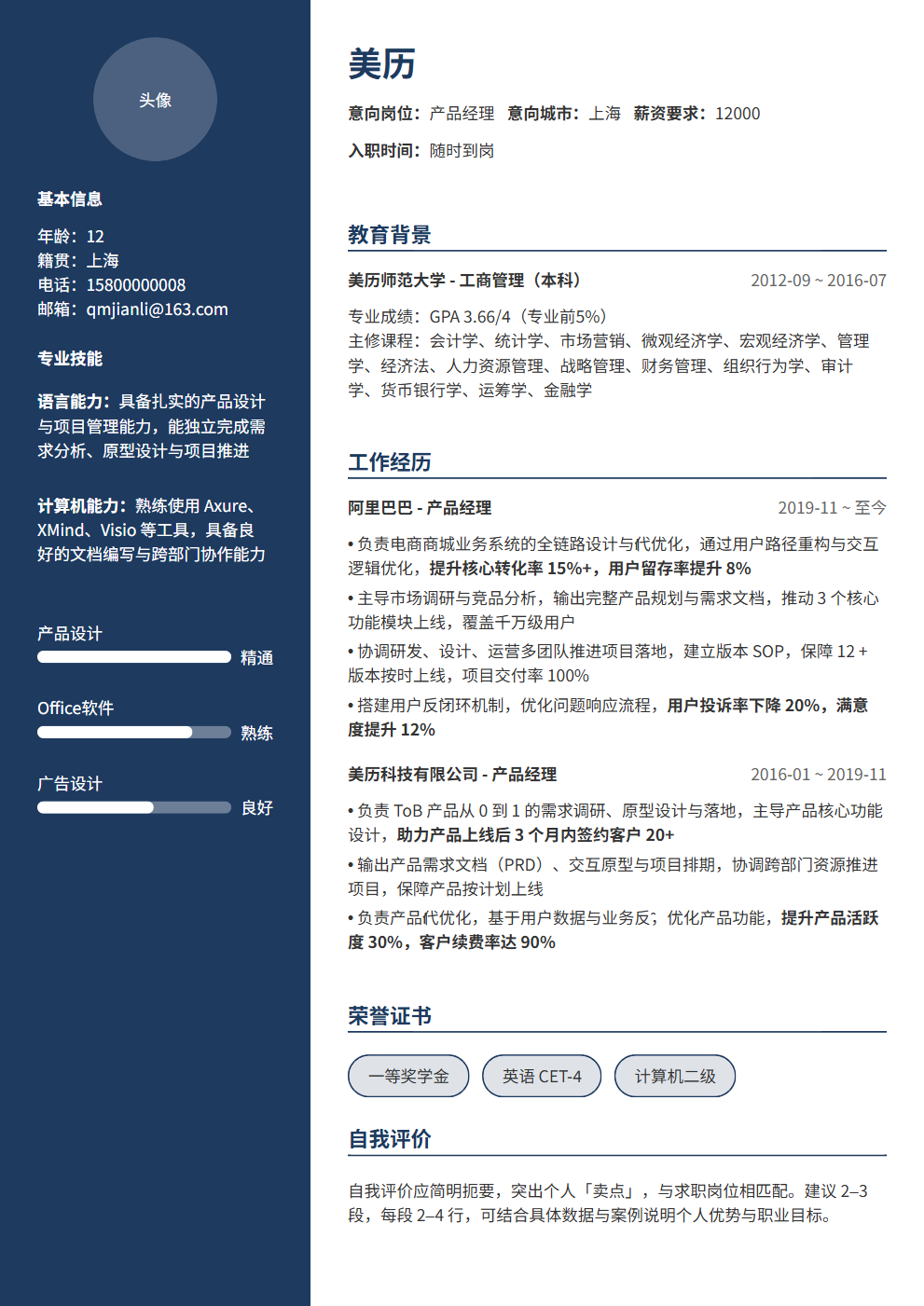
The 5-step breakdown is a universal framework for case interviews, but different case types have their own specialized analytical approaches. Next, we'll deconstruct 6 classic case types one by one. Before diving into each type, we recommend using our resume tool to organize your business analysis experience — if you can reference your own experience during the interview, your persuasiveness will increase significantly.
Case Type 1: Market Entry
Market entry is the most frequently tested type in case interview techniques, especially in consulting firm and strategy role interviews. The core question: Should the client enter a new market?
Standard Analysis Framework
- Market attractiveness: Market size, growth rate, profit margin, cyclicality
- Competitive landscape: Number of existing players, concentration, entry barriers, threat of substitutes
- Own capabilities: Whether brand/channels/technology/capital support entry
- Entry mode: Build vs. acquire vs. joint venture — each has pros and cons
- Financial projection: Investment cost, expected revenue, payback period, NPV
Common Pitfalls
Analyzing only whether the market is attractive while ignoring whether you can win. A high-growth market with intense competition and no differentiation advantage on your part may be a bad decision to enter. Another common mistake is neglecting the choice of entry mode — building takes longer but offers more control, acquiring is faster but carries integration risk, and joint ventures are flexible but offer less control.
Interviewer Scoring Criteria
Whether you comprehensively evaluated the fit between market attractiveness and own capabilities; whether you considered multiple entry modes and compared them; whether financial projections are reasonable with sensitivity analysis.
Case Type 2: Profit Optimization
The core of a profit optimization case: The client's profits have declined (or aren't high enough) — how to improve? This is the second most frequent type in consulting interview cases, testing whether you can systematically identify profit drivers.
Standard Analysis Framework
Profit = Revenue - Cost, so analysis unfolds along two lines:
- Revenue side: Price × Volume. Can price be increased? Can volume grow? Can product mix be optimized (sell more high-margin products)?
- Cost side: Fixed costs + Variable costs. Which cost items are abnormal? Is there room for cost reduction? Are economies of scale being fully leveraged?
Key Decomposition Technique
Don't vaguely say "increase revenue and decrease costs" — drill down layer by layer to actionable levels. For example, "revenue decline" → Is it a price decline or volume decline? → If volume decline, which channel/product line/region? → After identifying the specific cause, propose targeted solutions. This "peeling the onion" analysis is what interviewers value most.
Interviewer Scoring Criteria
Whether you used the profit formula to build a clear analytical framework; whether you drilled down to root causes rather than staying at the surface; whether proposed solutions are specific, actionable, and prioritized.
Case Type 3: Market Sizing
Market sizing is the most "pure" test of quantitative logic in case interviews. Classic questions include "How many ping pong balls are consumed in China each year" or "How many Starbucks are there in Beijing." The interviewer doesn't care whether your number is precise — they care whether your estimation logic is sound.
Standard Analysis Methods
- Demand-side estimation: Target population × penetration rate × per capita consumption × unit price. For example: China coffee market = urban population × coffee drinker ratio × annual cups × price per cup.
- Supply-side estimation: Work backwards from supply capacity. For example: Beijing Starbucks count = number of commercial districts × average stores per district.
- Cross-validation: Estimate using both methods — if results are in the same order of magnitude, the logic is reliable.
Key Techniques
State the reasoning behind every assumption out loud. "I assume coffee drinkers make up 30% of the urban population because the ratio is higher in tier-1 cities but lower nationally" is far better than silently writing down 30%. Keep calculations simple — use round numbers. The interviewer doesn't want to see you calculate to three decimal places. Always do a sanity check at the end: "100 cups of coffee per person per year is roughly one cup every 3-4 days — that frequency is reasonable."
Interviewer Scoring Criteria
Whether you chose a reasonable starting point for estimation; whether each assumption has a basis rather than being a wild guess; whether you performed cross-validation or sanity checks; whether the calculation process is clear and traceable.
Case Type 4: M&A Decision
M&A decision cases test: Should the client acquire a particular company? This type is the most comprehensive in case interviews, requiring simultaneous use of market analysis, financial modeling, and strategic judgment.
Standard Analysis Framework
- Strategic rationale: Can the acquisition fill the client's capability gaps? Can it create synergies (revenue synergies/cost synergies)?
- Target company assessment: Financial condition, core assets/technology/talent, existing customers and channels, potential risks (debt/litigation/cultural conflict)
- Valuation and price: How much is the target worth? Is the asking price reasonable? What valuation method to use (DCF/comparable companies/precedent transactions)?
- Integration feasibility: Cultural compatibility, management retention, systems integration difficulty, regulatory approval risks
Common Pitfalls
Only running the financial numbers without considering strategic fit — a cheaply valued company that doesn't align with your strategic direction could become a burden. Another trap is ignoring integration risk — research shows 70% of M&A failures stem from integration issues, not valuation problems.
Interviewer Scoring Criteria
Whether you considered both strategic value and financial returns; whether you identified key synergies and quantified them; whether you assessed integration risks and mitigation plans; whether the valuation logic is sound.
Case Type 5: New Product Pricing
The core of a new product pricing case: The client is launching a new product — what should the price be? This type in case interview techniques tests your understanding of pricing logic and consumer psychology.
Standard Analysis Framework
- Cost-plus pricing: Cost + target profit margin. This is the floor, not the optimal price.
- Competitive benchmarking: What are competitors charging? What is our product's differentiation premium/discount relative to competitors?
- Value-based pricing: How much value does the product create for customers? How much are they willing to pay for that value? This is the ideal pricing approach.
- Price elasticity testing: Volume changes at different price points → find the profit-maximizing price.
Key Techniques
Don't just give a number — give a pricing strategy. For example: "I recommend a launch price of X, using a penetration pricing strategy to quickly gain market share, then adjusting to Y after 6 months based on user feedback." Also consider the possibility of price discrimination — can different customer segments (enterprise vs. individual, new vs. existing) be charged different prices?
Interviewer Scoring Criteria
Whether you used multiple pricing methods rather than a single approach; whether you considered pricing strategy rather than just a number; whether you analyzed the impact of price elasticity on profit; whether you proposed differentiated pricing ideas.
Case Type 6: Operations Optimization
Operations optimization cases focus on: The client's operational efficiency isn't high enough — how to improve? This type of consulting interview case is common in manufacturing, logistics, and retail industries, testing whether you can identify operational bottlenecks and propose improvements.
Standard Analysis Framework
- Process mapping: Map the end-to-end process, noting time/cost/output at each step
- Bottleneck identification: Which step is the key constraint on overall efficiency? Is it insufficient capacity, inconsistent quality, or excessive wait times?
- Root cause analysis: Use the 5-Why method to dig deeper — Why is this step slow? → Because equipment failure rates are high → Why are failure rates high? → Because maintenance cycles are suboptimal → Why suboptimal? → Because there's no data-driven preventive maintenance program
- Improvement plan: Short-term quick wins (adjust scheduling/optimize SOPs) + Long-term fundamental improvements (introduce automation/redesign processes)
Key Techniques
The biggest mistake in operations optimization is proposing solutions based on intuition. Always quantify the current state first — "Current production line yield is 92%, industry benchmark is 98%" — you need a baseline to measure improvement. Also pay attention to prioritization of improvements: start with low-investment, quick-win projects to build confidence and resources, then push for long-term improvements.
Interviewer Scoring Criteria
Whether you systematically mapped the process rather than focusing only on local areas; whether you quantified bottlenecks and improvement potential with data; whether you distinguished between short-term quick wins and long-term fundamental improvements; whether improvement plans considered implementation difficulty and resource constraints.
4 Bonus Tips for Case Interviews
Tip 1: Proactively Ask for Data — Don't Guess in a Vacuum
Many candidates in case interviews are afraid to ask the interviewer for data, worried it makes them look unprepared. The opposite is true — proactively requesting key data shows you know what information you need to make a judgment, which demonstrates structured thinking. For example: "To assess market attractiveness, I need to understand market size and growth rate — could you provide that data?"
Tip 2: Think Out Loud — Let the Interviewer Follow You
Case interviews aren't written exams — the thinking process matters more than the final answer. Staying silent for 30 seconds before speaking is a major mistake — the interviewer can't evaluate your thinking. The right approach: narrate your thoughts as you think. "I plan to analyze from both the revenue and cost sides. Let me start with revenue..." This way, even if your conclusion is off, the interviewer can see your logic.
Tip 3: Use Visuals to Support Your Expression
If the interview provides paper and pen or a whiteboard, drawing is more effective than talking. Turn the profit formula into a tree diagram, processes into flowcharts, market data into tables — visual expression makes things immediately clear to the interviewer and demonstrates your structural capabilities.
Tip 4: Do Sensitivity Analysis — Show Risk Awareness
When giving your conclusion, proactively perform sensitivity analysis: "If the market size is 20% lower than expected, the project is still profitable; but if customer acquisition costs are 30% higher, the payback period would exceed 3 years, and I'd recommend holding off." This "if... then..." analysis demonstrates your risk awareness and decision-making rigor.
FAQ
How much business knowledge do I need for case interviews?
You don't need to be an industry expert. Case interviews test analytical frameworks and logical thinking, not depth of industry knowledge. The interviewer will provide sufficient background information — you only need to master basic business concepts (like profit formulas, market share, entry barriers) and common analytical frameworks. Over-relying on industry knowledge can actually trap you in details and cause you to miss the structure.
What if I can't think of a good analytical framework during the interview?
Don't panic — use the most basic logical decomposition: Any business problem can be approached from "revenue - cost" or "supply - demand" dimensions. Frameworks don't need to be fancy — logical consistency is what matters. You can also explain your thinking direction to the interviewer, who will usually give you hints — this won't cost you points and actually shows you're good at communicating.
Do I need to prepare for all 6 case types separately?
We recommend practicing at least 1-2 complete cases for each type, since each type has different analytical frameworks and pitfalls. But what matters more is mastering the 5-step breakdown as a universal framework — it's the underlying logic for all cases. If you're short on time, prioritize market entry and profit optimization, as these two types appear most frequently.
Will a calculation mistake fail me immediately?
No. Case interviews evaluate your thinking process, not your calculation ability. Minor calculation errors won't affect your score, but if a calculation error leads to a directional mistake (like calculating growth as decline), that's a problem. Tip: Use round numbers for calculations, calculate out loud, and quickly verify whether the order of magnitude is reasonable after finishing.
How do I find practice partners?
The best approach is finding peers who are also preparing for consulting interviews to do mock interviews with each other. If that's not possible, practice in front of a mirror or with voice recording — the key is to complete the full 5-step process, not just think in your head. You can also use AI tools to simulate the interviewer, but real-person practice provides interaction closer to actual interviews.
The core of case interviews is structured thinking, and a well-structured resume is equally a window for interviewers to judge your thinking ability. Are your project experiences logically organized? Are your data achievements quantified? Use our resume generator to reflect your analytical ability in every detail of your resume, so interviewers are impressed even before the case interview begins.