Career Change Interview Strategy: 5 Steps to Build a Convincing Career Transition Story
Systematically break down the core challenges of cross-industry career change interviews, build your career transition narrative in 5 steps, with speech templates for 6 common transition scenarios, and avoid fatal mistakes in career change interviews.
Cross-industry job hunting is one of the most challenging career transitions.In career change interviews, the interviewer's first reaction is often skepticism—what makes you think you can handle an entirely new field? But data shows that over 35% of professionals have experienced at least one cross-industry transition, and successful ones share a common trait: they didn't rely on luck—they convinced interviewers with a carefully craftedcareer transition narrative.
This article starts from the interviewer's underlying concerns, uses a 5-step framework to help you build a logically coherent and emotionally compelling transition story, and provides speech templates for 6 common transition scenarios, helping you go from "unlikely candidate" to "the one we need" incareer change interviews.
1. Core Challenges of Career Change Interviews: The Interviewer's 3 Major Concerns
In career change interviews, the interviewer appears to be asking about your experience and capabilities, but three core concerns are swirling in their mind. Understanding these concerns is the starting point for building your transition narrative.
Concern 1: Is your professional capability sufficient?
The interviewer's most direct worry is:You have no work experience in this industry—what makes you think you can do the job?This isn't prejudice; it's a reasonable risk assessment. They worry you'll need too long to get up to speed, or make wrong judgments on critical issues.
Key response: Don't try to prove you're "just as strong" as in-industry candidates. Instead, prove youpossess the core capabilities for rapid onboarding, and that your cross-industry perspective is actually a unique advantage.
Concern 2: Is your transition genuine or impulsive?
The interviewer's second layer of concern is about motivation.Is this a well-thought-out career plan, or are you "escaping" because you couldn't make it in your original industry?If it's the latter, they worry you'll retreat when facing difficulties or be half-hearted after joining.
Key response: Show your transition is anactive choice rather than passive escape, supported by a clear logical chain.
Concern 3: Can you adapt to the new industry's culture?
Different industries have different mindsets and work rhythms.Moving from traditional manufacturing to tech, or from government to startups—culture shock is real. Interviewers worry you'll be "misfitted," either unable to adapt or bringing old habits into the new environment.
Key response: Prove youunderstand and identify with the new industry's cultural traitsand have successful cross-cultural adaptation experience.
2. The 5-Step Career Transition Story Building Method
A good transition story isn't about rearranging your experiences—it's about connecting past, present, and future with aclear logical thread. Each of the following 5 steps addresses one of the interviewer's core concerns.
Step 1: Identify Transferable Skills
Transferable skills are yourcore capitalfor crossing industries. It's not "what I've learned" but "what problems I've solved, and how those problem-solving approaches apply in the new industry."
Identification method:
- List the 3 most challenging problems you've solved in the past 3 years
- Deconstruct the core capability behind each problem (e.g., data analysis, cross-department coordination, user insight, project management)
- Find corresponding scenarios for these capabilities in the new industry
Key principle:Don't vaguely say "I have strong communication skills." Say "I once coordinated 5 departments to complete an urgent project delivery within 3 days—this cross-department coordination capability is equally critical for a product manager role."
Step 2: Find Industry Connection Points
Interviewers need to see areal connectionbetween you and the new industry, not a random jump. Connection points can be: shared customer groups, similar business logic, overlapping tech stacks, or common user needs.
Three angles for finding connection points:
- User perspective: Is there overlap between the users you serve and those in the new industry? E.g., education operations to SaaS product—both target B2B decision-makers
- Business perspective: Is there similarity between the business logic you've managed and the new industry? E.g., e-commerce operations to local services—both follow traffic × conversion × retention
- Technical perspective: Are the technical tools you use compatible with the new industry? E.g., data analysis to growth hacking—both rely on SQL and A/B testing
Key principle:The more specific the connection point, the better. "I understand the tech industry" is meaningless; "Over 60% overlap between my previous customer base and your target users" is an effective connection.
Step 3: Build Your Transition Narrative
Your transition narrative is thesoul frameworkof your entire interview. A good transition narrative follows a "trigger—exploration—confirmation" three-act structure:
Trigger:What event or insight made you start thinking about transitioning? This isn't "my original industry is declining" but "I discovered an opportunity that better matches my core capabilities."
Exploration:What specific exploration and preparation have you done? Including self-study, certifications, side projects, industry networking.This is the most powerful part for proving your transition determination.
Confirmation:What made you finally confirm this transition direction is right? It could be a project experience, an in-depth conversation, or a data validation.
Narrative template:"While working in [original industry], I discovered [trigger event/insight], which made me realize my [core capability] might have greater impact in [new industry]. So I began [specific exploration actions], and through [validation process], I confirmed that [transition direction] is the best choice for me."
Step 4: Prepare for Skepticism
In career change interviews,skepticism is inevitable, but skepticism doesn't equal rejection. When interviewers question you, it actually means they're seriously considering you. The key is how you respond to skepticism, turning "weaknesses" into "differentiated advantages."
Three strategies for handling skepticism:
- Acknowledge + Transform: Acknowledge the gap but quickly turn it into an advantage. E.g., "True, I don't have direct industry experience, but precisely because of that, I'm not constrained by industry conventional thinking and can bring fresh problem-solving approaches"
- Evidence First: Respond to skepticism with facts, not emotions. When questioned about professional capability, show completed related projects, certifications, or achievements
- Reverse Question: Turn skepticism into deeper discussion. E.g., "The challenge you mentioned does exist. May I ask what the biggest pain point your team currently faces on this issue?"
Step 5: Demonstrate Learning Ability
Learning ability is themost underrated yet most critical competitive advantagein career change interviews. What interviewers really want to confirm isn't "do you know it now" but "can you learn it quickly."
Four dimensions for demonstrating learning ability:
- Learning speed: How quickly have you mastered new skills in the past? Give specific timelines
- Learning depth: You didn't just learn the surface—you understand the underlying logic. Prove it by explaining a professional concept in your own words
- Learning outcomes: What did you produce after learning? Learning without outcomes is just "awareness"; learning with outcomes is "mastery"
- Learning plan: You have a clear plan for post-hire learning—what to master in the first 30, 60, and 90 days
Key principle:Don't just say "I have strong learning ability." Prove it withspecific learning stories. E.g., "I taught myself Python data analysis in 2 weeks, independently completed 3 business analysis projects within 3 months, one of which directly influenced operations strategy adjustments."
3. Speech Templates for 6 Common Career Change Scenarios
Different transition directions face different skepticism and require different response strategies. Below are the 6 most common career change scenarios with corresponding speech templates.
Scenario 1: Engineering to Product Management
Core interviewer concern:You understand technology but may not understand users; the core of product management is user insight, not technical implementation.
Speech template:"As a [technical role], my biggest takeaway wasn't coding ability, but the ability totranslate complex technical problems into executable solutions. In [specific project], I realized that the success of technical solutions depends on truly understanding user needs—this sparked my interest in product thinking. I validated my user insight capability through [specific actions: e.g., leading requirement reviews, conducting independent user research], [specific results]. I believe my technical background helps me better assess feasibility, while product thinking helps me better define what's right."
Scenario 2: Operations to Marketing
Core interviewer concern:Operations is execution-oriented, marketing is strategy-oriented—is your strategic thinking sufficient?
Speech template:"The essential difference between operations and marketing isn't execution vs. strategy, butreach pathways. Operations designs reach pathways backwards from user behavior; marketing designs communication pathways forwards from brand positioning.I precisely have the ability to reverse-engineer strategy from the user end—in [specific project], I discovered [insight] through user behavior data analysis, and the operations plan designed accordingly achieved [specific results]. This data-driven strategic capability is equally critical in marketing roles."
Scenario 3: Traditional Industry to Tech
Core interviewer concern:You can't adapt to tech's speed and culture.
Speech template:"The biggest difference between traditional industries and tech isn't speed, butdecision-making mechanisms. Traditional industries emphasize process approvals; tech emphasizes rapid validation. In my [specific experience] in a traditional industry, I proactively drove [innovation project], achieving [results] using [agile methods] under [specific constraints].I understand that the core of tech culture is 'fail fast, let data speak'—and this is exactly the approach I was already practicing in a traditional industry environment."
Scenario 4: Sales to Customer Success
Core interviewer concern:Sales focuses on acquisition, customer success on retention—can you shift your mindset?
Speech template:"The common foundation of sales and customer success isunderstanding customer needs. The difference is sales focuses on 'how to get customers to buy' while customer success focuses on 'how to help customers continuously gain value.' My biggest insight from [specific sales experience] is:the best sales approach isn't persuading customers, but helping them find the truly suitable solution—this is itself the core logic of customer success. I achieved [customer renewal/repurchase results] through [specific actions: e.g., proactive customer follow-ups, driving product optimization], proving my ability to shift from 'one-time transaction' to 'long-term value management.'"
Scenario 5: Academia/Research to Corporate
Core interviewer concern:You're used to academic thinking—can you adapt to a results-oriented business environment?
Speech template:"The difference between academic research and business practice isn't rigor, but theobjective function. Academia pursues optimal solutions; business pursues feasible solutions.My research training gave me deep analytical capability, and I chose to transition precisely because I want to see research results落地and create real impact. In [specific research project], I proactively [translated research results into specific applications/collaborated with industry], achieving [specific business outcomes]. This experience confirmed that I'm better suited to solving problems in a business environment."
Scenario 6: Freelance/Startup to Corporate
Core interviewer concern:You're used to freedom—can you adapt to organizational discipline and team collaboration?
Speech template:"The biggest takeaway from freelancing/entrepreneurship isn't freedom, butextreme accountability for results—no one has your back; every decision directly impacts survival. This 'owner mentality' is precisely the scarcest quality in corporate settings.I chose to return to corporate not because my startup failed, but because I discovered [specific reason: e.g., scale effects, resource synergy]can help me create greater value on a larger platform. I look forward to bringing the [specific capabilities: e.g., zero-to-one execution, resource integration] honed during entrepreneurship to the team."
4. Five Fatal Mistakes in Career Change Interviews
Mistake 1: Overly Disparaging Your Original Industry
This is the most common self-destructive expression in career change interviews."My original industry has no future""That industry is too competitive"—to interviewers, these aren't reasons for your transition but evidence of your escapism. Worse, interviewers will think: will you say the same about our industry in the future?
Correct approach:Express your transition motivation using "attraction" rather than "escape" logic. Say "I discovered opportunities in the new industry that better match my core capabilities," not "my original industry is declining."
Mistake 2: Substituting "Willingness to Learn" for "Actual Capability"
"I'm willing to learn""I can learn"—these statements are virtually meaningless in career change interviews. Interviewers hire people who can do the work, not students coming to class. Everyone has willingness to learn, but only learning outcomes can prove your capability.
Correct approach:Replace "I'm willing to learn" with "Here's what I've already learned and produced." Even a single side project or online course portfolio is 100 times more convincing than empty promises.
Mistake 3: Avoiding the Fact of Insufficient Industry Knowledge
Some career change candidates try to use rhetoric to cover up their lack of understanding of the new industry, only to be exposed by a single follow-up question from the interviewer.Acknowledging gaps and showing a plan to address them earns far more respect than bluffing.
Correct approach:Honestly say "My understanding of this field is still deepening. Currently my knowledge is..., and after joining I plan to... within 30 days." Interviewers appreciate not omniscience, but honesty and planning ability.
Mistake 4: Only Talking About "What I Can Do," Not "Why I Choose You"
Many career change candidates turn the interview into a capability showcase, ignoring a key question:what interviewers want to know isn't how strong you are, but why you chose them. Capability demonstration without targeting only makes interviewers think you're mass-applying.
Correct approach:Every capability you demonstrate should connect to the target company's specific needs. E.g., "I noticed your company is expanding into XX business—my experience in XX from my original industry can be directly applied."
Mistake 5: Ignoring Resume-Interview Consistency
If your resume describes experiences in Industry A, but you spend the interview talking about transitioning to Industry B,interviewers will feel a disconnect. Your resume is the script for your interview, and your interview is the performance of your resume—they must be consistent.
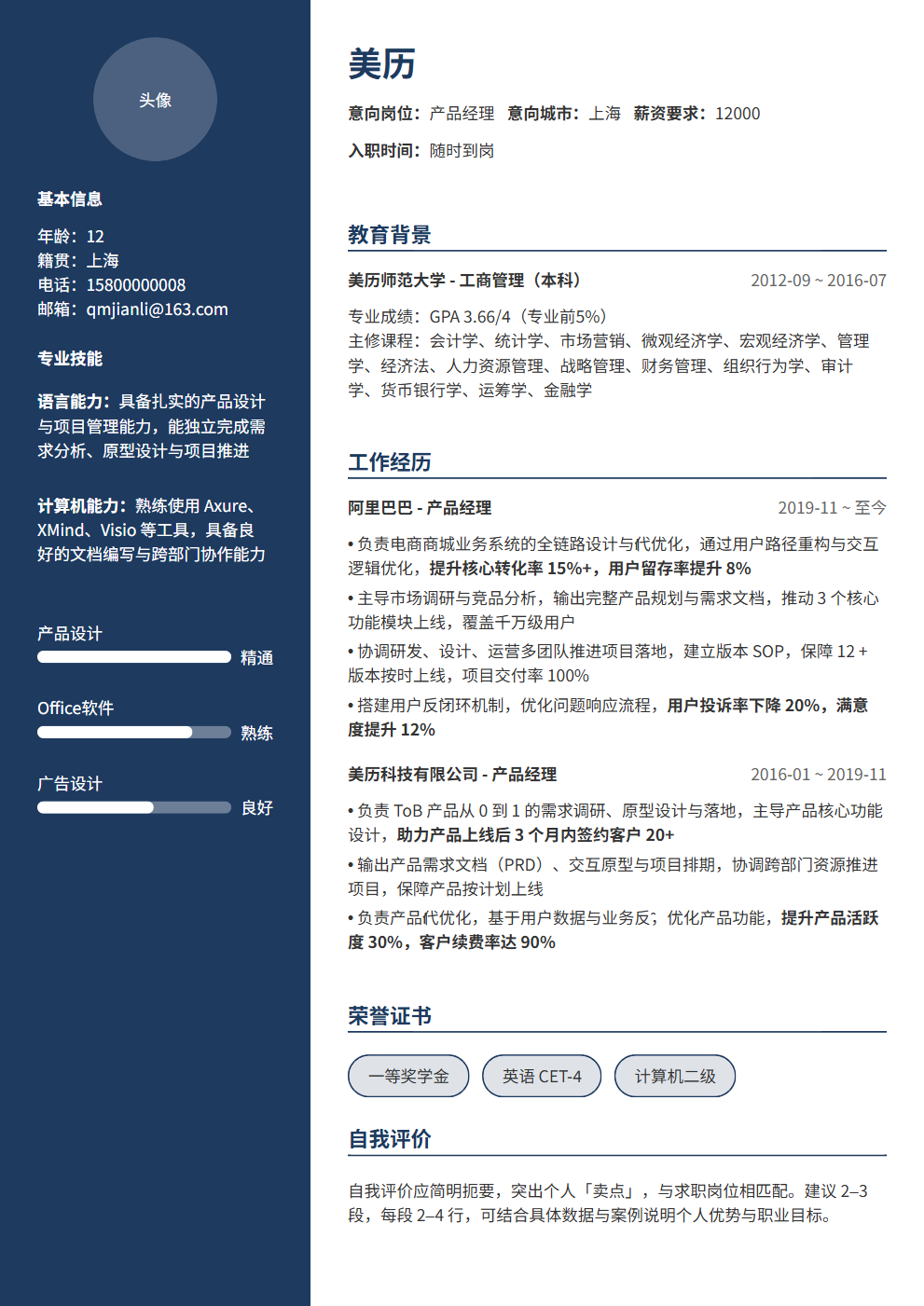
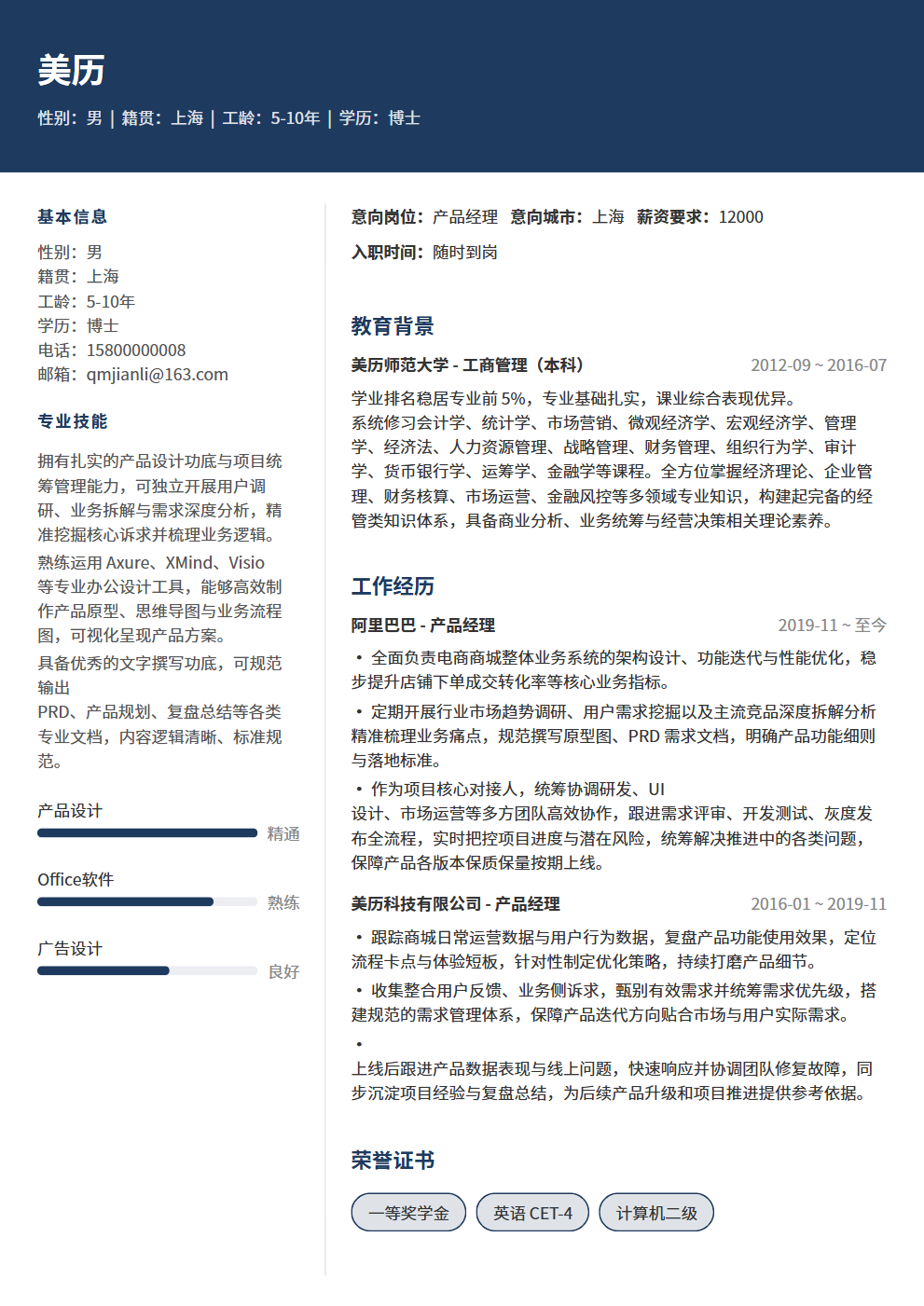
Correct approach:Reflect your transition logic in your resume—highlight transferable skills, note projects relevant to the new industry, and state your transition direction in your self-summary.Use our resume generator to optimize your resume with target industry keywords, creating a closed loop between your resume and interview narrative, significantly boosting initial screening pass rates.
FAQ
How to answer "You have no relevant experience" in career change interviews?
This is a must-ask question in career change interviews.Core answer framework: Acknowledge + Transform + Prove. First, honestly acknowledge the lack of direct experience, then quickly pivot to your transferable skills—"While I don't have direct industry experience, I've built [transferable skills] in [related field], such as [specific case]." Finally, use your preparation and achievements to prove your onboarding capability. Remember: the interviewer asks this not to reject you, but to see how you handle challenges.
What if salary decreases after career change? How to discuss salary in interviews?
Cross-industry transitions may indeed involve salary adjustments.In interviews, don't proactively offer salary concessions—this shows insufficient confidence in your own value. If asked about expected salary, provide a reasonable range, not your bottom line. A better strategy is topivot the conversation to value creation:"I believe if I can create X value for the team, compensation will naturally match." Also, focus on total compensation rather than monthly salary—stock options, growth opportunities, and industry prospects are all part of compensation.
How long should I prepare for a career change interview?
The ideal preparation period is3-6 months. The first 1-2 months for industry research: understand the target industry's core logic, key role requirements, and leading companies' business models. The middle 1-2 months for capability building: accumulate demonstrable achievements through project practice, online courses, and industry certifications. The final month for interview preparation: refine your transition narrative, simulate common skepticism, and prepare a 30-60-90 day learning plan. Remember: the more prepared you are, the more composed you'll be in interviews.
How to reflect transition logic in your resume?
Your resume is the first stop for your transition story.Key strategy: Redescribe your experience using the target industry's language. For example, transitioning from engineering to product—don't just write "responsible for developing XX system"; write "led the productization process of XX feature from requirement analysis to launch, serving XX million users." In your self-summary, clearly state your transition direction and core rationale.Using a resume generator can help you optimize resume wording with target role keywords, letting HR see your fit with the new role within 3 seconds.
The interviewer keeps asking about my original industry—does that mean they're not interested?
Quite the opposite.When interviewers probe into your original industry details, they're typically looking for evidence of transferable skills. They want to confirm whether your achievements in the original industry have substance, and whether those capabilities can truly transfer to the new role. Response strategy: connect every original industry experience to the new role's requirements—after saying "what I did in my original industry," follow with "this experience is equally applicable in your company's XX scenario, because..."
Cross-industry career change isn't starting from zero—it'srecombining existing capabilities in new ways. Master this 5-step building method, refine your transition narrative, and incareer change interviews, let interviewers see not "an outsider" but "a strong candidate with unique perspectives and transferable skills." And it all starts with getting your resume past the screening—use our resume generator to optimize your resume with target industry keywords, making your transition story impress HR from the resume stage.