Campus Recruitment Interview Guide: 7 Key Milestones from Written Test to Offer
A systematic guide through 7 key milestones of the campus recruitment interview process, from written tests and group interviews to business and HR rounds, with strategies and pitfall tips at each stage to help you land your offer.
Campus Recruitment Interview Overview: 7 Key Milestones
Campus recruitment interviews are a long campaign. From submitting your resume to receiving an offer, you typically go through 7 key milestones: resume screening, written test/online assessment, group interview/leaderless group discussion, first round (technical/business interview), second round/cross-interview, HR interview, and offer & onboarding. The pass rate decreases at each stage — stumble at any point, and all previous effort is wasted.
Many fresh graduates fail campus recruitment interviews not because they lack ability, but because they don't understand the evaluation logic and winning strategies at each milestone. This article breaks down all 7 milestones one by one, helping you go from "barely scraping through" to "confidently advancing."
- Milestone 1 Resume Screening: Only 20% pass rate — the entry ticket to the entire campus recruitment interview process.
- Milestone 2 Written Test/Online Assessment: A filter for basic abilities, testing both aptitude and professional knowledge.
- Milestone 3 Group Interview/Leaderless Group Discussion: Highest elimination rate — 70% of candidates are eliminated at this stage.
- Milestone 4 First Round (Technical/Business Interview): Verification of core competencies, determining whether you make it to the finals.
- Milestone 5 Second Round/Cross-Interview: Dual assessment of depth and breadth, distinguishing those who "can do the work" from those who "can handle responsibility."
- Milestone 6 HR Interview: Final review of stability and sincerity — seemingly easy but with hidden traps.
- Milestone 7 Offer & Onboarding: Pitfalls to avoid even after receiving the Offer Call.
Milestone 1: Resume Screening — The First Gate with Only 20% Pass Rate
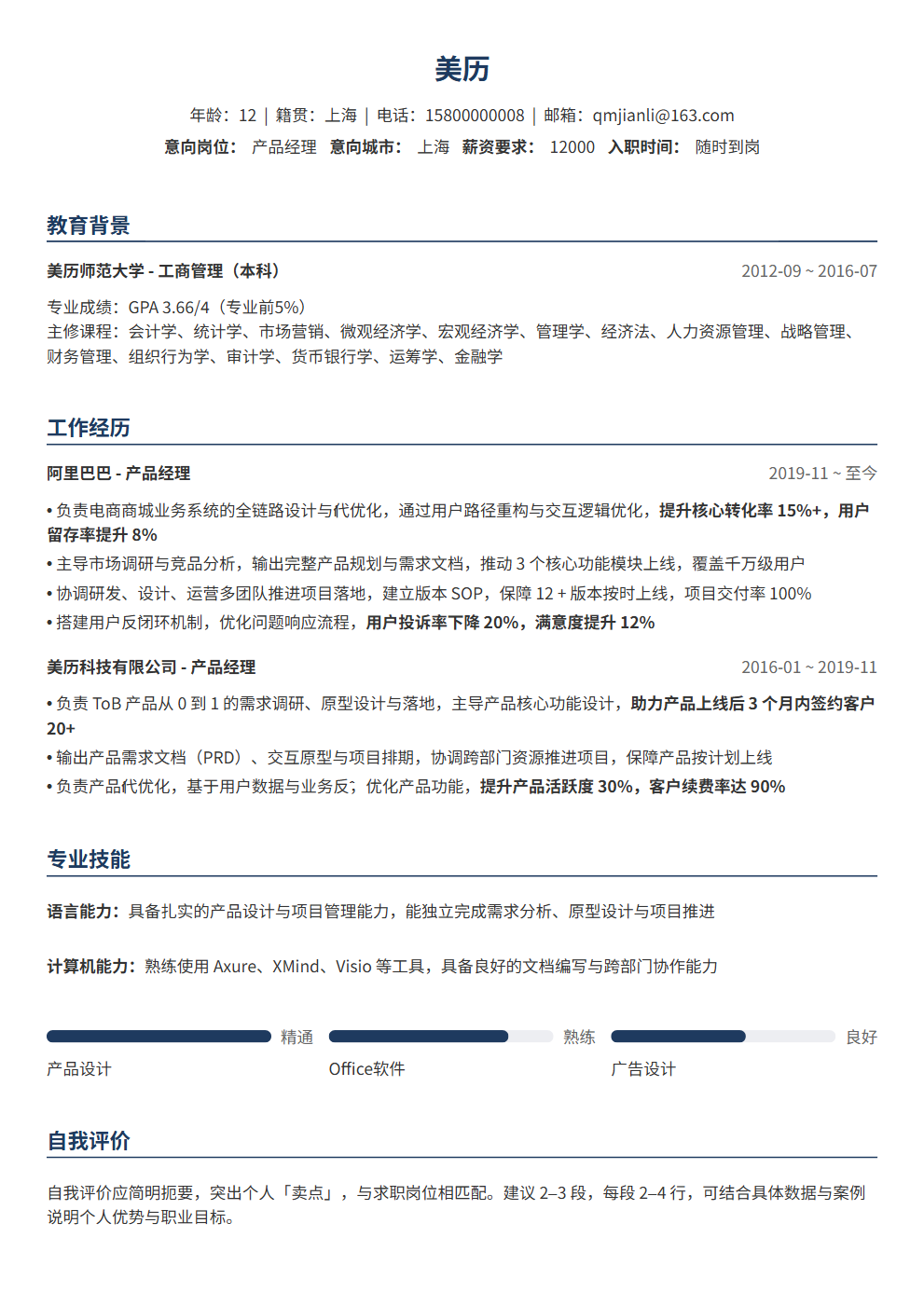
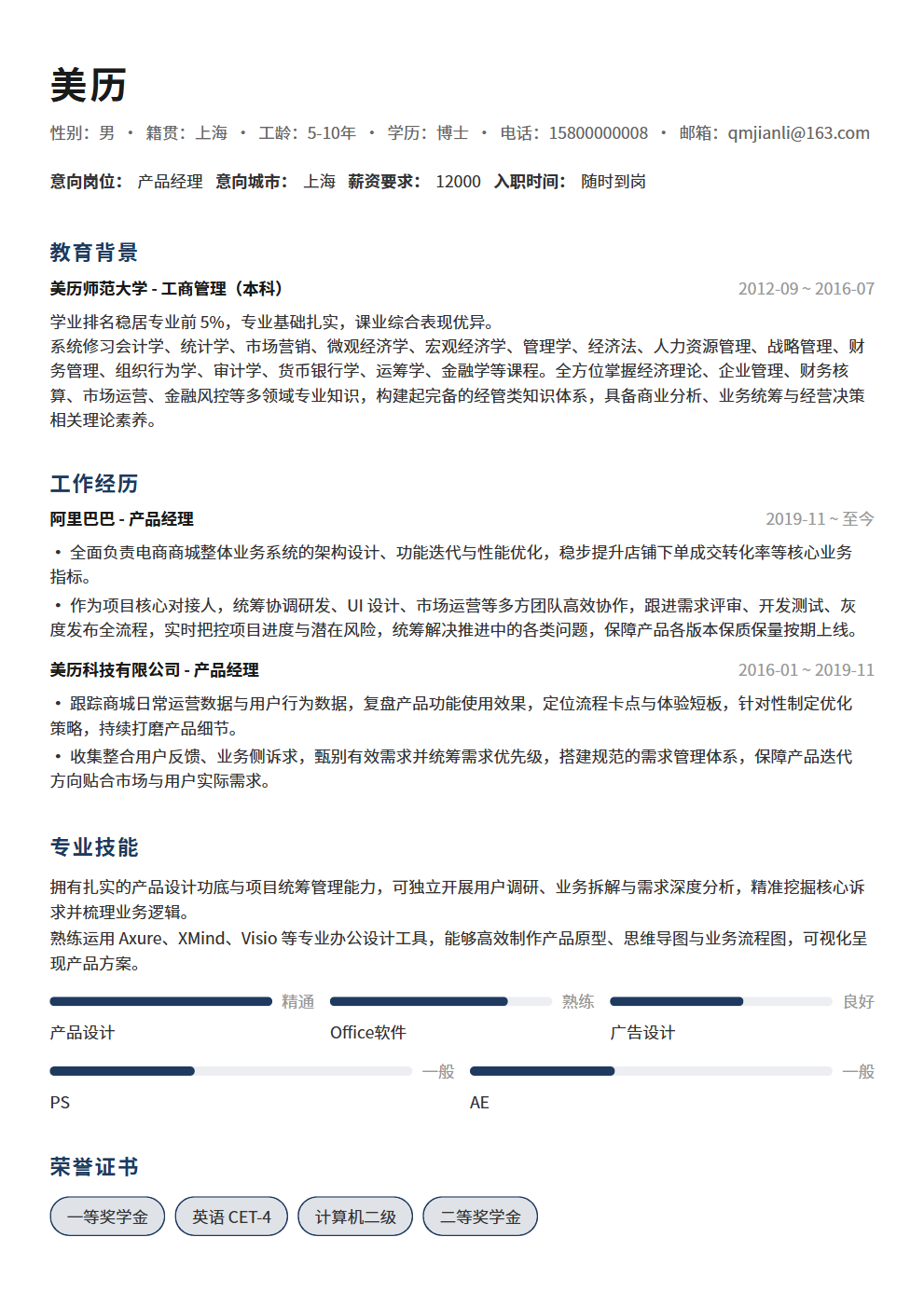
Resume screening is the first gate of campus recruitment interviews and one of the highest elimination stages. A major tech company's autumn recruitment for a single position can receive tens of thousands of resumes, and HR spends an average of no more than 30 seconds on each one. If your resume can't catch their eye in 30 seconds, it goes straight to the "reject" pile.
3 Core Criteria for Resume Screening
- Education and University: Major tech companies typically have target university lists. 985/211 universities are the basic threshold, and some positions require a master's degree or above.
- Internship Experience: Internship experience at major tech companies is the biggest differentiator, especially internships directly related to the target position.
- Projects and Competitions: High-value project experience (such as open source contributions, independent products) and competition awards (such as ACM, national mathematical modeling awards) can significantly boost your pass rate.
4 Tips to Boost Your Resume Pass Rate
- One-page principle: Keep your campus recruitment resume to one A4 page — HR doesn't have time to flip to page two.
- Data-driven expression: Use "increased conversion rate by 30%" instead of "optimized user experience" — let numbers speak.
- Keyword matching: Read the JD carefully and embed position-required keywords into your resume. Many companies use ATS systems for initial screening.
- Targeted submissions: Don't submit the same resume for every position. Adjust the focus and order of your resume based on different positions.
Your resume is the key to campus recruitment interviews. A professional, precise, and highlight-rich resume can double your pass rate. Use our resume generator to optimize your resume content based on the job description with one click, letting HR see your core competitiveness within 30 seconds.
Milestone 2: Written Test/Online Assessment — The Basic Ability Filter
After passing resume screening, the next step is the written test or online assessment. This round primarily tests basic abilities and logical thinking, typically including aptitude questions (verbal comprehension, quantitative relations, logical reasoning, data analysis) and professional questions (programming, product analysis, financial calculations, etc.).
3 Common Formats of Written Tests
- Aptitude + Professional combination: The most common format at major tech companies, with aptitude tests accounting for 40% and professional questions for 60%.
- Pure programming questions: Common for technical positions — 3 algorithm problems, 2-hour time limit, scored by number of test cases passed.
- Personality assessment: Some companies include personality tests with no standard answers but consistency checks — contradictory responses will be flagged.
3 Strategies for Written Test Preparation
- Practice at least 500 aptitude questions: Aptitude questions follow fixed patterns. Practicing 500 questions covers about 90% of question types. Recommended platforms include Fenbi APP or Nowcoder's aptitude section.
- Focus on LeetCode Hot 100 for programming: Campus recruitment programming problems are generally at LeetCode medium difficulty. Focus on four major categories: arrays, linked lists, trees, and dynamic programming.
- Time allocation strategy: For aptitude questions, start with your strengths and skip what you don't know; for programming, tackle the easiest problem first to secure baseline points.
Common Pitfalls in Written Tests
The biggest pitfall in written tests isn't "can't solve it" — it's running out of time. Many students spend 15 minutes stuck on a difficult problem, leaving no time for easier ones later. The correct strategy: secure the points you're confident about first, then go back to tackle the hard ones. Also, pay attention to edge cases in programming problems — many students have correct logic but fail to handle empty inputs, integer overflow, and other boundary conditions, losing points unnecessarily.
Milestone 3: Group Interview/Leaderless Group Discussion — The Highest Elimination Stage
The group interview is the highest elimination stage in campus recruitment interviews. Typically 8-10 people per group discuss an open-ended case and present a solution after 30-40 minutes. The elimination rate is as high as 60%-70%. Many people fail not because they lack ability, but because they don't understand the scoring logic of group interviews.
4 Role Positions in Group Interviews
- Leader: Responsible for building the discussion framework, allocating time, and driving progress. Highest risk and highest reward — perform well and advance directly; perform poorly and get eliminated immediately.
- Timer: Responsible for reminding the team of time checkpoints and controlling the discussion pace. Suitable for students who are calm but not comfortable leading.
- Recorder: Responsible for documenting key discussion points and organizing the final solution. Suitable for students with clear logic and fast writing.
- Contributor: Proposes valuable insights, supplements details, and drives deeper discussion. The optimal role choice for most people.
5 Core Strategies for Group Interview Success
- Build a framework in the first 3 minutes: The first person to speak who can propose a clear discussion framework basically locks in the Leader role. The framework doesn't need to be perfect, but it must be logical.
- Speak at least 3 times: People who speak fewer than 3 times are basically eliminated. Each contribution should have substantive content, not just repeating others' points.
- Don't interrupt others: Interrupting is a major taboo, even if the other person is wrong. Wait until they finish, then politely supplement or correct.
- Drive consensus, not insist on your own opinion: Group interviews assess teamwork ability, not individual heroism. If the team has reached consensus, don't forcefully oppose just to stand out.
- Keep the summary concise: If you're doing the summary, keep it within 2 minutes using a "conclusion-points-highlights" structure.
3 Fatal Mistakes in Group Interviews
- Silent throughout: Not speaking even once means automatic elimination — no suspense.
- Aggressively dominating others: Frequently interrupting and negating others makes interviewers think you lack teamwork skills.
- Going off-topic: The discussion drifts off course without you realizing it, showing a lack of big-picture control.
Milestone 4: First Round (Technical/Business Interview) — Verification of Core Competencies
The first round is the most critical stage in campus recruitment interviews, typically conducted by your future direct manager or senior colleague, lasting 45-60 minutes. The first round primarily verifies your professional abilities and position fit, and is the key determinant of whether you make it to the finals.
3 Assessment Dimensions for Technical Position First Rounds
- Fundamental knowledge: Computer science basics (operating systems, networking, databases), programming language features, data structures and algorithms. This accounts for about 40% of the first round time.
- Deep project dive: Interviewers will deeply probe projects on your resume — "Why did you design it this way?" "What problems did you encounter?" "How would you improve it if you did it again?" This accounts for about 40% of the time.
- Coding ability: Live coding, typically 1-2 algorithm problems requiring you to explain your thinking while writing. This accounts for about 20% of the time.
3 Assessment Dimensions for Non-Technical Position First Rounds
- Business understanding: Depth of understanding of the target position's industry. For product roles: "What do you think about XX product's business model?"
- Case analysis: Given a business scenario, analyze the problem and propose solutions. Tests structured thinking and business intuition.
- Internship/project review: Deep dive into your past internship experience, testing your depth of thinking and growth potential.
3 Key Actions for First Round Preparation
- Prepare 3 levels of follow-up questions for each project on your resume: Level 1 "What did you do," Level 2 "Why did you do it this way," Level 3 "How would you optimize if you did it again." Many students only prepare Level 1 and get stuck at Level 2.
- Study target company interview experiences from the past year: Nowcoder and Maimai have abundant campus recruitment interview experiences. Focus on your target company and position, and summarize high-frequency topics.
- Do at least 3 mock interviews: Practice with classmates or seniors, focusing on the ability to "think out loud." Many students have answers in mind but can't express them — this is a major interview pitfall.
Milestone 5: Second Round/Cross-Interview — Dual Assessment of Depth and Breadth
The second round is typically conducted by department heads or cross-department interviewers, lasting 30-45 minutes. Compared to the first round, the second round goes beyond specific skills to assess your depth of thinking and cross-domain perspective.
3 Core Differences Between Second and First Rounds
- From "can you do it" to "can you handle it": The first round assesses whether you can handle specific tasks; the second round assesses whether you can make correct judgments in complex scenarios.
- From "single dimension" to "multi-dimension": The first round focuses on professional ability; the second round comprehensively assesses technical depth, business understanding, communication and collaboration, and more.
- From "standard answers" to "open thinking": First-round questions typically have standard answers; second-round questions tend to be open-ended, testing your thinking framework and logical ability.
3 Common Question Types in Second Rounds
- System design questions: Such as "Design a URL shortening service" or "Design a message push system." Tests your architectural thinking and trade-off ability — you don't need a perfect solution, but you need a clear thinking process.
- Scenario judgment questions: Such as "What would you do if you found a bug 1 hour before launch?" or "How do you handle conflicts between requirements and technical solutions?" Tests your priority judgment and communication coordination abilities.
- Career planning questions: Such as "What's your 3-5 year career plan?" or "Why did you choose our company?" Tests your stability and sincerity — answers should be genuine and specific.
Core Mindset for Second Round Success
The core of the second round isn't "getting the right answer" but "thinking clearly." For open-ended questions, interviewers value your thinking process more than your answer. We recommend using a "framework first, details later" approach: first state your thinking framework (e.g., "I would analyze this from three dimensions: technical feasibility, business value, and implementation cost"), then elaborate on details layer by layer. Even if some details are off, a correct framework can still earn high marks.
Milestone 6: HR Interview — Final Review of Stability and Sincerity
The HR interview is the final stage of campus recruitment interviews. Many people think "the HR interview is just a formality," only to fail at this stage. The HR interview seems easy but has hidden traps — HR's focus is on your stability, sincerity, and value alignment.
5 High-Frequency HR Interview Questions
- "Why did you choose our company?" — Tests sincerity and preparation level. Don't say "because your company is a major tech firm." Answer specifically by combining company culture, business direction, and personal development.
- "Do you have other offers?" — Tests market competitiveness. If yes, be honest but don't boast; if no, emphasize "your company is my top choice."
- "What's your expected salary?" — Campus recruitment salaries typically have fixed ranges. Answer "I trust the company's compensation system" or give a reasonable range — don't give a specific number.
- "What's your biggest weakness?" — Don't give fake weaknesses like "I'm too much of a perfectionist." State a real weakness that's unrelated to the position's core competencies, and explain how you're improving.
- "Do you have any questions for me?" — This is a great opportunity to show sincerity. Ask "What are the team's core challenges right now?" or "What's the onboarding training plan like?" to demonstrate deep thinking about the position.
3 Pitfalls to Avoid in HR Interviews
- Don't show hesitation: When HR asks "Would you join if we give you an offer?" don't say "I'll think about it." The correct answer: "I'm very much looking forward to joining your company, and I would seriously consider any offer."
- Don't badmouth other companies: Even if you have better offers, don't disparage other companies in front of HR — it makes you look unprofessional.
- Don't proactively discuss salary details: Campus recruitment salaries typically have fixed standards. Proactively discussing salary details makes you seem immature. If HR asks, follow the strategy above.
Milestone 7: Offer & Onboarding — Things to Note After Receiving the Offer Call
Receiving an OC (Offer Call) doesn't mean everything is settled. From the OC to official onboarding, there are several key matters to pay attention to.
4 Things to Confirm After Receiving the OC
- Confirm offer details: The OC typically only mentions the total compensation. Make sure to confirm the breakdown of Base, annual bonus, RSU, sign-on bonus, and whether probation period salary is discounted.
- Confirm onboarding date: Campus recruitment offers typically require onboarding within 1 month of graduation. If you need a delay, communicate with HR in advance.
- Confirm breach of contract terms: Some companies' offers include a breach penalty clause (typically 1 month's salary). Make sure to confirm before signing the tripartite agreement.
- Written offer prevails: Verbal promises in the OC don't count — everything should be based on the written Offer Letter. If OC promises don't appear in the written offer, be sure to confirm with HR.
3 Pre-Onboarding Preparations
- Background check preparation: Major tech companies conduct background checks before onboarding. Prepare degree certificates, internship proof, salary records, and other materials in advance.
- Technical preparation: One month before onboarding, do targeted learning based on the target position's tech stack so you can get up to speed quickly after joining.
- Mindset adjustment: The transition from student to professional takes time. Don't put too much pressure on yourself — the first 3 months are a learning period where mistakes are acceptable.
3 Time Management Strategies for Campus Recruitment Interviews
Campus recruitment interviews aren't a sprint — they're a 3-6 month marathon. Good time management can double your number of offers.
Strategy 1: Don't Miss the Early Recruitment Batch
Many major tech companies have early recruitment batches in July-August. Competition in early batches is 30%-50% less than regular autumn recruitment, and failing the early batch doesn't affect regular autumn recruitment. It's essentially a free extra opportunity — definitely don't miss it.
Strategy 2: Stagger Your Interview Schedule
Scheduling 2+ interviews on the same day is a major mistake. Interviews require intense focus, and back-to-back sessions lead to noticeably worse performance in the second one. We recommend scheduling at most 1-2 interviews per day, with at least 3 hours between them, leaving time for review and adjustment.
Strategy 3: Review Is More Important Than Practice
After each interview, spend 30 minutes reviewing: Which questions did you answer well? Where did you get stuck? What was the interviewer's feedback? Record your review notes and review them before your next interview. The insights from reviewing 10 interviews are greater than practicing 100 problems.
FAQ
What's the difference between campus recruitment and social recruitment interviews?
Campus recruitment interviews focus more on potential and learning ability, while social recruitment interviews focus more on experience and immediate productivity. In campus recruitment interviews, interviewers don't expect you to have extensive project experience, but they will heavily assess your logical thinking, learning speed, and growth potential. So in campus recruitment interviews, showing your thinking process is more important than giving perfect answers.
Should I compete for the Leader role in group interviews?
Not necessarily. The Leader role carries the highest risk — if you're not good at facilitating or building frameworks, forcing the Leader role will expose your weaknesses. The principle for choosing a role: pick the role you're most confident in. If you're good at summarizing, be the Recorder; if you're good at managing pace, be the Timer; if you have good ideas but aren't comfortable leading, be a Contributor. No role is inherently better — performance is what matters.
What should I do when asked a question I don't know in an interview?
The worst response is "I don't know" followed by silence. The correct strategy is to first acknowledge you don't know, then demonstrate your thinking: "I haven't deeply considered this question before, but I can analyze it from the perspective of..." Interviewers aren't testing your knowledge inventory — they're testing your ability to think about unknown problems. Even if the final answer is wrong, a logical thinking process can still earn decent marks.
Can I apply to multiple companies simultaneously for campus recruitment?
Not only can you — it's strongly recommended. Campus recruitment has high uncertainty — any company might cancel offers due to headcount reductions or business adjustments. Applying to 5-10 companies simultaneously is normal practice, but make sure interview times don't conflict and don't reveal at Company A's interview that you prefer Company B.
Is there a high chance of being eliminated in the HR interview?
The HR interview pass rate is typically 80%-90%, the highest among all interview stages. However, if you show obvious stability issues during the HR interview (such as holding multiple offers with a hesitant attitude, insufficient understanding of the position, or career plans misaligned with the role), you can still be eliminated. Don't take the HR interview lightly — prepare seriously for every question.
Campus recruitment interviews are a systematic process, and your resume is the starting point of the entire project. A precisely position-matched, highlight-rich, data-driven resume can boost your resume screening pass rate by over 50%. Use our resume tool to optimize your resume for your target position with one click, get your entry ticket first, then advance through every milestone to land your offer.