10 Answers Top Company Interviewers Hate Most: Pitfall Guide and Corrected Scripts
Reveal the 10 answer types that interviewers at Google, Amazon, Meta and other top companies hate most, from empty rhetoric to emotional outbursts, each with real cases and corrected scripts to help you avoid interview pitfalls and boost your pass rate.
The 5 Most Fatal Answers (Instant Elimination)
In top company interviews, certain answers trigger an immediate red flag in the interviewer's mind. Interviewers at Google, Amazon, and Meta see dozens of candidates daily and have developed reflexive aversions to specific answer patterns. The following 5 types are "one-strike-you're-out" categories.
Empty Rhetoric: All Slogans, No Substance
These candidates love saying "I have exceptional leadership skills" or "I excel at cross-functional collaboration," but when pressed for specific examples, they dodge and weave. Interviewers want facts, not slogans.
Real case: A candidate interviewing for a PM role at Amazon was asked "How do you drive a cross-functional project?" and answered "I use my influence and communication skills to drive alignment." When pressed for specifics, they circled back to "just better communication." The interviewer wrote "no substantive content" on the evaluation form immediately.
Excessive Modesty: Capable But Afraid to Show It
The opposite of empty rhetoric — these candidates have accomplished a lot but downplay everything. An interview is not the place for modesty; it's your stage to demonstrate value. At Microsoft, a candidate who had led a core system module for 3 years answered "I'm just a regular developer" when asked about their role — they were actually the module lead.
Excessive modesty leads interviewers to conclude you either didn't contribute meaningfully or lack self-confidence. Both interpretations cost you points.
Badmouthing Former Employers: Complaining About Previous Companies or Bosses
This is the most dangerous minefield in interviews. When asked "Why are you leaving?" and a candidate responds "My previous boss was terrible" or "The company was poorly managed," the interviewer's immediate thought is: you'll say the same about us after you leave.
Real case: A candidate interviewing at Meta said "My previous company's tech stack was outdated and my manager didn't understand technology." The interviewer followed up with "What efforts did you make to drive technical upgrades?" The candidate had nothing to say. It's easy to criticize; it's hard to prove your own initiative.
Evasion: Dodging Questions Instead of Answering Directly
When an interviewer asks "What's your biggest failure?" and a candidate responds "My biggest failure is not joining your company sooner," that's question evasion. At Netflix, interviewers see this as a sign of poor self-reflection ability.
Evasion takes another form: answering a different question than what was asked. Asked about a technical solution, they discuss project background; asked about personal contributions, they describe team achievements. Interviewers need precise information to evaluate your capabilities, not a rehearsed monologue.
Over-Inflation: Exaggerating Beyond What You Can Defend
These candidates upgrade "participated in" to "led," and "familiar with" to "expert in." Top company interviewers excel at follow-up questions — three or four probes will squeeze out all the inflation.
Real case: A candidate at a Stripe interview claimed "I independently designed the entire recommendation system architecture." The interviewer followed up: "What recall strategy did you use? How did you handle feature engineering? What were the A/B test results?" After three questions, the candidate admitted they had only developed one module. The interviewer's verdict: credibility in question, immediate elimination.
The 5 Most Subtle Answers (Silent Deductions)
Unlike the previous 5 "instant elimination" types, these 5 are more subtle. They won't get you rejected on the spot, but the interviewer will silently deduct points. Many candidates feel they performed well but never receive an offer — often because they hit these hidden minefields.
Disorganized Logic: Jumping From Topic to Topic
When asked "How did you solve a technical challenge?" the answer jumps from problem context to solution to team dynamics to personal feelings. Interviewers need structured expression, not stream of consciousness.
At Apple's technical interviews, interviewers specifically evaluate whether candidates can organize responses using the STAR method (Situation-Task-Action-Result). Disorganized candidates are often flagged as "poor communication skills," and even strong technical ability may not compensate for concerns about collaboration efficiency.
Arrogance: Dismissive and Self-Important
These candidates typically have impressive backgrounds, but an interview is not a battlefield to prove you're better than others. At NVIDIA, a candidate repeatedly said "This question is too basic" and "I solved this at my last company years ago." The interviewer's takeaway: this person would be difficult to work with.
Arrogance has a subtler form: constantly interrupting the interviewer. Answering before the question is finished, or showing impatience when the interviewer offers hints. These micro-behaviors all signal "I don't respect you."
Thoughtless Responses: Reciting Answers Without Adaptation
These candidates prepare plenty of "standard answers" but freeze when the interviewer rephrases a question slightly. Interviewers want to see your thinking process, not your memorization ability.
Real case: At a Google interview, when asked "If you were to redesign Google Pay's payment flow, how would you approach it?" the candidate recited a pre-prepared "payment system design" answer without any analysis specific to Google Pay's business characteristics. The interviewer's assessment: lacks independent thinking ability.
Cookie-Cutter: Template Responses With Zero Personality
"My strength is being detail-oriented, and my weakness is being too much of a perfectionist" — this template response is heard at nearly every Salesforce interview session. When interviewers hear the same answer ten times a day, do you think they'll remember you?
Cookie-cutter answers reveal two problems: you didn't seriously prepare for this specific interview, and you lack deep self-awareness. Interviewers need to see the real you, not a mass-produced product.
Emotional Reactivity: Getting Defensive or Shutting Down Under Pressure
Stress interviews are standard practice at top companies. When an interviewer challenges your approach or questions your decisions, they're not rejecting you — they're testing your stress tolerance and emotional regulation.
Real case: At a JPMorgan interview, the interviewer questioned a candidate's project experience: "This approach doesn't seem very efficient." The candidate immediately became visibly agitated, raising their voice to argue. The interviewer noted on the evaluation: "Insufficient emotional management, not suited for high-pressure environments."
Corrected Scripts Quick Reference
Below is a corrected scripts comparison table for all 10 answer types, each with "Wrong Example → Right Example." Practice these repeatedly before your interview.
1. Empty Rhetoric Correction
Wrong: "I have exceptional leadership skills and excel at driving cross-functional collaboration."
Right: "At Amazon, I coordinated 3 teams of 12 people on the Prime delivery project. By implementing daily standups and weekly progress reports, I reduced the project delivery timeline from 6 weeks to 4 weeks."
2. Excessive Modesty Correction
Wrong: "I'm just a regular developer, did some routine work."
Right: "I was the core developer for that module, independently completed the order system refactoring, reducing API response time from 800ms to 200ms, and supporting 500K QPS during peak traffic on Prime Day."
3. Badmouthing Former Employers Correction
Wrong: "My previous company was poorly managed and the leadership was incompetent."
Right: "I gained valuable experience at my previous company, but I'm looking for a more technology-driven environment with bigger challenges — which is exactly why I'm applying here."
4. Evasion Correction
Wrong: "My biggest failure is not joining your company sooner."
Right: "My biggest failure was underestimating data volume during a system migration at Amazon, causing a 4-hour delay. After that, I created a capacity assessment checklist, and the next 3 migrations completed with zero incidents."
5. Over-Inflation Correction
Wrong: "I independently designed the entire recommendation system architecture."
Right: "I participated in the recommendation system's architecture design, led the recall module development, and collaborated with 2 colleagues on feature engineering — ultimately improving recommendation click-through rate by 15%."
6. Disorganized Logic Correction
Wrong: Rambling without structure.
Right: Using the STAR method — "The situation was S, my task was T, I took action A, and achieved result R."
7. Arrogance Correction
Wrong: "This question is too basic."
Right: "I've thought deeply about this before — my understanding is... though I'd also love to hear your perspective."
8. Thoughtless Response Correction
Wrong: Reciting standard answers without adapting to the question.
Right: "That's an interesting question — let me organize my thoughts first... Based on the scenario you described, I think we can analyze it from these angles..."
9. Cookie-Cutter Correction
Wrong: "My weakness is being too much of a perfectionist."
Right: "I sometimes over-optimize technology choices at the expense of speed. I've learned to define MVP solutions first for rapid validation, then iterate. For example, when building the dispatch system at Uber..."
10. Emotional Reactivity Correction
Wrong: Getting visibly defensive when challenged.
Right: "Thank you for that pushback — I hadn't fully considered that angle. Let me reconsider... From your perspective, the focus might be more on XX, and my approach could be optimized to..."
Inside the Interviewer's Scoring Logic
Understanding how interviewers score helps you target your preparation. Top company interviewers don't score based on gut feelings — they use clearly defined scoring dimensions and flagging mechanisms.
How Interviewers Flag "Red Flag" Answers
Interviewers typically have a "red flag" column on their evaluation forms. The following triggers immediate flagging: integrity issues (exaggerated claims exposed), attitude problems (arrogance, disrespect toward the interviewer), emotional issues (breaking down under pressure). Red flags usually mean immediate elimination — scores in other dimensions become irrelevant.
At Goldman Sachs interviews, the integrity red flag is the most serious mark. Once an interviewer suspects a candidate has fabricated project experience, even outstanding performance in other areas results in an automatic rejection.
Deduction Weights for Different Answer Types
The 10 wrong answer types carry different severity levels: Instant elimination types (empty rhetoric, badmouthing former employers, over-inflation) have the highest deduction weight — once triggered, recovery is nearly impossible; Severe deduction types (evasion, arrogance, emotional reactivity) significantly lower overall scores; Subtle deduction types (excessive modesty, disorganized logic, thoughtless responses, cookie-cutter answers) carry smaller individual deductions but have noticeable cumulative effects.
At McKinsey's interview evaluations, disorganized logic and thoughtless responses don't eliminate candidates directly, but they simultaneously deduct points from both "communication ability" and "independent thinking" dimensions, making it very difficult for the overall score to reach the hiring threshold.
How to Adjust in Real-Time During Interviews
Interviews aren't one-way broadcasts — they're two-way interactions. Learn to read the interviewer's feedback signals and adjust your strategy in real-time:
- Interviewer frequently checks the time or interrupts you: Your answer is too long or off-topic. Immediately condense and return to the core question.
- Interviewer keeps probing for details: They're interested in or skeptical of your answer. Support it with more facts and data.
- Interviewer looks confused: Your expression isn't clear enough. Reorganize your language and try a different approach.
- Interviewer starts making small talk: Core evaluation is likely complete. Stay natural but don't let your guard down.
The ability to adjust in real-time during interviews is itself a hidden dimension interviewers evaluate. Candidates who can flexibly adapt based on feedback are often preferred over those who can only read from a prepared script.
FAQ
What if nervousness causes disorganized answers?
Nervousness is normal — the key is having coping mechanisms. Before the interview, prepare 5-8 core stories using the STAR method. Even when nervous, you can output structured responses. If you genuinely get stuck, it's okay to say "Let me organize my thoughts for a moment" — interviewers often appreciate the honesty. At a Deloitte interview, a candidate asked for 30 seconds to collect their thoughts and then delivered a well-structured answer — and received the offer.
How to stay calm when challenged by the interviewer?
First, understand that the interviewer challenging you isn't attacking you — they're testing your stress tolerance and thinking resilience. The right approach: acknowledge their perspective first, then supplement with your own thinking. For example: "That's a fair point — from that angle, it could indeed be optimized. My initial consideration was primarily based on scenario XX..." Never immediately dismiss the interviewer's point or become emotional.
How to avoid overly template-like answers?
The root cause of template answers is lack of self-awareness. Before the interview, take time to review your real experiences and identify your unique stories. Everyone has irreplaceable details in their experience — weave those details into your answers, and they naturally won't sound cookie-cutter. When discussing weaknesses, don't say "too much of a perfectionist" — instead, share a real challenge you've faced and how you overcame it.
What if the interviewer asks something I genuinely don't know?
Honesty is far better than bluffing. You can say "I don't have deep knowledge of this topic yet, but based on my understanding, a possible approach would be..." Demonstrating your reasoning process matters more than giving the correct answer. At an Oracle interview, a candidate honestly admitted unfamiliarity with a technical question but provided a clear line of reasoning. The interviewer noted "honest and shows potential" — and the candidate passed.
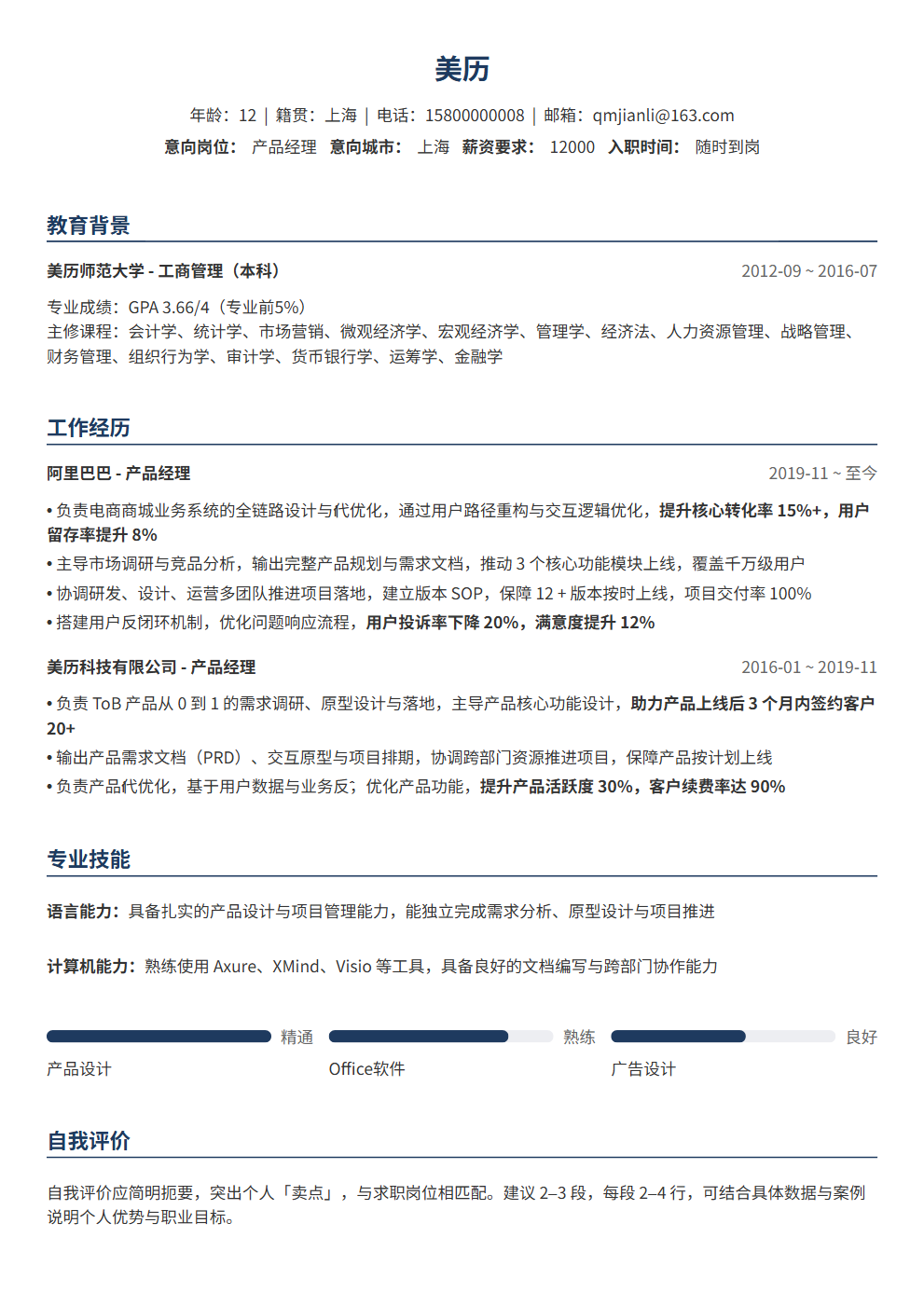
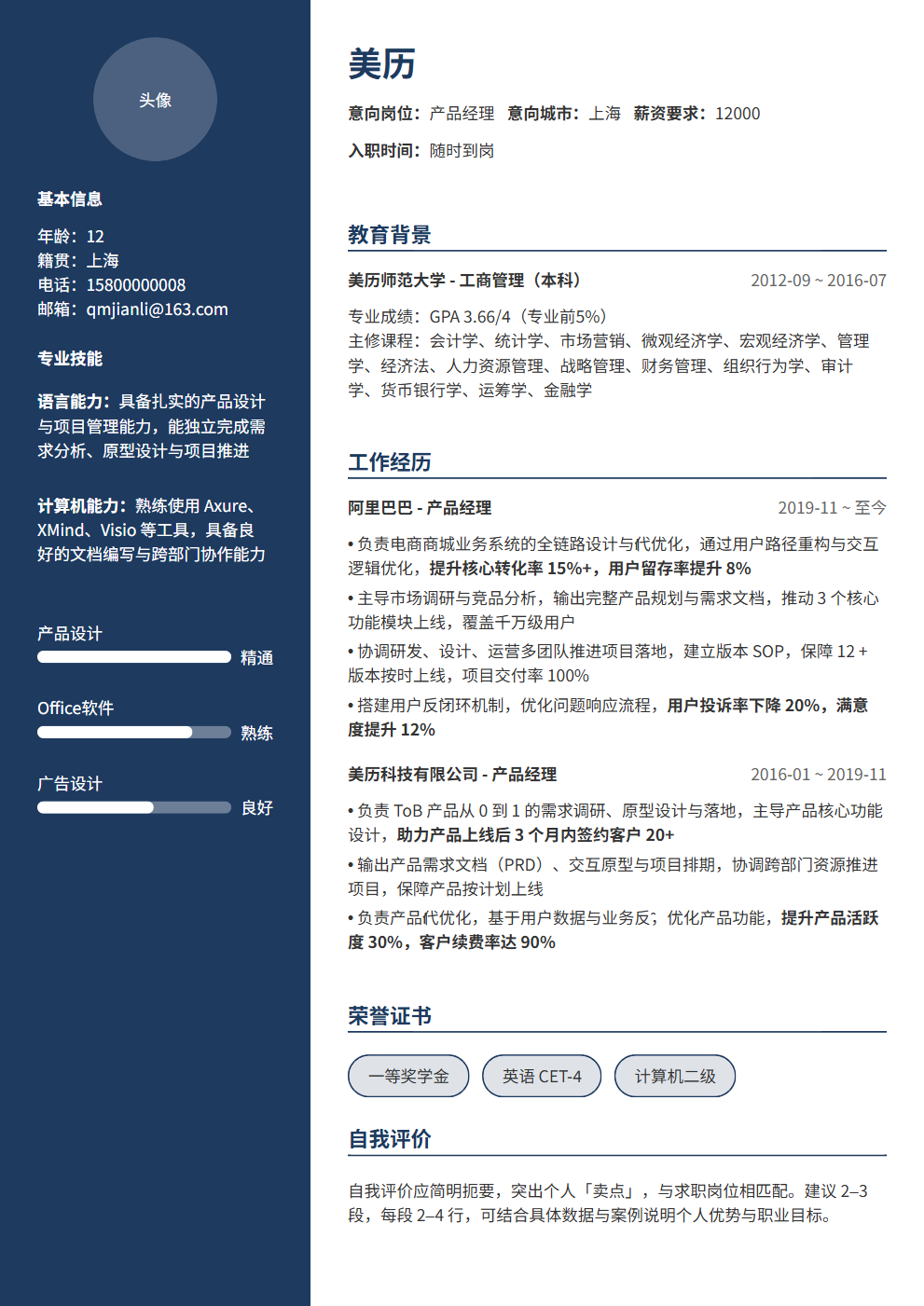
In top company interviews, avoiding these 10 answer pitfalls is just the first step. Equally important is having a professional resume that builds positive impressions before you even speak. Use our resume generator to quickly create a professional resume that highlights your core competitive advantages, giving you a head start from the resume screening stage. A great resume is the foundation of interview success — our resume builder tool helps you polish every experience into exactly what interviewers want to see.